Arboricultural Method Statement to Save a Tree
Find out how an arboricultural method statement can justify pruning a protected tree instead of removal, satisfying the council and keeping your project on track.
The Scenario: A Retained Tree Blocks Your Development
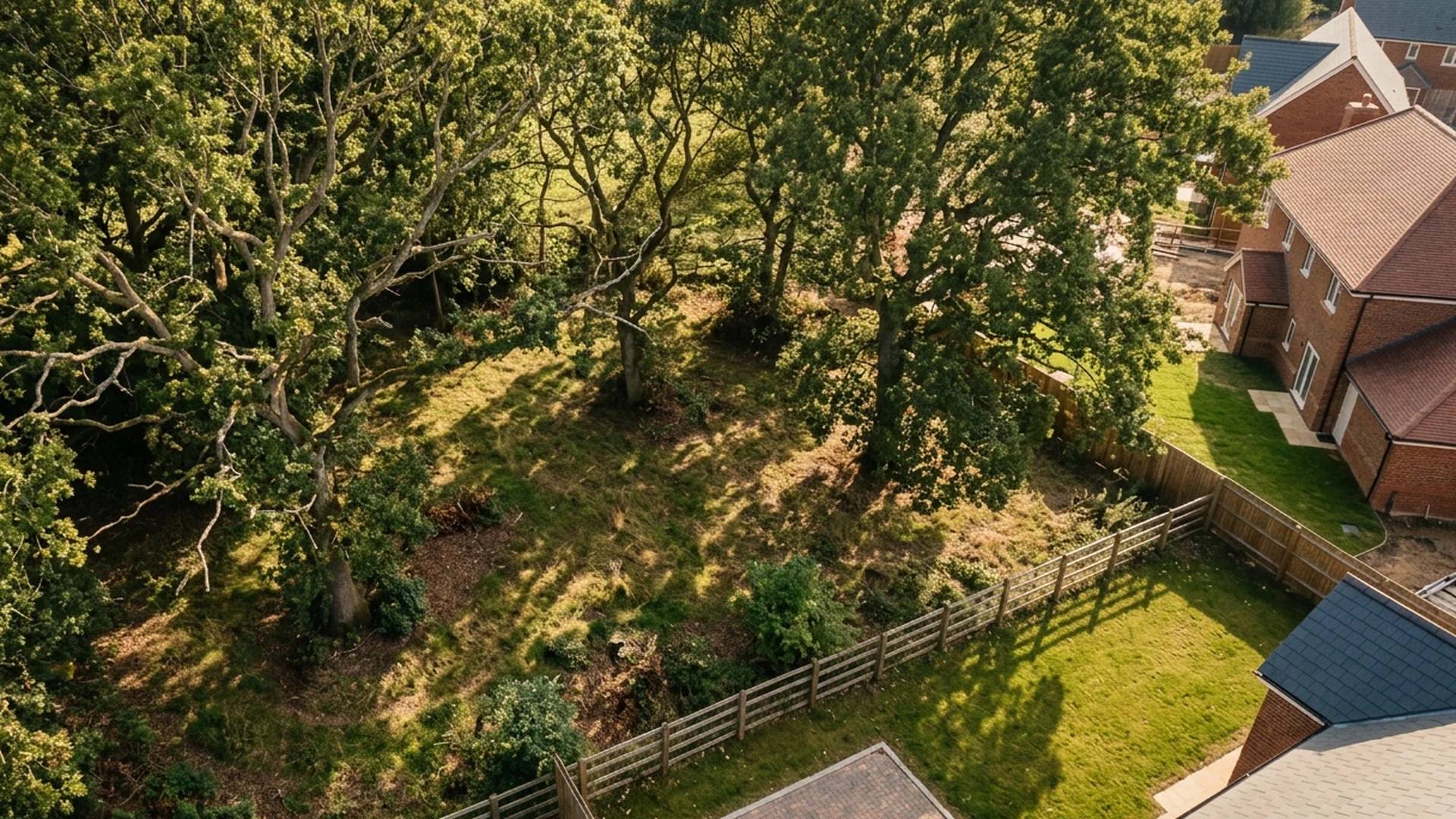
A common point of friction in development projects involves a mature tree. The local planning authority has designated it for retention, perhaps through a Tree Preservation Order or its location within a conservation area. Yet, its canopy or root protection area directly conflicts with your proposed site layout, access road, or building footprint. The immediate reaction is often to apply for the tree’s removal, arguing it makes the development unviable. This application is frequently met with refusal from the council’s tree officer. The project stalls, and frustration builds.
There is a more effective approach. Instead of focusing on removal, a robust arboricultural method statement can present a compelling case for strategic pruning. This document provides a technical, evidence-based solution that creates the necessary space for your project while ensuring the long-term health and retention of the valuable tree.
Why Councils Favour Retention Over Removal
Understanding the local planning authority’s position is crucial to navigating this process successfully. Their preference for retaining mature trees is not arbitrary. It is rooted in legal obligations, established planning policy, and a recognition of the tangible benefits these trees provide to the wider community. Simply stating that a tree is in the way is rarely a sufficient reason for its removal when it is protected.
The Role of Tree Preservation Orders (TPOs) and Conservation Areas
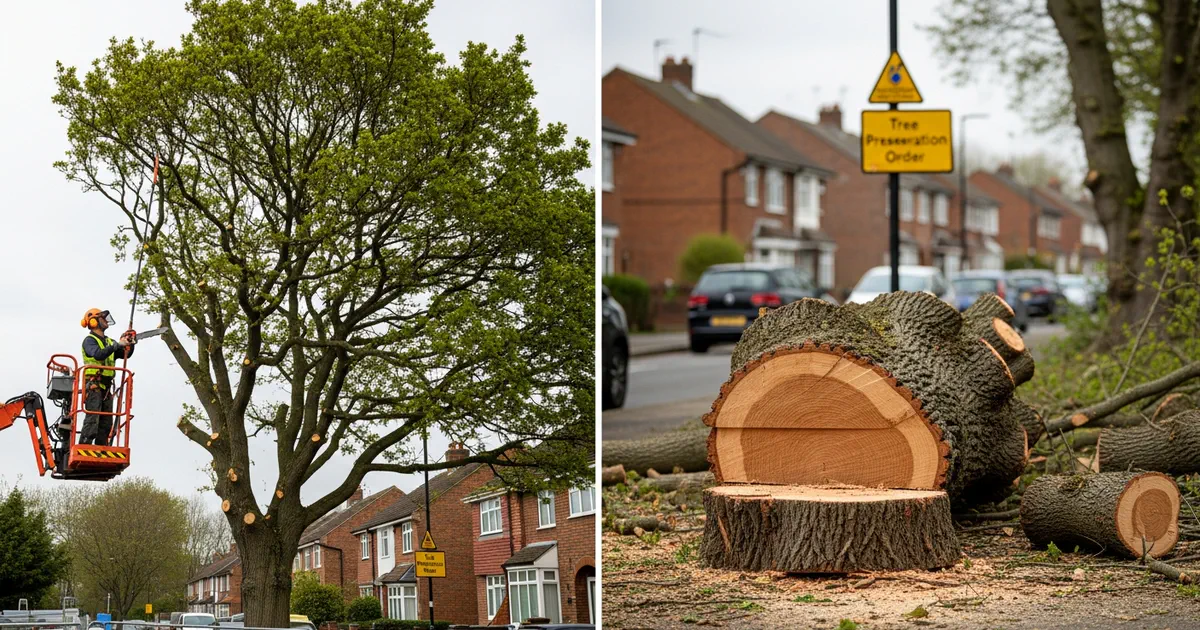
A Tree Preservation Order is a legal instrument made by a local planning authority to protect specific trees, groups of trees, or woodlands in the interests of amenity. Similarly, trees within a designated conservation area receive a level of protection. The council has a statutory duty to uphold these protections.

Proposing a pruning-based retention strategy, backed by technical evidence, is a far more productive direction than pursuing removal.
Public Amenity and Biodiversity Value
Councils assess trees based on their public amenity value. This is a broad concept that includes the tree’s contribution to the local landscape and character, its visual importance, and its function in screening or softening development. A large, mature tree is considered a significant public asset. Furthermore, national and local planning policies place increasing emphasis on environmental factors. Concepts like Biodiversity Net Gain are now integral to the planning process. A mature tree is a hub of biodiversity, supporting a complex ecosystem of insects, birds, and other organisms. Its removal represents a significant environmental loss that the council is mandated to prevent unless there is an overwhelmingly strong justification. Proposing a viable retention strategy is therefore a much more persuasive approach.
The Arboricultural Method Statement as a Solution
The arboricultural method statement, or AMS, is often viewed as a purely protective document — a set of rules for builders to follow near trees. While this is one of its functions, its utility extends far beyond simple protection. When used proactively, an AMS becomes a powerful tool for negotiation and justification. It can be the key to unlocking a site where a protected tree appears to be an insurmountable obstacle.
What is an Arboricultural Method Statement?
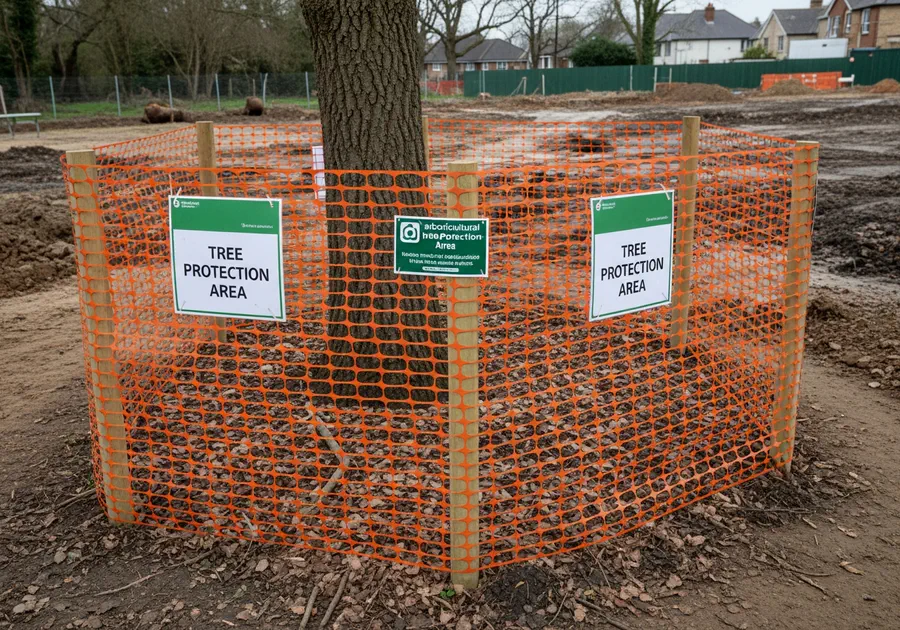
An arboricultural method statement is a detailed, site-specific document that specifies precisely how construction activities will be managed in close proximity to retained trees. Its primary purpose is to provide the local planning authority with the assurance that the proposed development can be implemented without causing damage to these trees. This includes detailing measures for ground protection, specifying the type of machinery to be used, and outlining the sequencing of works. It translates the recommendations of a BS 5837 tree survey into a practical, on-site works plan.
Moving Beyond Protection: Using an AMS for Justification
The real power of an AMS in this scenario lies in its ability to justify a programme of tree surgery. Instead of simply fencing off a tree and hoping for the best, the AMS can be used to build a technical case for specific, targeted pruning. The document will detail a carefully considered pruning regime designed to achieve the necessary clearance for your development, whether for a building’s eaves, a scaffolding lift, or vehicle access. Crucially, it does so while demonstrating that the work will not compromise the tree’s long-term health, stability, or amenity value. The AMS provides the tree officer with the technical evidence and professional reassurance they need to approve a pragmatic solution. It transforms the conversation from a binary choice between removal or retention to a more nuanced discussion about retention with sensible modification.
Building the Case: What Your Consultant Includes in the AMS
A persuasive AMS is not a generic template. It is a bespoke document built on a foundation of thorough assessment and industry best practice. To convince a tree officer that a pruning proposal is a sound alternative to removal, your arboricultural consultant will include several key components that provide a clear, evidence-based argument.
Detailed Tree Assessment
Before any pruning can be specified, a comprehensive assessment of the tree itself is required. This goes beyond simple species identification. The consultant will evaluate the tree’s age, dimensions, physiological condition, and structural integrity. This detailed analysis determines the tree’s vitality and its likely tolerance to pruning. Some species, like oak, respond well to reduction pruning by forming new growth. Others are less tolerant and may react poorly. The assessment establishes a baseline of health, confirming that the tree is a suitable candidate for the proposed work and will remain a healthy, valuable landscape feature for many years to come.
BS 3998:2010 Pruning Specification
All proposed tree work will be specified in accordance with British Standard 3998:2010 Tree Work – Recommendations. This is the authoritative standard for arboriculture in the UK. Referencing this standard in the AMS demonstrates a commitment to professional, high-quality work. The specification will be precise — it will not simply say ‘prune tree’.
BS 3998:2010 Specification Requirement
This level of detail removes ambiguity and gives the planning authority confidence in the proposal.
Visual Aids: Plans and Diagrams
Technical specifications are essential, but clear visual aids make the proposal immediately understandable. A good AMS will include annotated drawings and plans. A Tree Protection Plan will show the tree’s current canopy spread overlaid with the proposed post-pruning canopy spread, clearly illustrating the space that will be created. For more complex interactions, cross-section diagrams are invaluable. These can show the relationship between the pruned canopy and a proposed building, demonstrating that sufficient clearance for construction, scaffolding, and future occupation will be achieved. These visuals allow the tree officer and planning committee to see at a glance that the solution is practical and well considered.
Post-Pruning Management Plan
To further strengthen the case for retention, the AMS can include a forward-looking management plan for the tree. This demonstrates a long-term commitment to its health and wellbeing, beyond the immediate construction phase. The plan might recommend a follow-up inspection 18 to 24 months after the initial pruning to assess the tree’s response. It could also outline a future pruning cycle, perhaps every three to five years, to maintain the required clearances and ensure the tree develops a good, strong structure. This proactive approach shows the council that the tree is not being viewed as a problem to be solved once, but as a valuable asset to be managed responsibly into the future.
The Practical Steps to Take
Successfully using an arboricultural method statement to justify pruning requires a structured approach. Following these steps in the correct order will integrate arboricultural considerations into your project from the beginning, leading to a smoother planning process and a more positive outcome.
Engage an Arboricultural Consultant Early
The most common mistake is to treat arboriculture as an afterthought, only seeking advice after a planning application has been submitted or refused. Engage a qualified consultant at the very earliest design stage, ideally during feasibility or pre-application discussions. Early involvement allows the consultant to identify potential tree-related conflicts before they become fixed in the design. They can work with your architect to adjust layouts or, as in this case, propose a viable pruning strategy from the outset, saving significant time and cost later on.Commission a BS 5837 Survey and Report
The foundation for any AMS is a comprehensive tree survey conducted in accordance with British Standard 5837:2012 Trees in relation to design, demolition and construction – Recommendations. This survey will identify all trees on and adjacent to the site, recording their species, size, age, and condition, and categorise each tree based on its quality and value. The resulting report includes a Tree Constraints Plan, which shows the root protection area and canopy spread of the most significant trees. This document provides the essential baseline data needed to make informed decisions about tree retention and management.Develop the Pruning Strategy with Your Consultant
Once the BS 5837 survey is complete and a draft site layout exists, the collaborative work begins. You and your design team will provide the consultant with the specific clearance requirements for your development. The consultant will then use their expertise to assess the key tree and determine a pruning specification that is both arboriculturally sound and achieves your spatial objectives. This is a process of finding a balance that meets the needs of the project without causing unacceptable harm to the tree, resulting in a targeted, justifiable pruning plan.Submit the AMS with Your Planning Application
The final step is to compile all this information into the formal Arboricultural Method Statement and Tree Protection Plan. This package should be submitted as part of your full planning application. By presenting this detailed justification upfront, you demonstrate to the local planning authority that you have proactively identified and solved a potential conflict. You are not presenting them with a problem; you are providing them with a professional, evidence-based solution. This significantly increases the likelihood of a smooth validation process and a positive planning decision, allowing your project to proceed without costly delays.
Find out what's on your site before it becomes a problem.
Subito provides BS5837 tree surveys and arboricultural impact assessments for planning applications across England. If your site has old trees, we will identify them, assess them, and give you the information you need to design around them with confidence.