Bat Surveys for Planning: What Triggers One and Why Timing Matters
What triggers a bat survey, how the process works from PRA through to planning, and why the season closing in September matters for your timeline.
Bats are one of the most commonly encountered protected species on UK development sites. They roost in roof spaces, barn conversions, old stone walls, timber framed buildings, and mature trees. They are legally protected at every stage of their life cycle. And the survey season for confirming their presence or absence closes at the end of September.
If you are planning a development that could affect bats and you have not yet commissioned a survey, the window for this season is open — but it will not be for long.
This guide explains what triggers a bat survey, how the process works from first inspection through to planning submission, and what the updated Bat Conservation Trust guidelines published in 2023 mean for your project.
Why bats are treated differently from other wildlife
All 18 UK bat species are legally protected under the Wildlife and Countryside Act 1981 and the Conservation of Habitats and Species Regulations 2017. That protection covers the bats themselves and the roosts they use. Crucially, a roost does not need to be occupied at the time of survey to be legally protected. If bats use a feature regularly — even seasonally — that feature is protected throughout the year.
This creates a significant obligation for developers and homeowners. You cannot assume a building or tree is free of bats simply because bats are not visible at the time of inspection. Disturbing or destroying a roost without appropriate survey evidence and, where required, a licence from Natural England is a criminal offence. The legal responsibility sits with the landowner or developer, not with the contractor carrying out the works.
Planning authorities are well aware of this framework. Where a development proposal could affect potential bat habitat, Local Planning Authorities will request survey evidence before determining the application. Submitting without it — or submitting a survey that does not meet the current guidelines — will result in the application being returned or refused.
What triggers a bat survey
The question most developers and homeowners ask first is whether they actually need a survey. The answer depends on the nature of the works and the features present on site.
A bat survey is likely to be required where your project involves any of the following.
Roof works on older buildings
Agricultural buildings
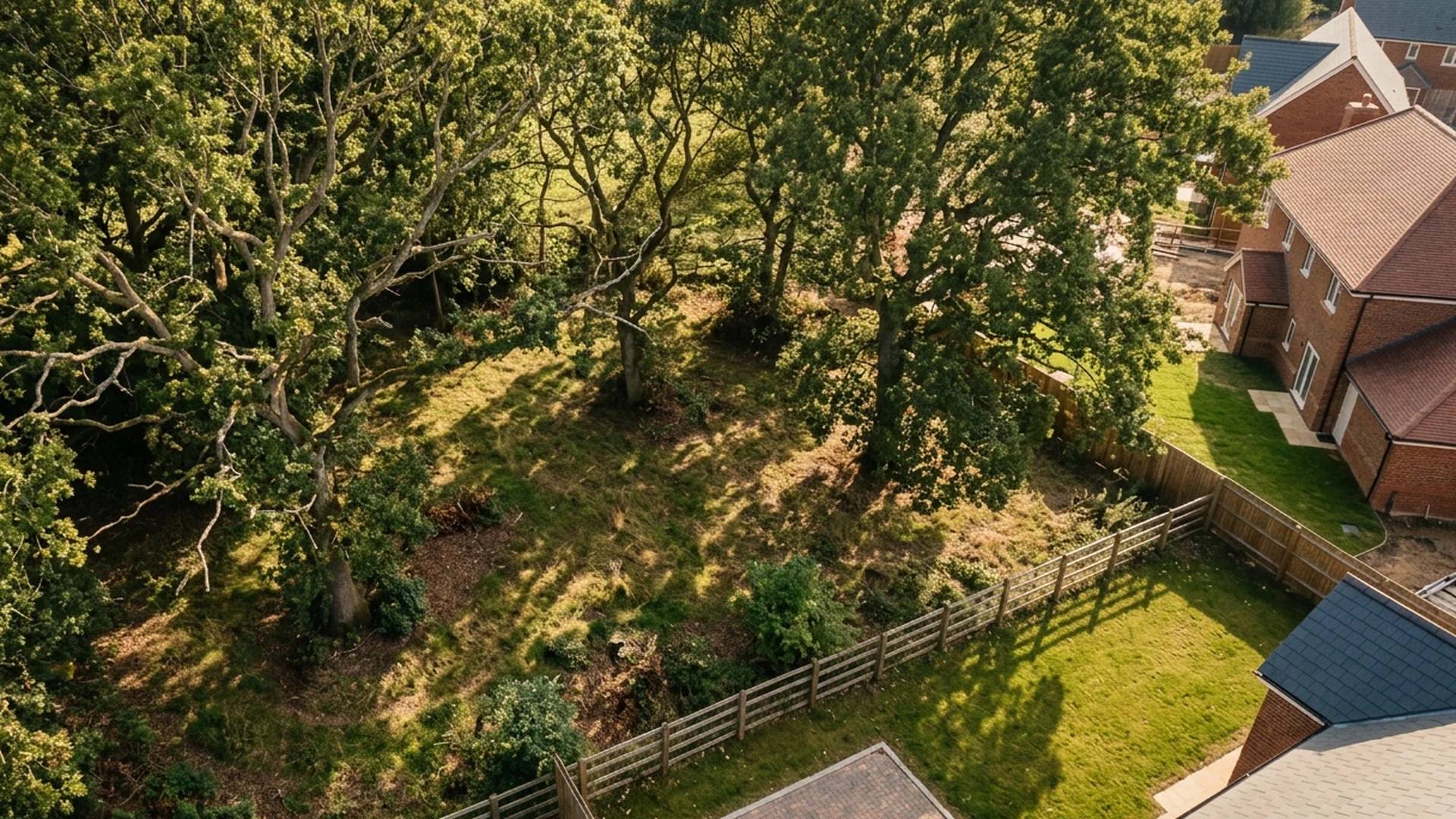
Mature trees
Within 50m of bat habitat
Residential alterations
When in doubt, the starting point is always a Preliminary Ecological Appraisal. This broad initial assessment identifies all potential ecological sensitivities on a site, including bat habitat, and advises on what surveys are needed. It can be completed at any time of year and will tell you quickly whether a specific bat survey is required before you proceed.
How the survey process works
Bat surveys follow a staged approach. Not every project requires every stage. A qualified ecologist assesses what is proportionate based on the features present and the nature of the proposed development.
Stage one
Preliminary Roost Assessment
Daytime inspection of buildings, structures, and trees.Any time of yearStage two
Emergence and return surveys
Dusk monitoring at roosting features using bat detectors and night vision.May to September onlyStage three
Activity surveys and static monitoring
Transect surveys and passive acoustic detectors for commuting and foraging routes.May to September only
Stage one: Preliminary Roost Assessment
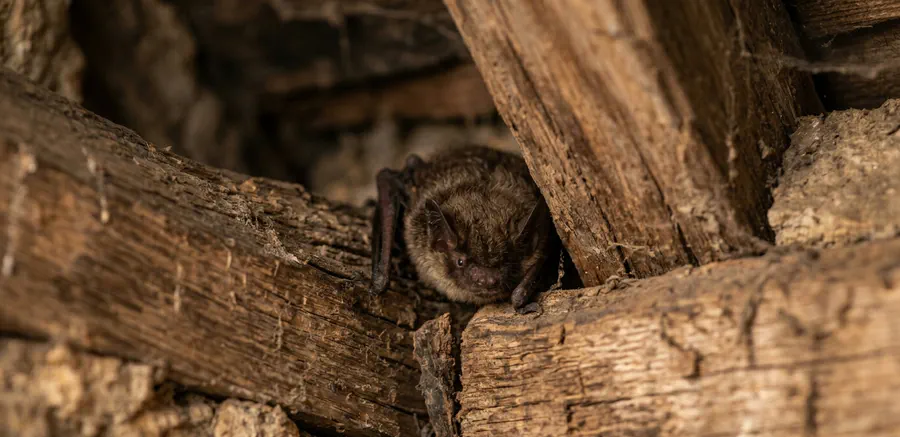
The Preliminary Roost Assessment, or PRA, is a daytime inspection carried out by a licensed ecologist. It covers the external and internal fabric of buildings, structures, and any trees on or near the site. The ecologist looks for potential roost features — gaps in soffits, loose roof tiles, timber beams, crevices in stonework — and for direct evidence of bat activity such as droppings, feeding remains, and staining around access points.
The PRA can be carried out at any time of year and in most weather conditions. It is the necessary first step before any further survey work is commissioned. Its outcome determines what, if anything, needs to happen next.
Where the PRA finds no roost potential and no evidence of bats, and the ecologist is satisfied that the building or structure is unsuitable for roosting, that assessment may be sufficient to support the planning application. Where potential roost features are identified, or where evidence of bats is found, emergence and activity surveys will be required.
Stage two: Emergence and return surveys
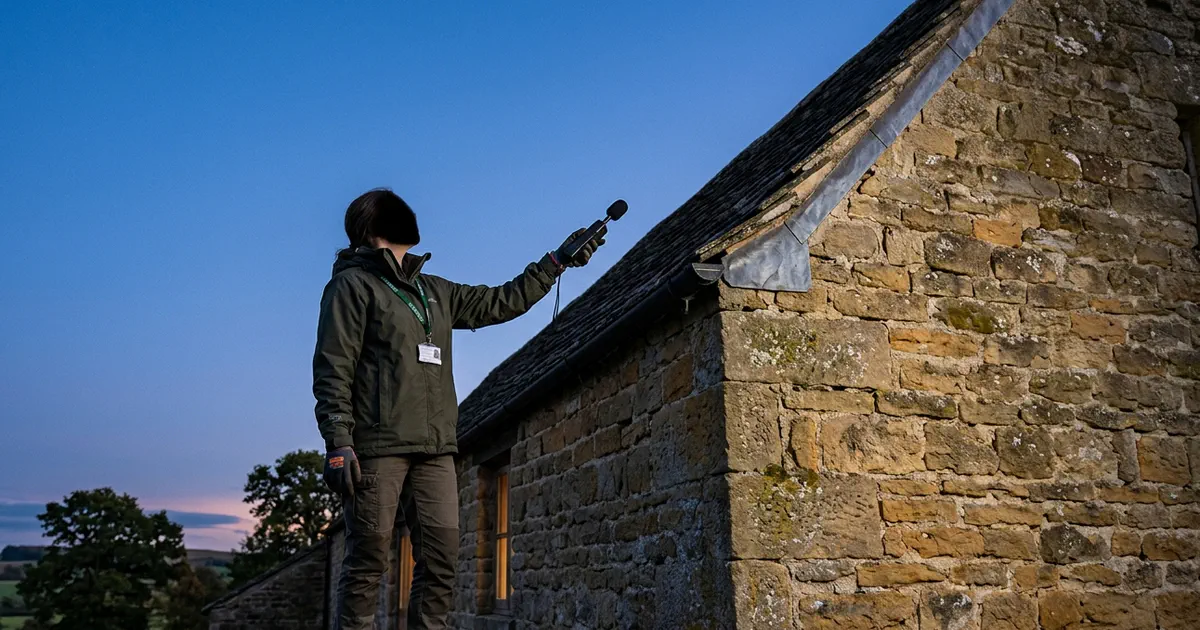
Emergence and return surveys involve watching and recording bats as they leave and return to roosting features at dusk and dawn. Surveyors use calibrated bat detectors and, under the 4th edition BCT guidelines, night vision equipment is now recommended. This allows bats emerging after dark to be observed and recorded accurately.
These surveys must be carried out between May and September, with the peak season running from May to August. Surveys within a single assessment must be separated by at least three weeks to capture variation in roost use across the season. The number of survey visits required depends on the nature of the site and the level of roost potential identified at the PRA stage — a process now structured around a more objective classification system introduced in the 4th edition guidelines.
One significant change in the updated guidelines is that dawn return surveys are now only infrequently required. This reduces the total survey burden for most projects compared with the previous edition.
Stage three: Activity surveys and static monitoring
Where a development has the potential to affect bat commuting or foraging routes — not just roosting sites — activity surveys may be required in addition to the emergence survey work. These involve transect surveys at dusk, using bat detectors to record bat species and activity levels across the site and its boundary habitats.
For larger or more complex sites, static monitoring using passive acoustic detectors left on site overnight provides a fuller picture of bat activity without requiring ecologists to be present. The data is then analysed in the laboratory against a reference database of bat calls to identify species.
What the 4th edition BCT guidelines changed
The Bat Conservation Trust published its 4th edition Good Practice Guidelines in September 2023. These are the current standard expected by Natural England and by Local Planning Authorities across England.
The most significant changes relevant to development projects are as follows.
The classification of potential roost features has been overhauled. The previous system of low, moderate, and high roost potential was considered too subjective and produced inconsistent outcomes between surveyors. The new system uses a more structured assessment framework designed to improve consistency. Any survey commissioned before September 2023 that uses the old classification is now out of date and may not satisfy a planning authority.
Night vision aids are now formally recommended for emergence surveys. This reflects evidence that bats often emerge after the point at which they can be reliably observed by the naked eye. The requirement for appropriate equipment increases the standard of survey data that should be expected.
The guidelines address tree assessments in more detail than previous editions. For trees that cannot be adequately assessed from the ground, aerial inspection by a tree climber or using a Mobile Elevated Work Platform may be required to confirm the presence or nature of potential roost features before a tree is felled.
What happens if bats are found
Finding bats on your site does not necessarily stop your project. It means that appropriate mitigation is required, and in most cases a suitable solution can be found.
Where a bat roost will be disturbed or destroyed by development, Natural England must grant a European Protected Species licence before works can begin. To obtain this licence, three legal tests must be satisfied: the works must be for an imperative reason of overriding public interest, there must be no satisfactory alternative, and the favourable conservation status of the species must be maintained.
In practice, for most planning applications, these tests are satisfied through a well designed mitigation strategy. Mitigation typically involves timing works to avoid the breeding and hibernation seasons, incorporating purpose built roost features into the design of the replacement or altered structure, and retaining or enhancing bat habitat in the surrounding site. Your ecologist will design a mitigation strategy proportionate to the species and roost type found, and will support the licence application to Natural England.
Survey results are generally considered valid for planning purposes for 18 months. If your programme spans multiple seasons, you will need to plan for resurvey if earlier results expire before the application is determined.
Why timing matters so much

The survey window closes at the end of September
That delay has real consequences. An application that cannot be submitted until surveys are complete is an application that is waiting — through autumn, winter, and into the following year — while costs run and opportunity windows close.
Commissioning now is not premature caution. It is the most straightforward way to protect your project timeline.
Get your bat survey booked this season
Subito provides Preliminary Roost Assessments, emergence and return surveys, and activity monitoring across England. Our licensed ecologists follow the 4th edition BCT guidelines and will give you a clear, honest assessment of what your site needs and what the results mean for your project.