BS 5837 Is Changing. Here's What It Means for Your Project.
The British Standard behind every planning tree survey is being revised for the first time since 2012. Here is what is changing, when it lands, and what developers should do now.
The standard that governs every tree survey in a planning application is about to change. If you have a development in the pipeline — or one already under way — here is what is happening and what it means for you.
What is BS 5837 and why does it matter?
When you apply for planning permission on a site where trees are present, your local planning authority will ask for a tree survey produced in accordance with BS 5837. That is the British Standard that sets out how trees should be assessed, categorised, and protected during design, demolition, and construction.
It has been the foundation of arboricultural practice since its last major revision in 2012. It determines how root protection areas are calculated, how trees are graded for retention value, and what protection measures must be in place during a build. Get it wrong and your planning application stalls. Get it right and tree-related conditions become a manageable part of your programme rather than a blocker.
The 2012 version has served the industry well, but the world it was written for has changed considerably. Climate change, biodiversity net gain, and a much greater understanding of ancient and veteran trees have all moved on. The revision addresses that.
When is the new standard being published?
The revision panel published a draft for public consultation in August 2024. It attracted over 2,000 comments — nearly double the response to the previous revision. The panel has been working through every one of those comments individually. The projected publication date is November 2026.
When a revised standard is published, it immediately supersedes the old version. There will be a managed transition period to allow consultants, tree officers, and software providers to adapt, but the clock starts from publication.
What is changing?
The draft consultation and the revision panel’s subsequent commentary point to several meaningful changes.
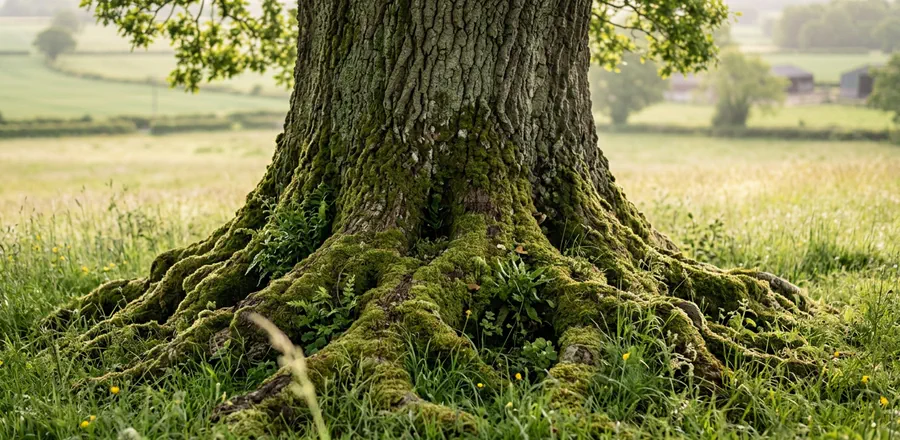
A new veteran tree category. The current standard uses an A, B, C, and U classification. The revised standard is expected to introduce a dedicated veteran tree category — recognising that ancient and veteran trees carry ecological, historical, and cultural value that the existing framework does not adequately capture. Veteran trees will also carry a larger root protection area, meaning more of the ground around them is treated as off-limits to construction activity.
More rigorous root protection area assessment. Root protection areas — the zones around a tree that must be kept free of disturbance — will be assessed with greater reference to ground conditions. Soil type, compaction, and drainage all affect how far a tree’s roots extend. The revised standard asks surveyors to record and account for these factors rather than applying a formula in isolation.
Tree planting moves to a separate standard. The 2012 version included guidance on planting trees as part of a development scheme. That section is being removed from BS 5837 and consolidated into BS 8545, the standard that covers trees from nursery to establishment. The amended BS 8545 was published in January 2026. The two standards now work as a complementary pair rather than overlapping.
Greater integration with biodiversity net gain. BNG has been mandatory for most planning applications in England since early 2024. The revised BS 5837 reflects that reality. Trees are a significant contributor to a site’s biodiversity baseline, and the updated standard is expected to provide clearer guidance on how tree survey data feeds into BNG calculations.
What does this mean for your project?
If your development is being assessed now, it will be assessed against BS 5837:2012. That is the current standard and it remains the correct reference until November 2026.
If your project timeline takes you past publication, you will need a survey that complies with the revised standard. The most practical step is to work with an arboricultural consultant who is following the revision closely and can plan your survey programme accordingly.
The veteran tree category and the revised root protection area methodology are the changes most likely to affect site layout decisions. If your site contains trees that might qualify as veteran — typically ancient oaks, field maples, or other long-lived native species — the updated standard could increase the area of your site that is treated as constrained. It is worth getting an early assessment done now so that any constraints are designed around, not discovered after planning is submitted.
Get ahead of the revision
The smartest approach to a standard change is to treat it as useful information rather than a threat. The revision makes tree survey data more accurate and more useful — better integrated with BNG, better calibrated for veteran trees, and more honest about the relationship between soil conditions and root spread.
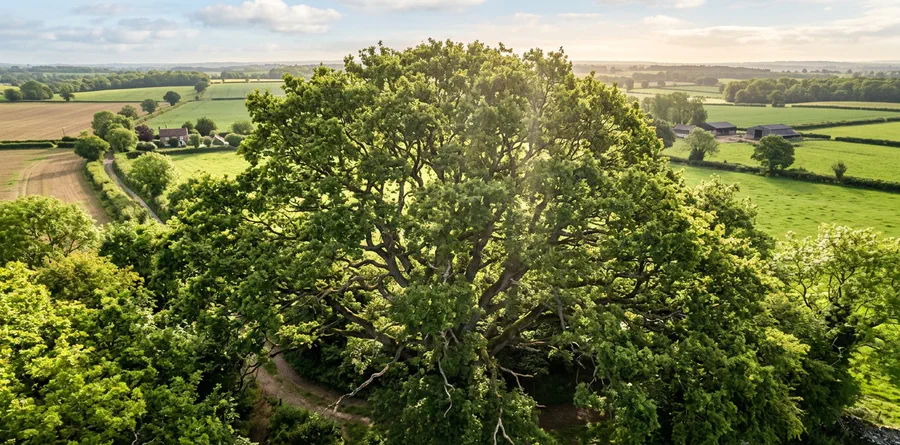
If you have a site with mature or veteran trees, an early arboricultural appraisal now gives you the information you need to design around those constraints before they become a planning condition. That is exactly how a tree survey should be used: at the front of the design process, not bolted on at the end.
Get a fixed-price quote from Subito or talk to us about your site if you want guidance on how the revision affects your specific project.
Published June 2026. Sources: Arboricultural Association ARB Magazine Issue 212, Spring 2026; Treework Environmental Practice — Howard Booth on the BS 5837 revision; BSI Standards Development Portal.