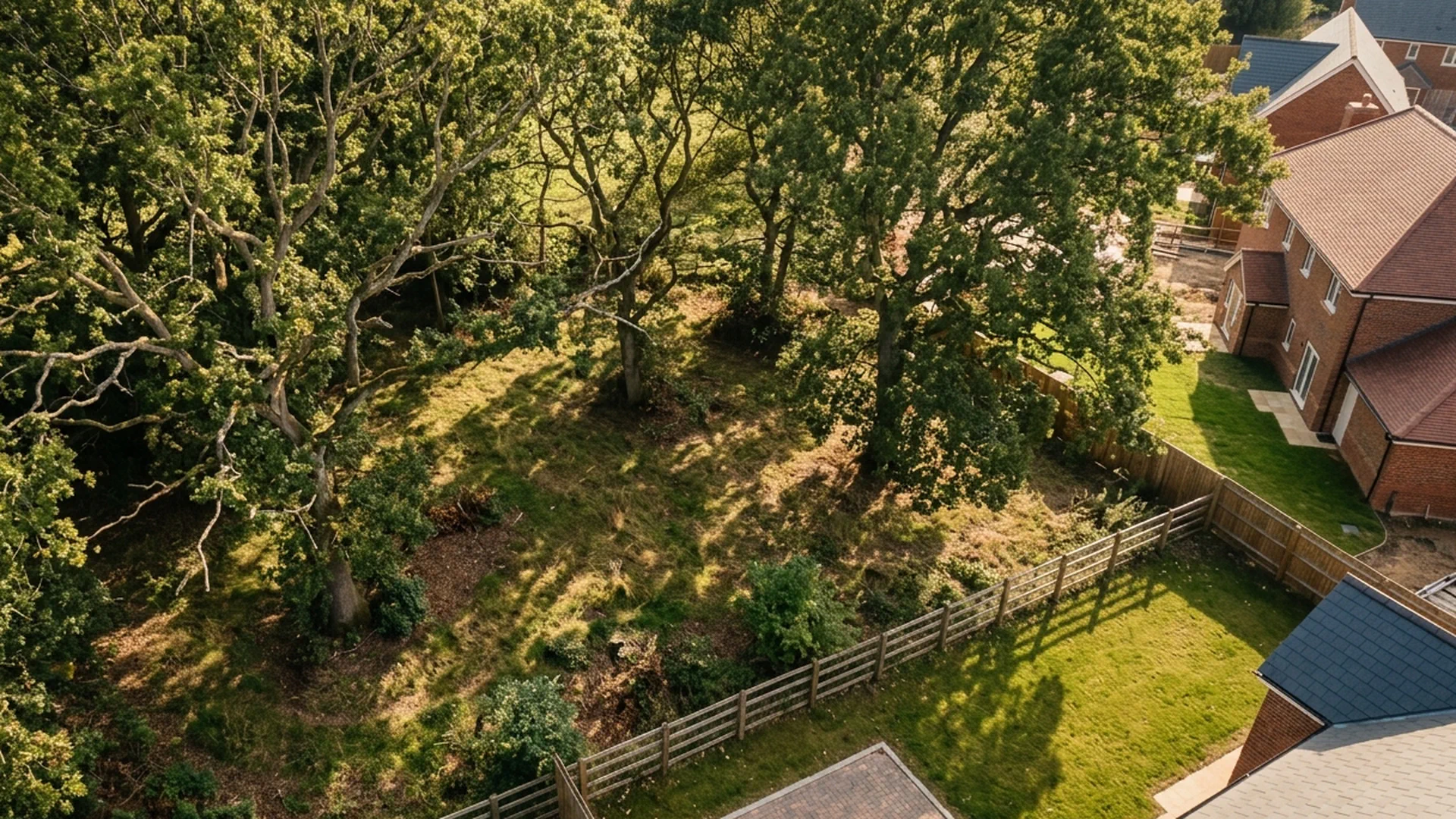
BS5837 Tree Survey vs Arboricultural Impact Assessment
A BS5837 survey records trees and constraints. An Arboricultural Impact Assessment tests your scheme against them. What developers need to know before submission.
BS5837 Tree Survey vs Arboricultural Impact Assessment: The Core Difference for Developers
A BS5837 survey records the trees on site and the constraints they create. An Arboricultural Impact Assessment evaluates how your specific development proposal affects those trees. The survey is the evidence base. The AIA is the planning-stage impact analysis built on top of it. Confusing the two is one of the most common reasons a tree-related planning submission stalls.
What a BS5837 Tree Survey Provides on a Development Site
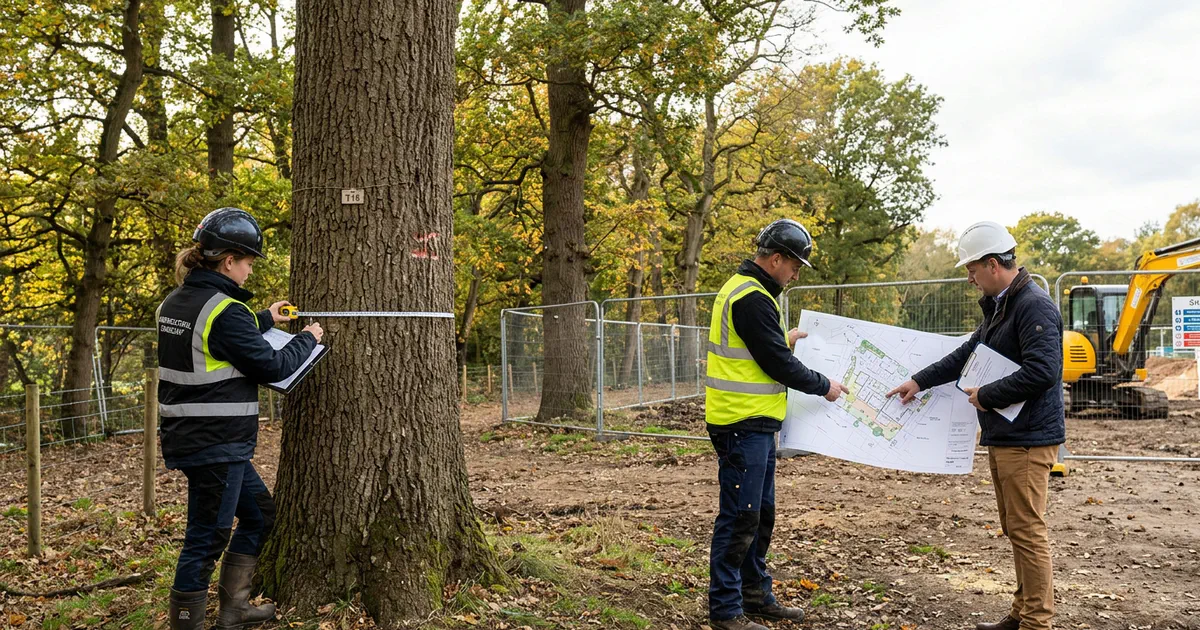
A survey to BS5837:2012 produces a tree schedule with species, stem diameter, canopy spread, height, condition and remaining contribution, plus a category rating from A to C or U. It maps root protection areas and delivers a tree constraints plan. It is a factual baseline. It does not judge whether your scheme should proceed.
When to Commission the BS5837 Survey
Commission before layout design, not after. A survey done once the red line and access are fixed tends to force redesign. Update it if site conditions change or the proposals shift materially.

How the BS5837 Survey Shapes Site Layout
Tree constraints and RPAs should drive where plots, access, services and drainage sit. The survey feeds design decisions rather than sitting in isolation in a planning folder.
What an Arboricultural Impact Assessment Adds Beyond the Survey
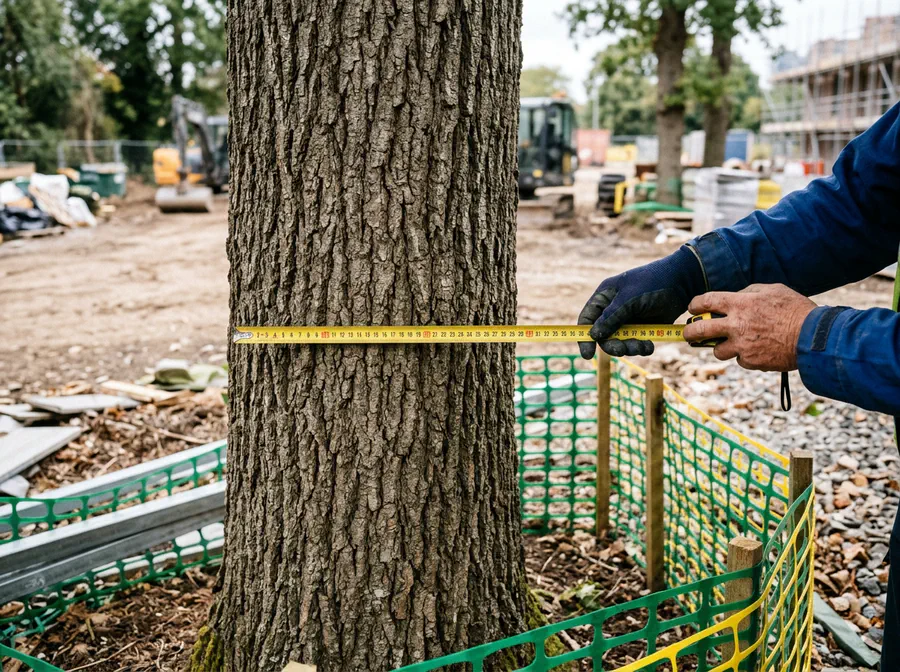
The AIA uses the BS5837 survey to assess the proposed scheme’s direct and indirect effects on retained trees. It identifies removals, RPA encroachment, construction pressures and the mitigation required.
Core Impacts Assessed in an Arboricultural Impact Assessment
Direct impacts
Indirect impacts
It also recommends a tree protection plan and arboricultural method statement where needed.
How the AIA Supports the Planning Application
The AIA demonstrates whether the scheme retains meaningful trees and avoids unacceptable harm. It helps answer tree officer comments and informs planning conditions.
How the BS5837 Survey and AIA Work Together
The two documents are sequential and complementary: survey first, then design, then impact assessment. A robust AIA cannot be produced without reliable survey data and an accurate layout.
Sequencing the BS5837 Survey and AIA for a Smoother Planning Submission
Survey
Commission the BS5837 survey and prepare the constraints plan.Test
Test layout options against RPAs and tree categories.Assess
Finalise the scheme and produce the AIA.Protect
Prepare the tree protection plan and method statement.
Early arboricultural input reduces abortive design and validation delays.
Common Developer Pitfalls with BS5837 Survey and AIA Evidence
Treating the survey as an AIA, commissioning too late, omitting layout details, failing to update after design changes and leaving tree protection until after submission all lead to requests for further information or refusal.
What Local Planning Authorities Expect from Your BS5837 Survey and AIA
LPAs need current survey data, clear plans, assessed impacts and proportionate mitigation. Requirements vary across the South East and East of England, so scope should match the site and scheme.
Frequently asked questions
Find out what's on your site before it becomes a problem.
Subito provides BS5837 tree surveys and arboricultural impact assessments for planning applications across England. If your site has old trees, we will identify them, assess them, and give you the information you need to design around them with confidence.