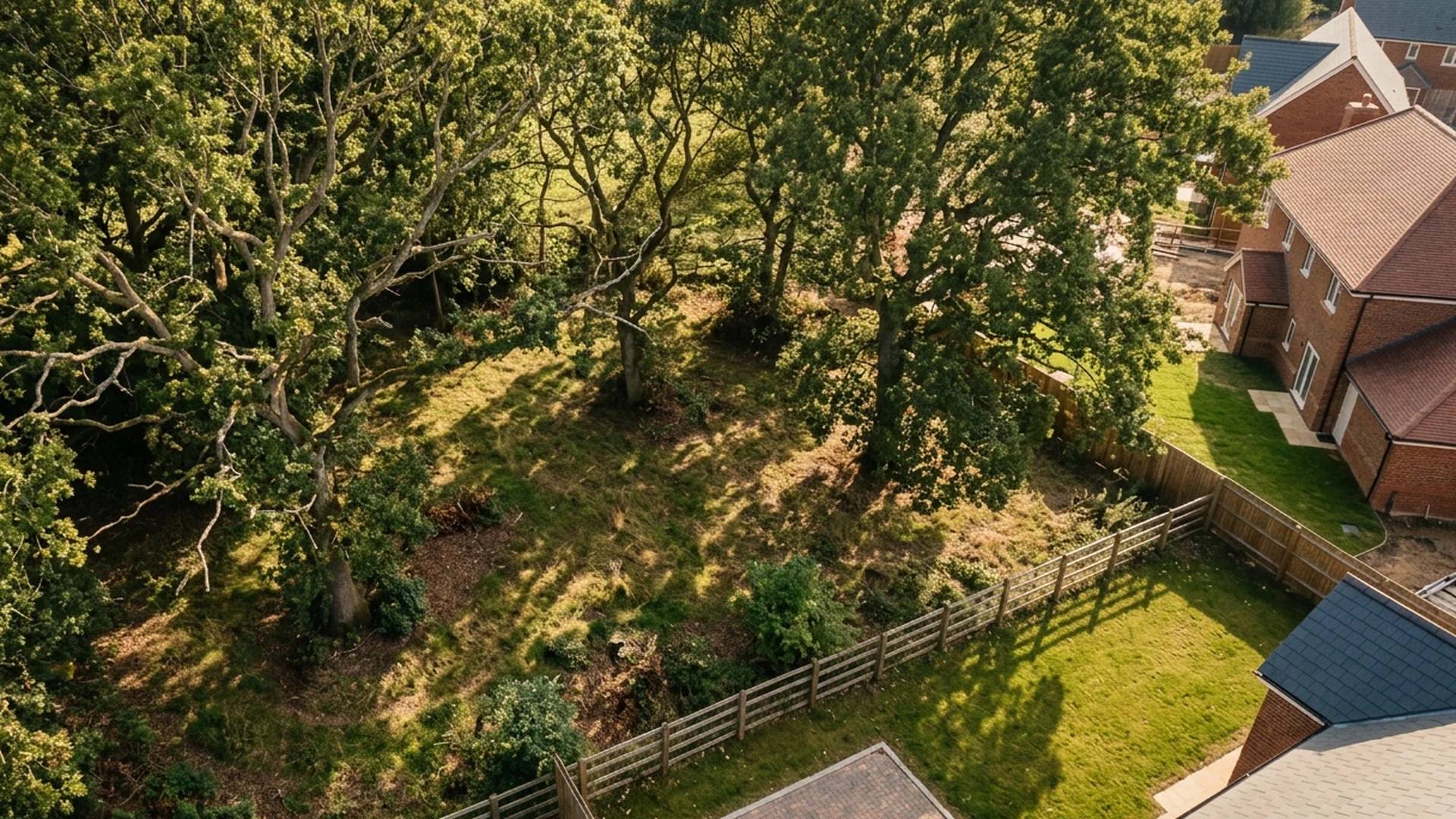
Combined Tree and Ecology Survey Visits: Cut Costs
Discover how a combined tree and ecology survey visit saves time and money, avoids duplicate site visits, and streamlines planning for developers.
The Problem with Separate Survey Visits
Why Duplicate Site Visits Cost You Time and Money
When you book your arboriculturist and ecologist on different dates, you pay for two mobilisations. That means two travel invoices, two sets of access arrangements, and twice the coordination burden on your project manager. For a typical residential scheme in the South East, that can add £500 to £1,000 in unnecessary fees before you even consider the delay. Worse, if the ecologist spots a bat roost in a tree the arboriculturist already cleared for retention, you are back to square one with redesigns. You are not saving money by splitting the work; you are paying a premium for inefficiency.
What a Combined Tree and Ecology Survey Visit Actually Looks Like
The Integrated Survey Approach
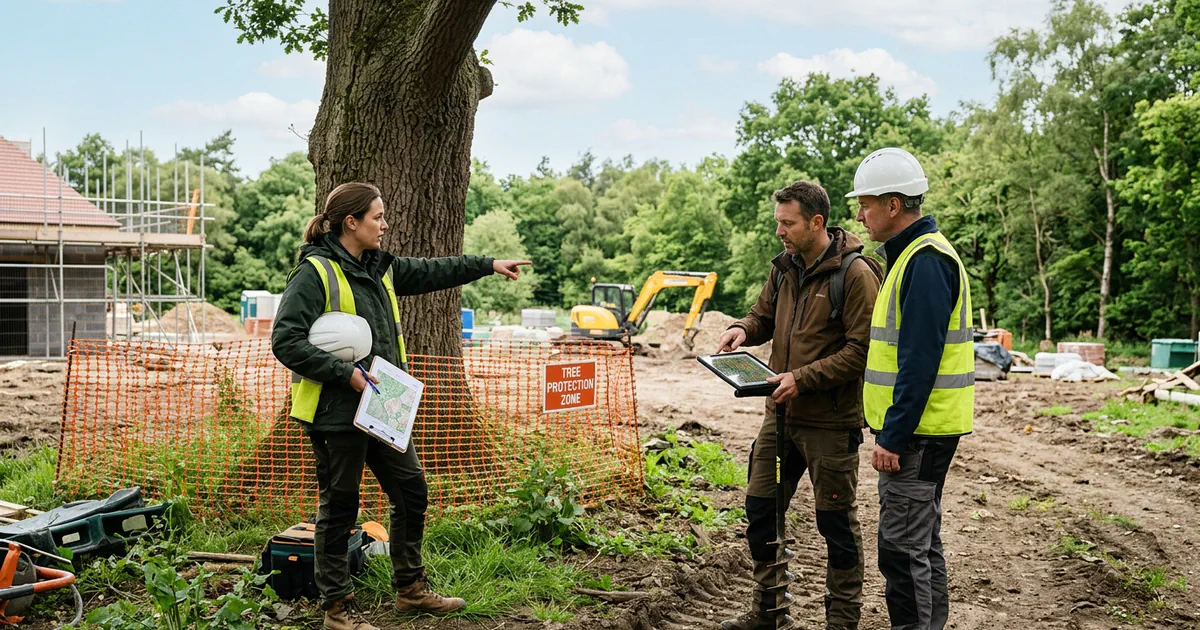
On a combined visit, the arboriculturist and ecologist walk the site together, covering the same ground in one pass. The arboriculturist assesses tree condition, root protection areas, and BS5837 categories while the ecologist simultaneously checks for protected species, habitat features, and ecological buffers. They share observations in real time, so nothing is missed. For example, while the arboriculturist notes a cavity in an oak’s main stem, the ecologist can immediately assess whether it offers bat roosting potential. This is not two surveys squeezed into one day; it is a single, integrated assessment where each specialist informs the other’s findings.
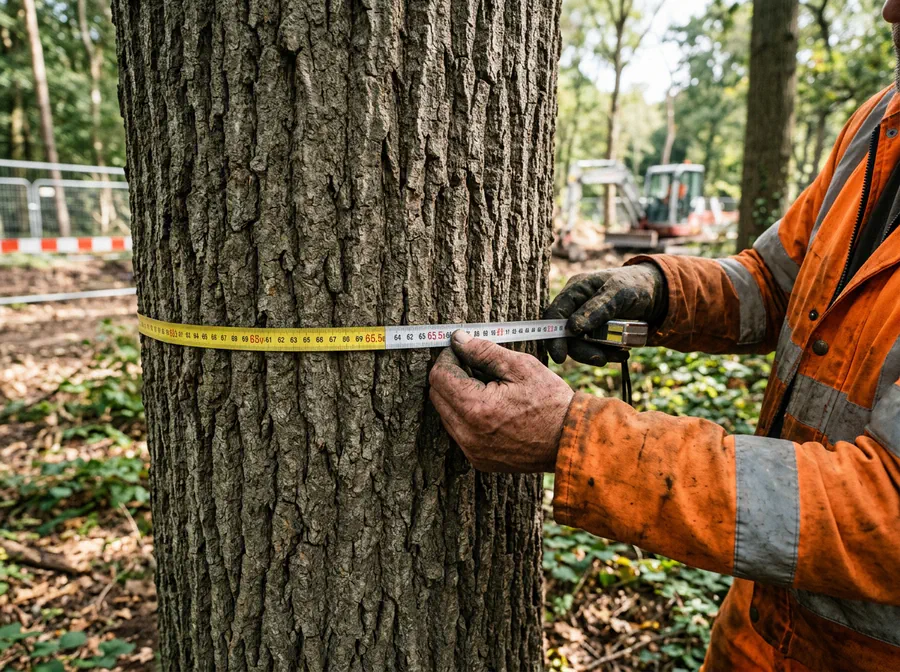
How Arboriculturists and Ecologists Work Together On Site
Sharing Data, Observation, and Risk Assessment in Real Time
The real value of a joint visit is the cross-pollination of expertise. When the arboriculturist identifies a tree with significant decay, the ecologist can check for nesting birds or roosting bats in the same tree, and together they decide whether it needs a separate emergence survey or a precautionary working method. This immediate feedback loop reduces the risk of contradictory recommendations. You avoid the classic scenario where the arboriculturist recommends removal of a tree that the ecologist later flags as a bat roost, forcing a costly redesign. Instead, you get a unified risk assessment that accounts for both tree health and ecological constraints from the start.
The Cost and Time Savings of a Combined Survey
Cutting Mobilisation Fees and Project Delays
One visit means one mobilisation fee, one set of travel costs, and one round of access coordination. For a typical site, that can cut survey costs by 20% to 30% compared to separate visits. More importantly, you get your report faster. Instead of waiting for two separate reports to be drafted and reconciled, you receive a single integrated document within days. This speed is critical when you are working to a planning deadline or a pre-application consultation. The commercial case is clear: you save money, you save time, and you reduce the risk of project delays caused by conflicting survey data.
What You Get from a Joint Report
Integrating Tree Constraints and Ecological Constraints
The deliverable is a combined constraints plan that aligns BS5837 tree data with ecological buffers and mitigation. You get one drawing that shows root protection areas, canopy spreads, habitat zones, and protected species features, all on the same base plan. This eliminates the confusion of cross-referencing separate reports and ensures that your architect and planner work from a single source of truth. No more contradictory recommendations where the arboriculturist says retain a tree but the ecologist says it must be removed for habitat reasons. The joint report resolves these conflicts before they reach your desk.
How This Feeds into Planning and Design
Better Collaboration from the Outset
When you commission a combined survey early, your architect and planner can design around the constraints from day one. They know exactly which trees are protected, where ecological buffers lie, and what mitigation is required. This prevents costly redesigns later in the process. For example, a layout that avoids a bat roost tree and its root protection area can be drawn up before planning submission, saving weeks of back-and-forth with the local authority. Subito’s in-house team of arboriculturists and ecologists works together from the initial site visit, so you get this integrated approach without having to coordinate multiple consultants.
When to Book a Combined Tree and Ecology Survey Visit
Timing, Seasonality, and Project Stage
The ideal time to book is at the pre-application stage, before you commit to a layout. This gives you the data you need to inform design decisions early. Seasonality matters: tree surveys are best done in leaf-on conditions (April to October) for accurate canopy assessment, while bat surveys are more reliable in summer months. However, a combined visit can still be valuable in winter for tree condition and habitat assessment, with a follow-up bat emergence survey if needed. Booking one coordinated visit at the right time saves you from multiple trips and ensures your planning application is not delayed by seasonal gaps.
Why Subito’s Dual Service Is the Smart Choice
A Single Team, Two Disciplines, One Visit
Subito is unique in having both arboricultural and ecological expertise in-house. That means you deal with one team, one contract, and one point of contact. We coordinate the survey schedule, share data on site, and produce a single integrated report. This saves you the hassle of managing separate consultants and reduces the risk of miscommunication. For developers and planning agents across the South East and East of England, it is the most efficient way to get the tree and ecology data you need for a smooth planning process.
Frequently asked questions
Find out what's on your site before it becomes a problem.
Subito provides BS5837 tree surveys and arboricultural impact assessments for planning applications across England. If your site has old trees, we will identify them, assess them, and give you the information you need to design around them with confidence.