Do I Need Permission to Prune My Own Tree?
Owning a tree does not mean you can prune it freely. Check TPOs and conservation area rules before any work, or you risk enforcement action and fines.
Do I need permission to prune my own tree? The short answer
No, not automatically. Owning a tree on private land gives you the tree, not an unrestricted right to cut it. Protection usually comes from one of two places: a Tree Preservation Order (TPO) or conservation area designation. Either can make routine pruning unlawful without consent, and the penalties are not trivial.
For landowners across the South East and East of England, the practical next step is not to guess. It is to establish which protection applies to the specific tree at the specific address before anyone lifts a saw.
Tree pruning permission and Tree Preservation Orders (TPOs)
A TPO can cover a single tree, a group, an area or a whole woodland, and it applies to private property as much as public land. Where a TPO is in force, pruning normally needs the local planning authority’s consent unless a specific exemption applies. Routine work such as crown reduction or thinning is caught, not just heavy felling.
How to check whether your tree is covered by a TPO
Start with the council’s online mapping or TPO register, then confirm with the tree officer. Registers are often out of date or mapped at low resolution, and a boundary line on a PDF is not proof either way. Confirm the exact tree and address in writing. Do not rely on a contractor’s assurance or a neighbour’s recollection.
What TPO consent covers when pruning
Consent can be needed for lopping, topping or cutting back branches. The application should describe the proposed pruning clearly, ideally with a specification an arboriculturist would recognise. Works to dead, dying or dangerous trees may be exempt, but the exemption must be checked and documented, not assumed after the fact.
Conservation area notice period
Tree pruning permission in conservation areas
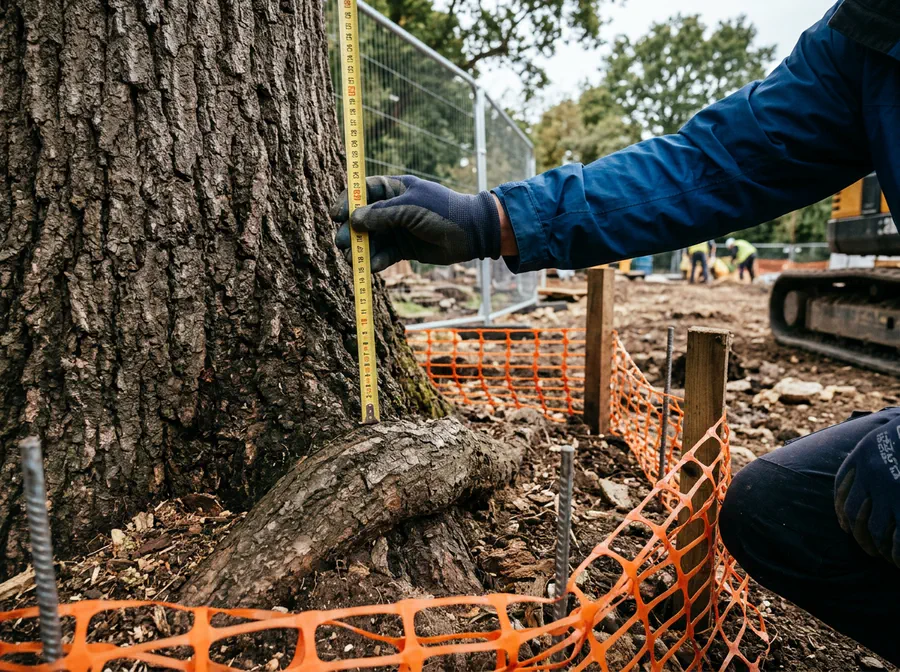
Conservation areas have separate protection. Trees above a minimum stem diameter, typically 75mm at 1.5m, are protected, and landowners usually need to give written notice before certain pruning works. This catches homeowners who assume a tree is unprotected because no TPO appears on the register.
Conservation area notice versus a TPO application
The conservation area process is a notification, not a consent application, but the council can still refuse or impose conditions within the six-week window. A TPO application is a formal determination. Procedures vary between authorities, so confirm the local requirement rather than assuming a neighbouring council’s process applies.
When you may not need permission to prune your tree
The exemptions are narrow. Some works to dead, dying or dangerous trees are exempt, and certain routine pruning of fruit trees can fall outside protection. Dangerous does not mean inconvenient, overhanging a shed, or dropping leaves into a gutter. If you are relying on an exemption, get it confirmed first.

How to apply for tree pruning permission
Identify the protected tree, decide the pruning specification, submit the TPO application or conservation area notice, then wait for the decision or for the notice period to expire. Starting work early creates enforcement risk that is difficult to unwind.
What to include in a TPO application or conservation area notice
Expect to provide a plan showing the tree, species and size, the proposed works, reasons, photos and contractor details. A clear pruning specification based on good arboricultural practice reduces delays and requests for further information.
What happens if you prune a protected tree without permission
Unauthorised pruning can lead to enforcement action, fines and requirements to replace or replant trees. The risk is almost always avoidable by checking protection and getting consent first.
When to use a tree survey or arboricultural consultant
Bring in a consultant for protected trees, complex pruning, planning conditions, conservation area sites, or applications needing supporting evidence. Subito’s Tree Surveys service can confirm protection status and prepare a clear pruning specification or tree report.
Frequently asked questions
Find out what's on your site before it becomes a problem.
Subito provides BS5837 tree surveys and arboricultural impact assessments for planning applications across England. If your site has old trees, we will identify them, assess them, and give you the information you need to design around them with confidence.