How eDNA Is Changing Ecology Surveys and What It Means for Your Planning Timeline
Environmental DNA testing is reshaping how protected species are detected on development sites. For developers frustrated by ecological survey delays, here is what the technology can and cannot do for your project.
If your development project has ever stalled waiting for an ecological survey window to open, you will understand the frustration. Bat surveys run from May to September. Great crested newt surveys require multiple visits between March and June. Miss the window and you wait a year. That kind of delay costs developers real money.
Environmental DNA, or eDNA, is a technology that is beginning to change this picture. It cannot remove seasonal constraints entirely, but it can compress timelines significantly for certain protected species assessments. Understanding what it does, where it works, and where its limits lie will help you plan your ecology programme more intelligently.
What eDNA actually is
Every living organism sheds genetic material into its surroundings. Fish leave DNA in the water they swim through. Newts shed it from their skin and eggs. Mammals deposit it in ponds and streams they visit. That genetic trace, collected from an environmental sample of water, soil, or sediment, is environmental DNA.
eDNA analysis works by collecting that sample, extracting the genetic material, and using laboratory techniques to identify which species left it behind. There are two main approaches. Targeted eDNA testing looks for the DNA of one specific species, confirming its presence or likely absence. eDNA metabarcoding casts a wider net, identifying entire communities of organisms from a single sample. Think of it as the difference between searching for one name in a phone book and reading every name on the page at once.
Both approaches are faster, less disruptive, and often cheaper than conventional field survey methods for the same species. Neither requires the species to be physically seen, caught, or handled. That matters particularly for legally protected species, where disturbing an animal without a licence is a criminal offence.
The established use case: great crested newts
The clearest example of eDNA changing planning timelines in the UK is the great crested newt. GCNs are a European protected species. Their presence on or near a development site is a material planning consideration, and establishing their presence or likely absence is a condition of many planning applications.
Conventional GCN surveys involve multiple site visits at night between March and June, using techniques including torchlight searches, bottle trapping, and egg searches. Depending on site conditions and the number of waterbodies involved, this process can require six visits over several weeks to reach a conclusion.
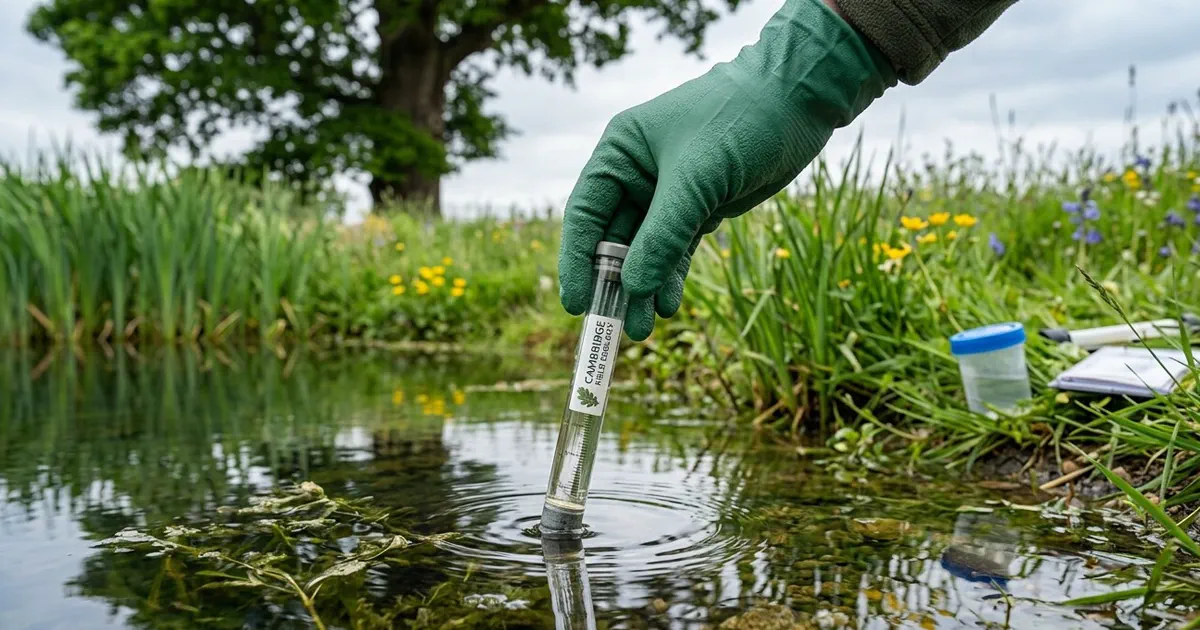
eDNA testing achieves the same result in a single visit. A licenced ecologist collects water samples from ponds and ditches within 500 metres of the site between mid April and the end of June. The samples go to an accredited laboratory. A result confirming presence or likely absence is returned, typically within a few days.
One visit instead of six
Negative results close the issue for two years
Positive results still need follow-up
Expanding applications
The established track record of GCN eDNA testing has opened the door to broader applications. Research and commercial practice are now extending eDNA into other protected species assessments relevant to UK planning.
Water vole surveys are one example. Water voles are a priority conservation species in the UK and their presence on a development site requires careful mitigation planning. Conventional water vole surveys rely on searching for field signs, which demands experienced ecologists and repeated visits. eDNA sampling from watercourses and ponds is increasingly used as a screening tool to confirm presence or likely absence quickly, reducing the survey programme needed before a planning decision can be made.
Metabarcoding of pond water has also been shown to detect a wide range of semi aquatic and terrestrial mammals from a single sample, including otters, field voles, and hedgehogs. Research has demonstrated that eDNA provides detection rates comparable to latrine surveys and camera trapping for certain species, but with far less field time.
Beyond mammals, eDNA metabarcoding is transforming how aquatic communities are assessed. Invertebrate communities are key indicators of freshwater habitat quality and play a significant role in habitat assessments submitted with planning applications. What previously required extensive physical sampling and specialist laboratory identification can now be achieved with a small water sample and a sequencing analysis.
What this means for your project timeline
The practical benefit for developers is not that eDNA removes the need for ecological surveys. It does not. It is that eDNA can resolve presence or absence questions faster, in fewer site visits, and sometimes outside the traditional survey season constraints of conventional methods.
On a site with multiple potential ecological sensitivities, a targeted eDNA programme completed early in the season can clear several protected species questions simultaneously. That narrows the list of issues that need conventional survey follow up, which in turn makes the overall ecology programme shorter and more predictable.
For projects where GCN surveys have previously added months to a planning timeline, eDNA offers a realistic route to compressing that process into a single April or May visit. That result then either closes the issue or triggers a proportionate conventional follow up, rather than locking the programme into a full season of repeated visits before the picture is clear.

The limits of eDNA in a planning context
eDNA is a powerful tool. It is not a universal shortcut, and a good ecologist will advise you clearly on where it applies and where it does not.

Positive results require follow-up
Planning authority acceptance varies
eDNA does not assess habitat
Combining eDNA with a well planned ecology programme
The most effective use of eDNA is as the opening move in a carefully sequenced ecology programme, not as a last minute alternative when conventional surveys have run out of time.
Commission a Preliminary Ecological Appraisal early
A PEA identifies which protected species are plausible on your site and which survey methods are appropriate for each.Schedule eDNA at the start of the window
Where eDNA is applicable, your ecologist can book it for the earliest point in the seasonal window, returning a result in time to close the issue or commission proportionate follow up in the same season.Plan from the outset, not when delays emerge
That approach delivers the timeline compression eDNA genuinely offers. Retrofitting it after conventional surveys have run out of time rarely recovers the same benefit.
Commission the PEA early and let your ecologist design the most efficient programme from that foundation.
Start your ecology programme with Subito
Subito provides Preliminary Ecological Appraisals, eDNA surveys for great crested newts, and the full range of protected species assessments needed to support planning applications across England. We will tell you clearly what your site needs, what eDNA can resolve, and how to plan your survey season to keep your project moving.