Emergency Tree Felling Without Permission: What's Legal
Felling a dangerous tree without permission is only lawful in narrow, urgent situations. Here's what the exemptions cover, what to document, and who to notify.
Emergency Tree Felling Without Permission: The Legal Starting Point
Emergency tree felling dangerous without permission is possible, but only in narrow, genuinely urgent situations. It is not a blanket exemption you can reach for when a consent decision is inconvenient. The landowner has to be able to show that danger was imminent and that only the necessary work was carried out. If you cannot demonstrate both, you are exposed.
This matters because the downside is not a stern letter. Unauthorised work on a protected tree can lead to prosecution, unlimited fines in the Crown Court, and a replanting order. On a live development, an enforcement case can stall a discharge of conditions or hold up a sale.
Is the Tree Actually Dangerous? Making the Emergency Call
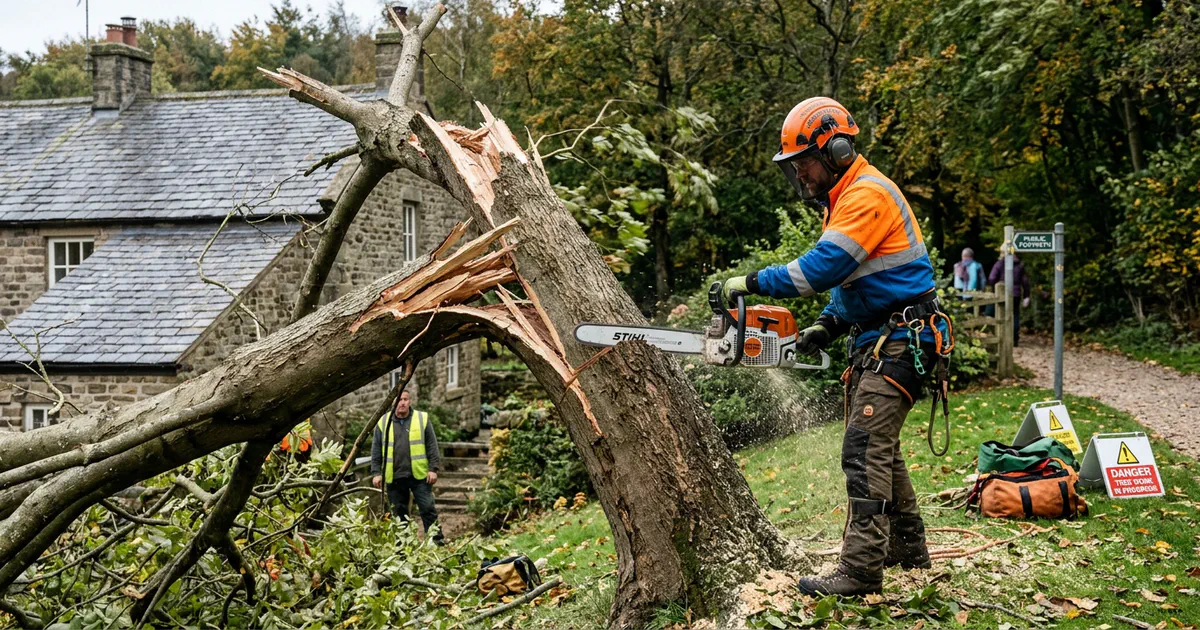
Imminent risk to people or property is a different thing from nuisance, overhang, deadwood or inconvenience. A tree dropping small deadwood over a garden is not an emergency. A mature ash with a fresh shear crack across the main stem, leaning toward a footpath used by schoolchildren, might be. Assess the target, the likelihood of failure and the severity of the consequence. If there is immediate public danger, call the emergency services and the local authority. Otherwise, get a qualified arboriculturist to look at it before anyone picks up a chainsaw.
Which Tree Protections and Permissions May Still Apply
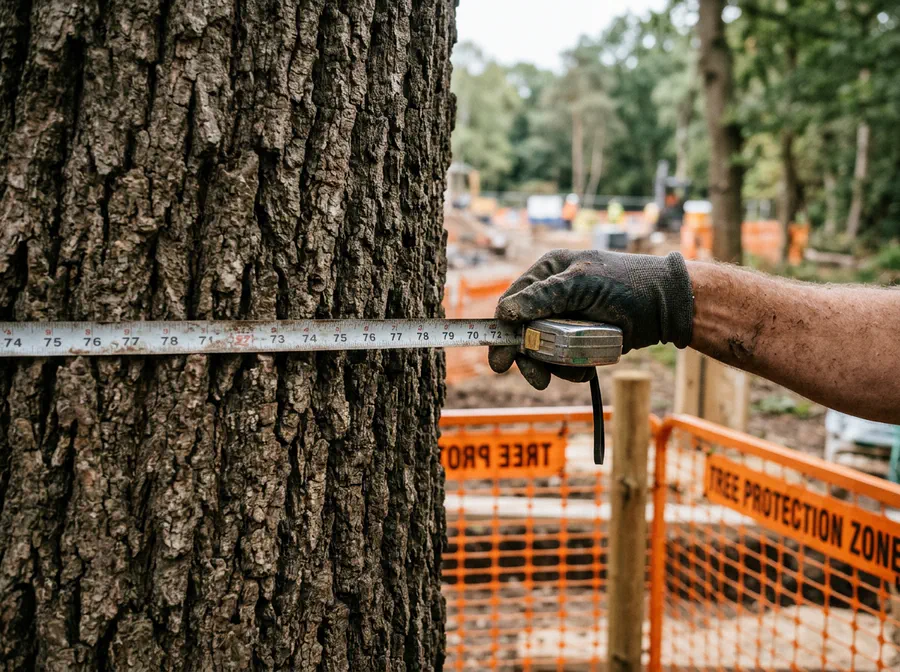
Tree Preservation Orders, conservation areas, felling licences and planning conditions can all affect a dangerous tree. Dangerous-tree exemptions exist in each regime, but they are worded differently and cover different things. A TPO exemption typically allows work to prevent danger, while a felling licence exemption has its own tests. Check with the local planning authority and the Forestry Commission where you can. If the tree is in a conservation area, give the authority notice as soon as practicable.
Felling licence threshold
What You Can Do Without Permission Under the Dangerous Tree Exemption
You can make safe or fell only where necessary to prevent danger, and no more than reasonably required. That might mean removing a split limb rather than the whole tree. It does not cover routine pruning, site clearance or works that could safely wait for consent. If the tree can be made safe by reducing it to a monolith and the consent process can run its course, that is what the exemption expects.
Documenting the Emergency Before, During and After Work
Capture photographs and video before anything is cut, with date and time stamps. Note the weather, the risk you identified, the targets, and why immediate action was needed. Record why a full felling, rather than pruning, was unavoidable. Keep contractor records, method statements and any arboriculturist’s advice. This evidence is what you will rely on if the authority asks questions later.

Who to Notify and What to Submit Afterwards
Contact the local authority tree officer as soon as possible. Make any retrospective TPO consent application or conservation area notification, and address felling licence or replanting requirements. Keep copies of everything you submit and note the dates. The authority will want to see that the work was proportionate, not that you have tidied up the paperwork after the fact.
Avoiding Enforcement: Common Pitfalls and How a Tree Survey Helps
Common mistakes include felling without evidence, removing healthy trees alongside the dangerous one, ignoring planning conditions, and failing to notify the authority. A pre-emptive tree survey or risk assessment from a Tree Surveys consultant gives you a documented baseline, clearer evidence if an emergency arises, and better compliance. It is cheaper than an enforcement case.
Frequently asked questions
Find out what's on your site before it becomes a problem.
Subito provides BS5837 tree surveys and arboricultural impact assessments for planning applications across England. If your site has old trees, we will identify them, assess them, and give you the information you need to design around them with confidence.