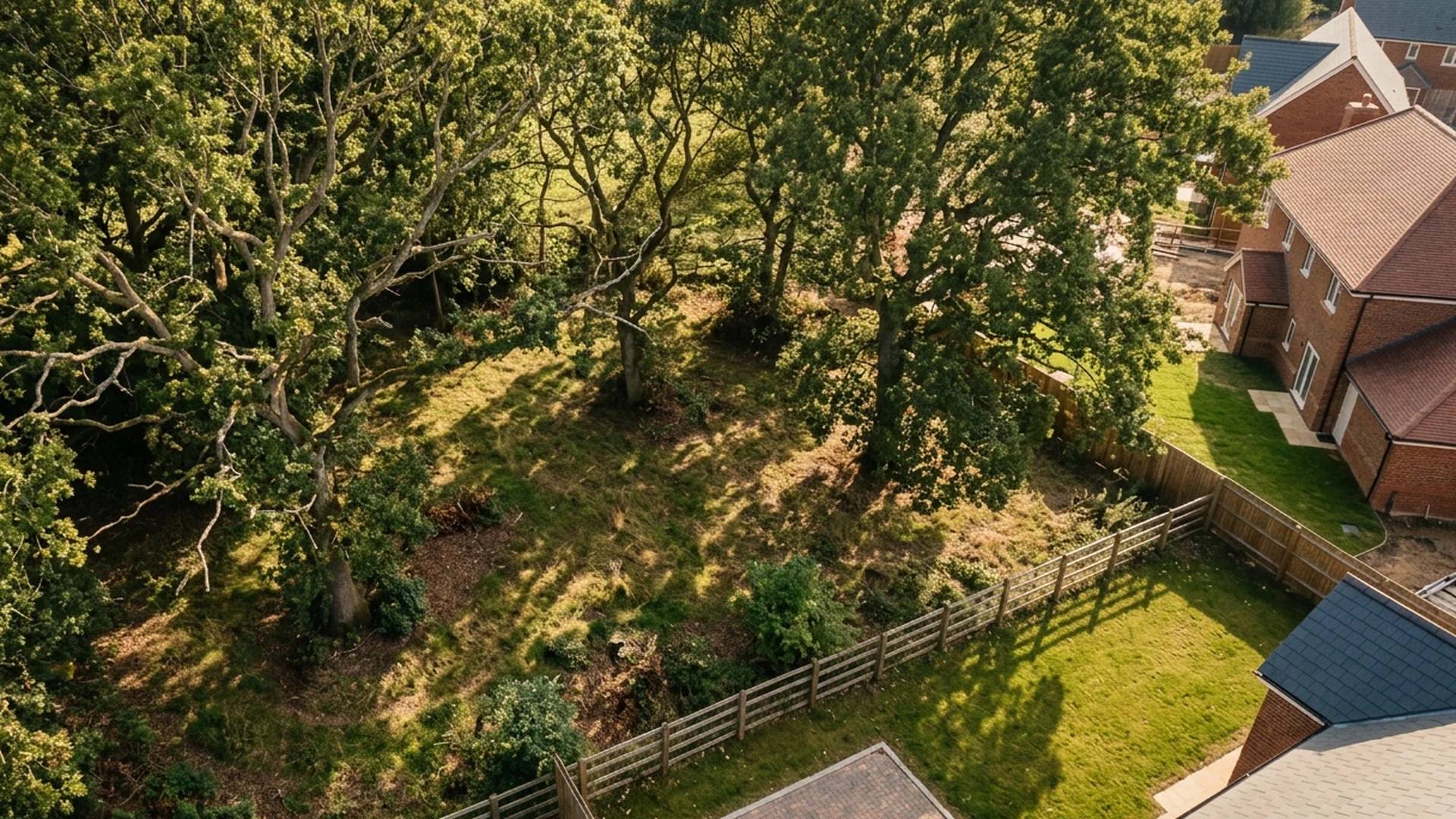
Hidden Costs After the Tree Survey: Root Barriers, No-Dig and Supervision
Tree surveys flag constraints, not costs. Root barriers, no-dig construction and arboricultural supervision fees often appear later in the budget. Here is how to plan for them.
Hidden Costs After the Tree Survey: What the Report Does Not Price
A tree survey tells you what you can and cannot build around. It does not tell you what that permission costs to deliver. The report identifies constraints, root protection areas and recommendations, but root barriers, no-dig construction and arboricultural supervision are implementation items that land in the construction budget weeks or months later. For developers, planning consultants, architects and landowners working to a fixed appraisal, that gap is where margins disappear.
Why Arboricultural Recommendations Become Construction Costs
A tree protection plan is a drawing. Delivering it means physical works: fencing, ground protection, barriers, no-dig surfaces and, on many sites, a watching brief. Planning conditions then lock those recommendations into the consent, so they become compliance obligations rather than optional extras. Survey fees cover assessment and reporting. Post-survey costs cover specification, installation, inspection and sign-off, and they are usually procured from different contractors on different timescales.
Where the money sits
Root Barrier Costs: Specification, Installation and Site Constraints
Root barriers are required where excavation or new hard surfacing would otherwise sever roots inside a root protection area. They are rarely a simple linear metre rate. A quoted £40 to £80 per linear metre can double once trenching, hand digging, root pruning and soil handling are added.
Root Barrier Types, Materials and Design Fees
Permeable barriers allow some moisture movement and suit many residential schemes. Impermeable barriers are used where roots must be deflected permanently, often near services or foundations. Recycled polymer panels are cheaper per metre than proprietary systems but may need thicker sections to meet the same deflection criteria. Proprietary systems come with manufacturer details, which reduces design risk but adds cost. Structural design or specification input from an engineer or arboriculturist is a separate fee, typically £400 to £1,200 depending on complexity.
Installation, Excavation and Access Extras
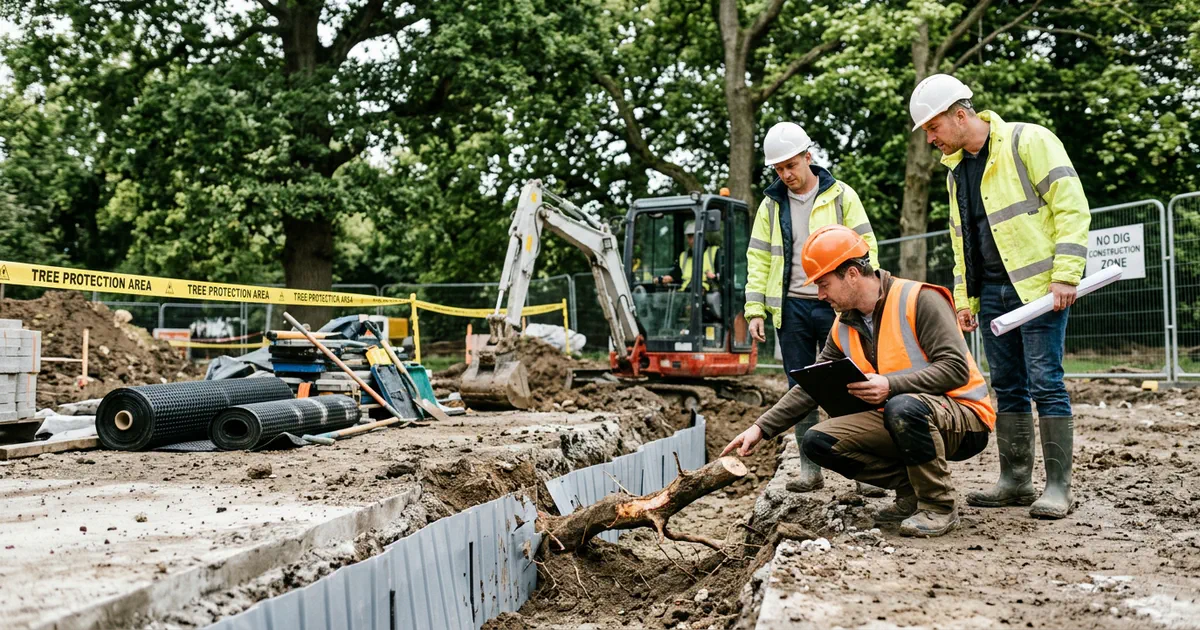
Trenching inside a root protection area is usually hand dug, which is slower and more expensive than machine excavation. Root pruning must be supervised and cut cleanly. Soil handling and disposal add haulage. Traffic management, restricted access and contingency for unexpected roots or buried services all push the rate up. On tight urban sites, a 30 linear metre barrier can easily exceed £6,000 installed.
No-Dig Construction Costs: Surfaces, Piles and Contractor Uplift
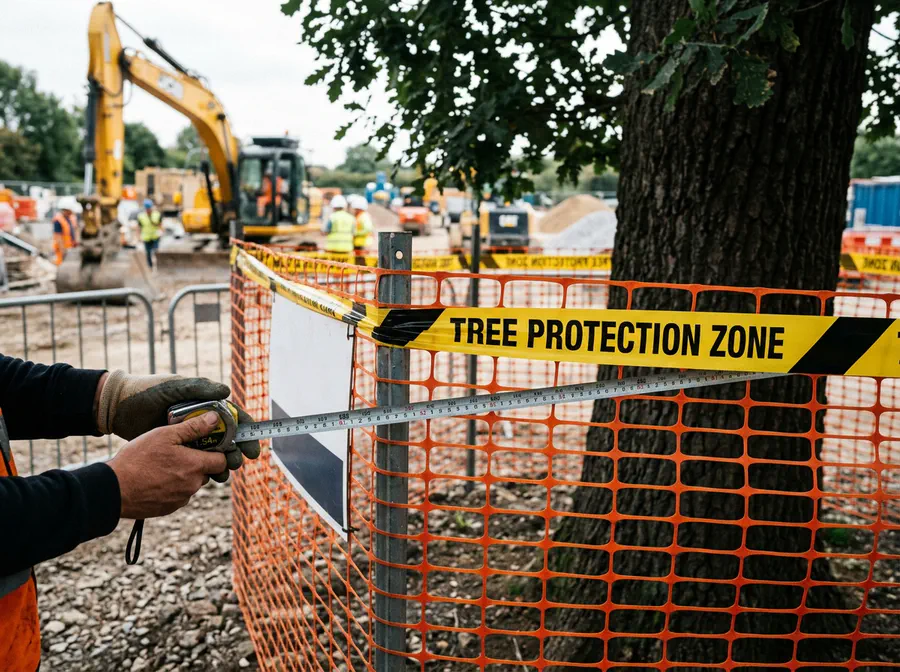
No-dig methods avoid root damage by keeping loads above the root zone or transferring them to deeper bearing strata. They carry a premium over standard construction, and that premium is rarely captured in a planning-stage budget.
No-Dig Surfacing, Cellular Systems and Piled Foundations
No-dig driveways and paths use cellular confinement systems, geogrids or three-dimensional paver systems over a granular base. Costs run from £80 to £180 per square metre installed, against £40 to £70 for standard paving. Piled foundations within a root protection area, including screw piles and mini-piles, can add £150 to £400 per pile plus rig mobilisation. Rafts and reinforced slabs are alternatives where piling is not viable.
Design Changes, Engineering Input and Mobilisation
Structural engineer fees for no-dig or piled solutions typically start around £1,500 and rise with complexity. An arboricultural method statement is often required as a condition, adding £500 to £1,500. Specialist contractors are in short supply, so availability drives programme. Small-works mobilisation can add £1,000 to £3,000 even for a modest installation.
Arboricultural Supervision Cost No Dig: Fees, Frequency and Sign-Off
Arboricultural supervision cost no dig is one of the most commonly underestimated items. It is almost always separate from the initial tree survey and is charged per visit, per hour or as a retainer. Typical rates run from £350 to £650 per visit, or £75 to £120 per hour, with retainers negotiated for longer programmes.

What Drives Supervision Visit Numbers and Duration
Pre-commencement meetings, tool-box talks, watching briefs during excavation, no-dig installation inspections and completion sign-off all count as visits. A simple no-dig driveway might need three visits. A phased scheme with piling, barriers and multiple access points can need ten or more.
Reporting, Revisits and Compliance Evidence
Each visit generates site notes, photographs and a supervision log. Revisits caused by contractor sequencing or delays are chargeable. Consultants with limited availability may charge a premium for short-notice attendance, and evidence packs for condition discharge are often a separate line item.
Hidden Cost Overlaps: When Root Barriers, No-Dig Works and Supervision Combine
The three items interact. A root barrier may require a no-dig surface above it, and both require supervision to satisfy the condition. Each element adds design coordination, programme risk and cost that a single survey quote will not show.
Design Coordination and Programme Delays
Redesign fees, consultant coordination and waiting for specialist contractors all add cost. If supervision is not booked early, works stall and the programme slips. On constrained sites, a two-week delay can cost more than the supervision itself.
Validation, Planning Conditions and Discharge Fees
Evidence packs, condition discharge applications and local authority queries all carry fees. Additional arboricultural input after works start, such as responding to a council query or providing a revised method statement, is usually chargeable at hourly rates.
How to Budget for Post-Survey Arboricultural Costs
Budget for these items at appraisal stage, not after tender. Treat them as construction costs with professional fees attached, and build in contingency.
Requesting Fee Proposals and Clarifying Exclusions
Ask for fixed fees where scope is clear and time-based rates where it is not. Check what is excluded from contractor quotes: arboricultural method statements, supervision, root pruning and disposal are common omissions. Compare arboricultural fee proposals on scope, visit numbers and reporting, not headline rate alone.
Contingency Levels and Cash Flow Timing
Allow 10 to 15 percent contingency on root barrier and no-dig packages, and 20 percent where ground conditions are uncertain. Supervision fees typically fall due at pre-commencement, during works and at sign-off, so cash flow them across the programme rather than treating them as a single payment.
Procurement Questions and Next Steps for Budget Holders
Ask the right questions before you commit to a budget. The answers will tell you whether your appraisal is realistic.
Questions to Ask Your Arboricultural Consultant
Ask how many supervision visits the scheme is likely to need, whether no-dig specifications are included, who details root barriers, and whether condition discharge support is in the fee. Ask what happens if works overrun.
Turning Tree Survey Recommendations into a Costed Delivery Plan
Convert each recommendation into a line item with a quantity, a rate and a responsible party. That single exercise turns a survey report into a delivery plan, reduces variation orders and stops abortive works before they start.
Frequently asked questions
Find out what's on your site before it becomes a problem.
Subito provides BS5837 tree surveys and arboricultural impact assessments for planning applications across England. If your site has old trees, we will identify them, assess them, and give you the information you need to design around them with confidence.