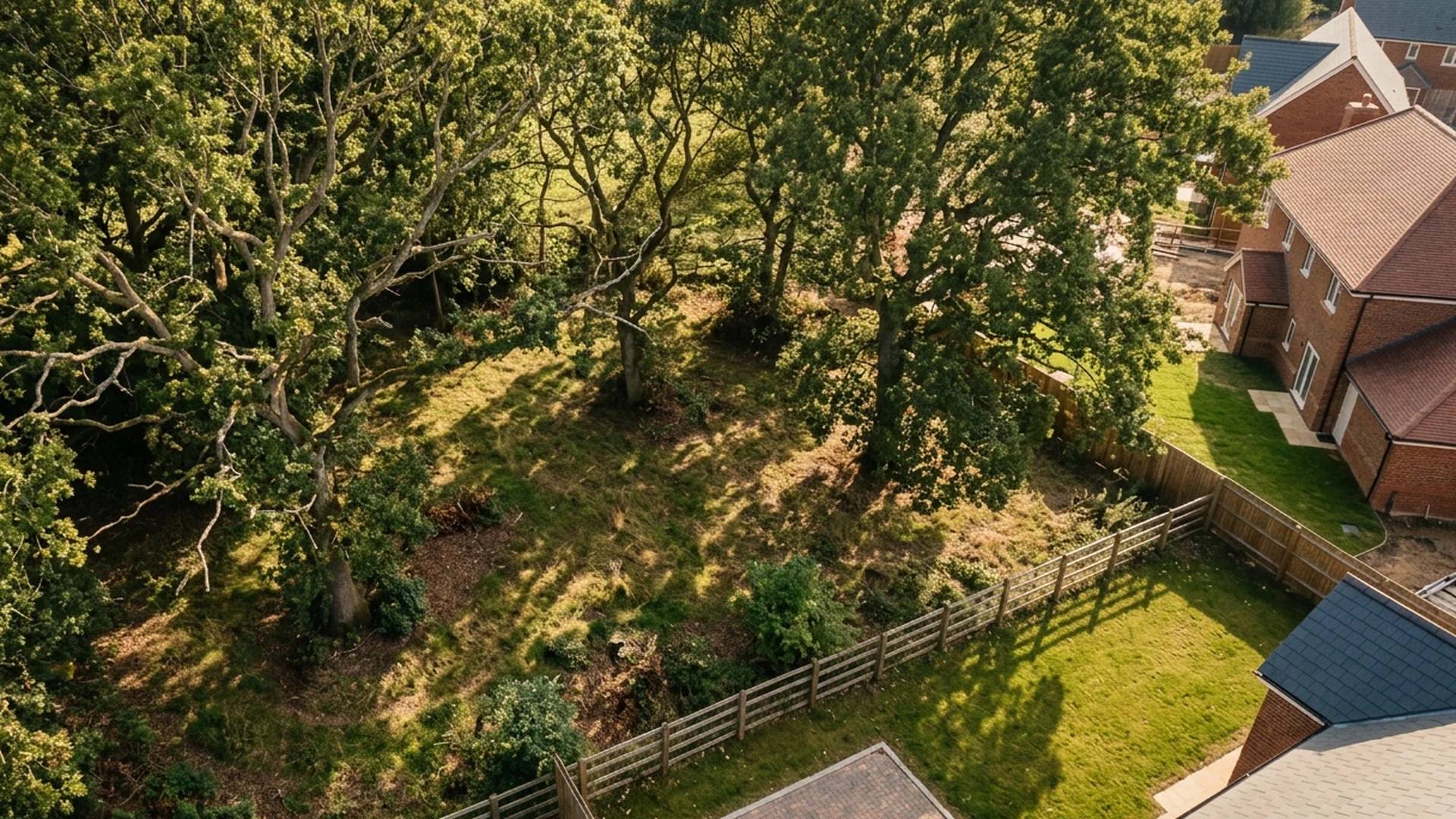
How to Brief an Arboricultural Consultant Properly
A vague brief leads to rework, delays, and abortive fees. Learn exactly what to tell your arboricultural consultant before the first site visit.
Why a Vague Brief Costs You More Than the Consultant’s Fee
When a tree survey report comes back requiring significant revision, the instinct is often to treat it as a consultant problem. In practice, the root cause is usually an incomplete brief. The consultant surveyed what they thought was needed, wrote to the scope they assumed was correct, and produced a document that does not match what the case officer or the design team actually requires.
The consequences are not trivial. A report that needs reworking delays the planning submission, which in turn delays the programme. If the submission window closes or a committee date is missed, the knock on effect can run to weeks or months. Abortive fees accumulate on both sides: the consultant charges for the additional work, and the planning consultant or architect absorbs time spent managing the revision cycle. In some cases, the original survey fieldwork has to be repeated because the scope was wrong from the outset, not just the written output.
None of this is inevitable. A precise written brief, issued before the first site visit is booked, removes the ambiguity that causes these problems. The sections below explain exactly what that brief should contain and why each element matters.
Start With the Planning Context, Not Just the Site Address
The single most common omission from a brief is the planning context. Sending a site address and asking for a tree survey tells the consultant almost nothing about what the report needs to achieve. The local planning authority, the application type, any pre application advice received, and the specific policy or condition driving the requirement are all essential inputs before the scope can be set.
Different LPAs have different expectations. Some have adopted supplementary planning documents that specify the format and content of arboricultural reports. Others have case officers who routinely request additional information that is not strictly required by BS 5837 but has become standard practice within that authority. A consultant who knows which LPA they are working within can calibrate the report accordingly from the outset.
The application type also shapes the scope. A householder application for a rear extension sits in a very different risk category from a full planning application for thirty units on a greenfield site with a mature tree belt along the boundary. Pre application advice, if it has been received, is particularly valuable: if a case officer has already indicated that a specific output will be required, that instruction should be passed directly to the consultant rather than filtered or paraphrased.

Confirm Which British Standard or Guidance Document Applies
Arboricultural and ecology consultants work across several different standards and guidance documents, and they do not all apply to every project. Assuming the consultant will automatically know which one is relevant to your instruction is a common source of scope error.
BS 5837 scope
BS 8596, by contrast, covers the surveying of trees for bat roosts and is an ecology output rather than an arboricultural one. Where a project requires both a BS 5837 tree survey and a bat roost assessment, these are separate commissions with separate methodologies, even if the same consultant is capable of delivering both. Conflating them in the brief, or leaving it unstated which standard applies, creates confusion about deliverables and fees from the start.
Other guidance documents, such as the Forestry Commission’s guidance on ancient woodland or Natural England standing advice on veteran trees, may also be relevant depending on the site. The architect or planning consultant should specify the standard or guidance document they expect the report to reference, rather than leaving that determination entirely to the consultant.
Define the Deliverables, Not Just the Survey Type
Asking for a tree survey is not the same as specifying what you need. Under BS 5837, a full arboricultural commission for a development project typically involves several distinct outputs, and each one serves a different purpose in the planning process.
Pre application outputs
Submission stage outputs
A brief that asks for a tree survey without specifying which of these outputs is required will typically result in a first draft that covers some but not all of what the LPA expects. The consultant may produce a survey schedule and constraints plan without an impact assessment, or may write a combined report that does not separate the assessment from the method statement in the way the case officer requires. Naming the specific deliverables in the brief eliminates this ambiguity entirely.
Share the Design Drawings Early, Even If They Are Not Final
One of the most avoidable causes of report rework is the consultant writing an arboricultural impact assessment without having seen the proposed design. Without the site layout, section drawings, and proposed levels, the consultant cannot assess where root protection areas conflict with foundations, drainage runs, or hard standing. They can describe the trees. They cannot assess the impact of the development on those trees.

The concern about sharing drawings that are not yet finalised is understandable but misplaced. The consultant does not need a completed design. They need enough information to identify where conflicts exist so that the design can be refined before the report is written, rather than after. Providing the latest iteration of the site layout, even at an early stage, allows the consultant to flag root protection area encroachments, identify trees that the current design cannot retain, and advise on layout changes that would improve the arboricultural outcome. That conversation is far less costly when it happens before the report is drafted than when it happens in response to a case officer’s holding objection.
Tell the Consultant What the Programme Requires
Arboricultural and ecology surveys are not always available on demand. Some outputs have seasonal constraints that directly affect when fieldwork can be carried out, and a consultant who does not know your submission deadline cannot tell you whether the programme is achievable.
Bat roost assessments, for example, have defined survey seasons. Emergence and re entry surveys for bats must be carried out between May and October, with the core season running from May to August. If a project requires both a BS 5837 tree survey and a bat roost assessment, and the brief is issued in September, the consultant needs to know the submission deadline immediately in order to advise whether the ecology work can be completed in time or whether a phased submission is necessary.
Phasing requirements also affect the scope of the arboricultural method statement. If the development is being built in phases, the method statement needs to address each phase separately, including the management of tree protection measures during the transition between phases. A consultant who does not know about phasing until the first draft is complete will need to restructure the document, not simply add a paragraph.
The brief should state the target submission date, any known committee dates, and whether the development is phased. That information allows the consultant to plan fieldwork, allocate time for report writing, and flag any programme risks before they become problems.
How to Structure the Brief as a Single Reference Document
A well formed brief does not need to be long. It needs to be complete. The goal is a single document that the consultant can read once and then mobilise without needing to chase information.
Establish the planning context
Open with the site address, the LPA, the planning reference if one exists, the application type, and any pre application advice received. Include the specific policy or condition that is driving the arboricultural requirement so the consultant understands what the report needs to satisfy.Specify the standard and the deliverables
State which British Standard or guidance document applies and list the specific outputs required by name: tree survey schedule, tree constraints plan, arboricultural impact assessment, arboricultural method statement, or a combined report. Do not leave this to assumption.Attach the design drawings
Include the latest site layout, any section drawings, and proposed levels information. Note the drawing revision numbers and confirm whether further design changes are anticipated, so the consultant knows whether to expect an updated set before writing begins.State the programme
Give the target submission date, any committee dates, and whether the development is phased. If there are known ecology constraints such as a bat survey requirement, flag them here so the consultant can advise on survey season implications immediately.
Beyond these core elements, the brief should note any known site constraints that may affect the survey: access restrictions, third party land ownership affecting trees near the boundary, existing tree preservation orders or conservation area designations, and any previous arboricultural reports that have already been prepared for the site. If a previous report exists, share it. The consultant should not be reconstructing information that has already been gathered.
A brief structured in this way gives the consultant everything they need to confirm the scope, agree the fee, and plan the fieldwork in a single exchange. It removes the back and forth that delays mobilisation and eliminates the assumptions that lead to a first draft that misses the mark.
Frequently asked questions
Find out what's on your site before it becomes a problem.
Subito provides BS5837 tree surveys and arboricultural impact assessments for planning applications across England. If your site has old trees, we will identify them, assess them, and give you the information you need to design around them with confidence.