Inherited Land With Old Trees: What to Check First
Bought or inherited land with old trees? Check ownership, TPOs, conservation areas and ecology before any work. A tree survey baseline protects you from costly mistakes.
Inherited Land With Old Trees: What to Check First Before Any Work
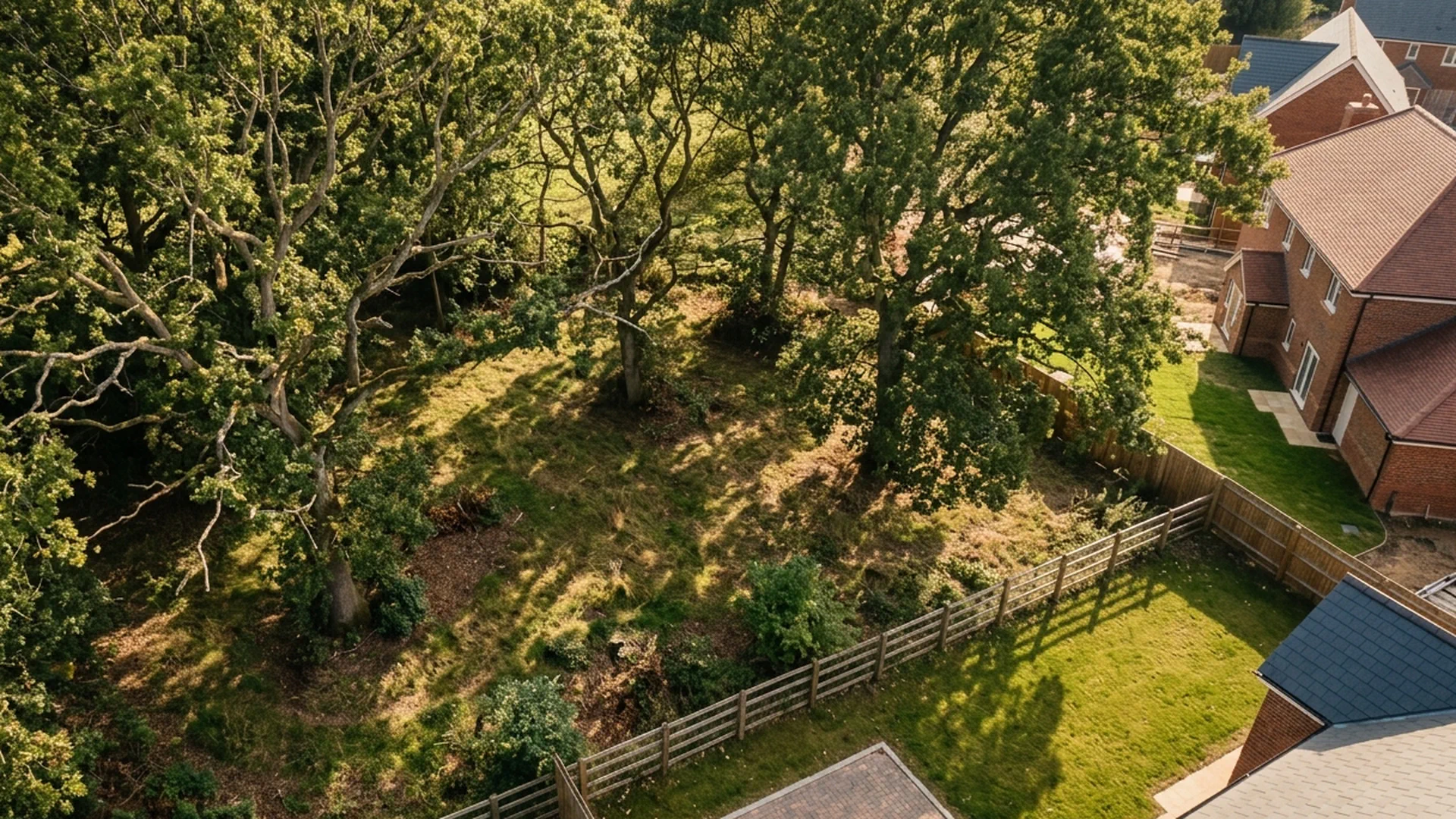
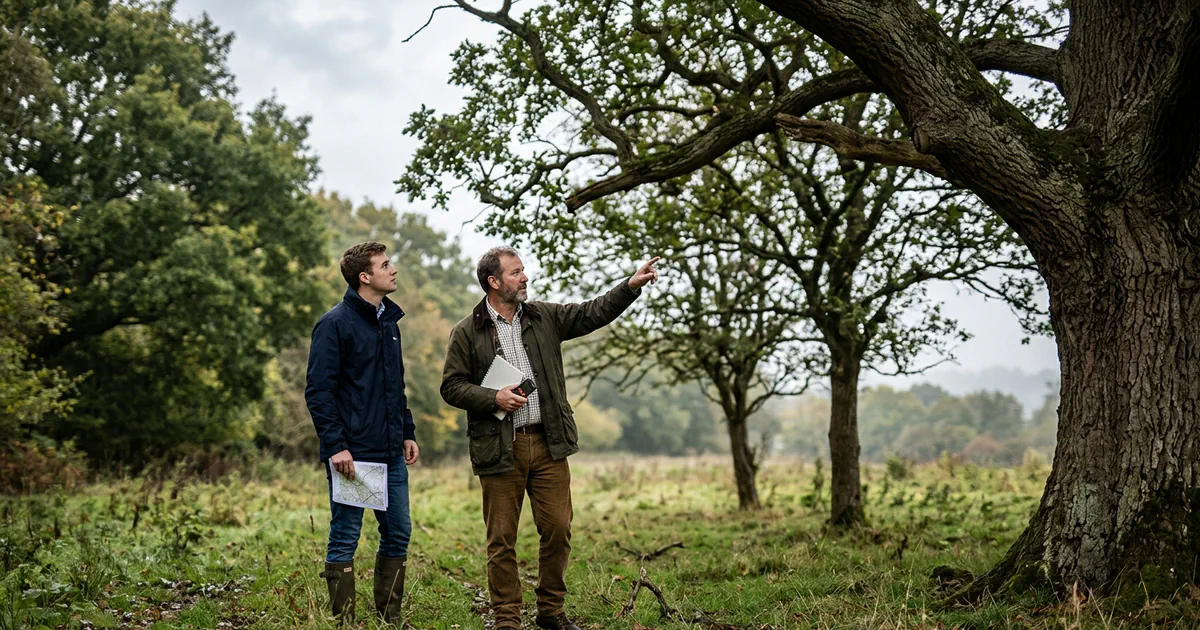
Old trees on land you have just acquired can be an asset or a liability, and the difference usually comes down to what you do in the first few weeks. Instruct a contractor to tidy up before the checks are done and you risk a planning enforcement notice, a wildlife offence, or a liability claim you did not see coming. The order below is deliberate. Work through it before anyone puts a saw to a branch.
Check the Title Deeds, Property Pack and Boundary Plans for Tree-Related Clauses
Start with the paperwork, not the trees. The title plan tells you which trunks are actually yours, and boundary trees are a common source of expensive disputes when a neighbour claims ownership of a mature oak the previous owner always maintained. Read the property pack for covenants, easements and rights of access. Tree schedules occasionally appear in transfers or leases, and they can impose positive obligations to maintain or restrictions on removal. If a covenant requires you to keep a hedge or tree at a certain height, that obligation survives the purchase.
Search for Tree Preservation Orders and Conservation Area Status
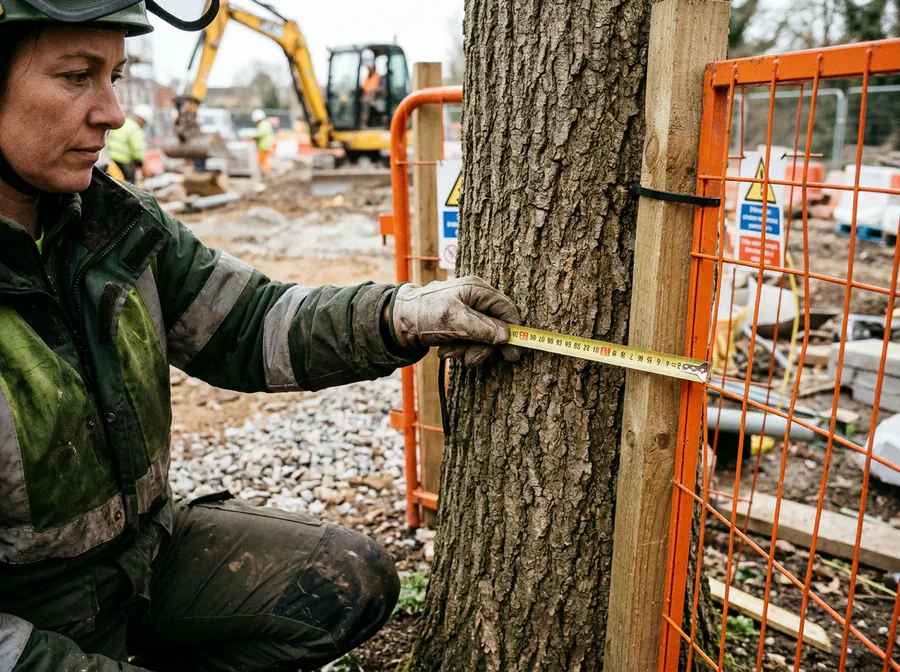
Ask the local planning authority in writing whether any TPOs or conservation area designations affect the land. Online maps are a useful first pass but they are not authoritative, and TPO boundaries are sometimes drawn loosely around groups of trees. In a conservation area, you must give six weeks’ notice before felling or pruning any tree with a trunk diameter over 75mm at 1.5m, and consent is needed for works to protected trees even where the pruning is minor.

Look Beyond Planning: Ancient Woodland, Veteran Trees and Wildlife Protections
Planning status is only half the picture. Check the Ancient Woodland Inventory and the local authority’s veteran tree records. Ancient woodland is effectively irreplaceable, and its loss is a material planning consideration even where no statutory designation applies. Then consider species. Bats roost in mature trees, and all bat species are protected, so a roost check by a licensed ecologist may be needed before any work. Nesting birds are protected while a nest is in use, which in practice rules out most tree work between March and August.
Nesting season window
Understand Safety, Liability and Insurance Before You Manage Old Trees
Old trees fail. Limbs drop, trunks hollow, and roots heave paving. As landowner you owe a duty of care to visitors and neighbours, and occupiers’ liability cover should be confirmed before you take possession. Walk the site and photograph anything obviously hazardous, such as a hanging limb over a footpath or a leaning tree near a boundary. Do not act on a hunch. Get advice before felling a tree you think is dangerous, because a rushed removal can create a liability problem rather than solve one.
Commission a Tree Survey or Arboricultural Assessment to Establish a Baseline
A tree survey records species, dimensions, condition, age class, safety issues and site constraints. This baseline is what you will refer back to for years, and it is not the same as a mortgage or valuation report, which lenders use for a different purpose and which rarely contains the detail you need. Expect a survey to flag things like included bark unions, decay cavities and root plate disturbance that a visual walkover would miss.
Scope the survey
Confirm whether you need a basic condition survey or a full BS 5837 survey for development.Book the site visit
Allow access to all boundaries and note any trees you cannot reach.Review the report
Check recommendations against your plans before instructing any contractor.
Review Planning Constraints and Any Development Aspirations for the Land
If development is even a possibility, check the local plan designations, permitted development rights, past applications and access arrangements now. An early BS 5837 tree survey informs layout and feasibility, and it is far cheaper to commission before a scheme is drawn than after. A root protection area that clips a proposed driveway can force a redesign, and discovering that at pre-application stage saves months.
Decide What You Can Safely Do Now, and What Must Wait for Specialist Advice
Until the statutory and ecological checks are complete, avoid felling or pruning except for genuine emergencies such as a tree that has partially failed and is blocking access. Appoint an arboriculturist where the survey flags structural concerns, keep dated photographic records of the site as you found it, and verify any contractor’s insurance and qualifications before they start. The trees have stood for decades. A few weeks of patience now is cheaper than an enforcement notice later.
Frequently asked questions
Find out what's on your site before it becomes a problem.
Subito provides BS5837 tree surveys and arboricultural impact assessments for planning applications across England. If your site has old trees, we will identify them, assess them, and give you the information you need to design around them with confidence.