Inherited Tree Survey Validity for New Land Owners
Buying a plot with an existing tree survey? Learn when it's still valid, what it can't tell you, and why a fresh survey may be the only safe option.
The scenario: you’re buying a plot with an existing tree survey
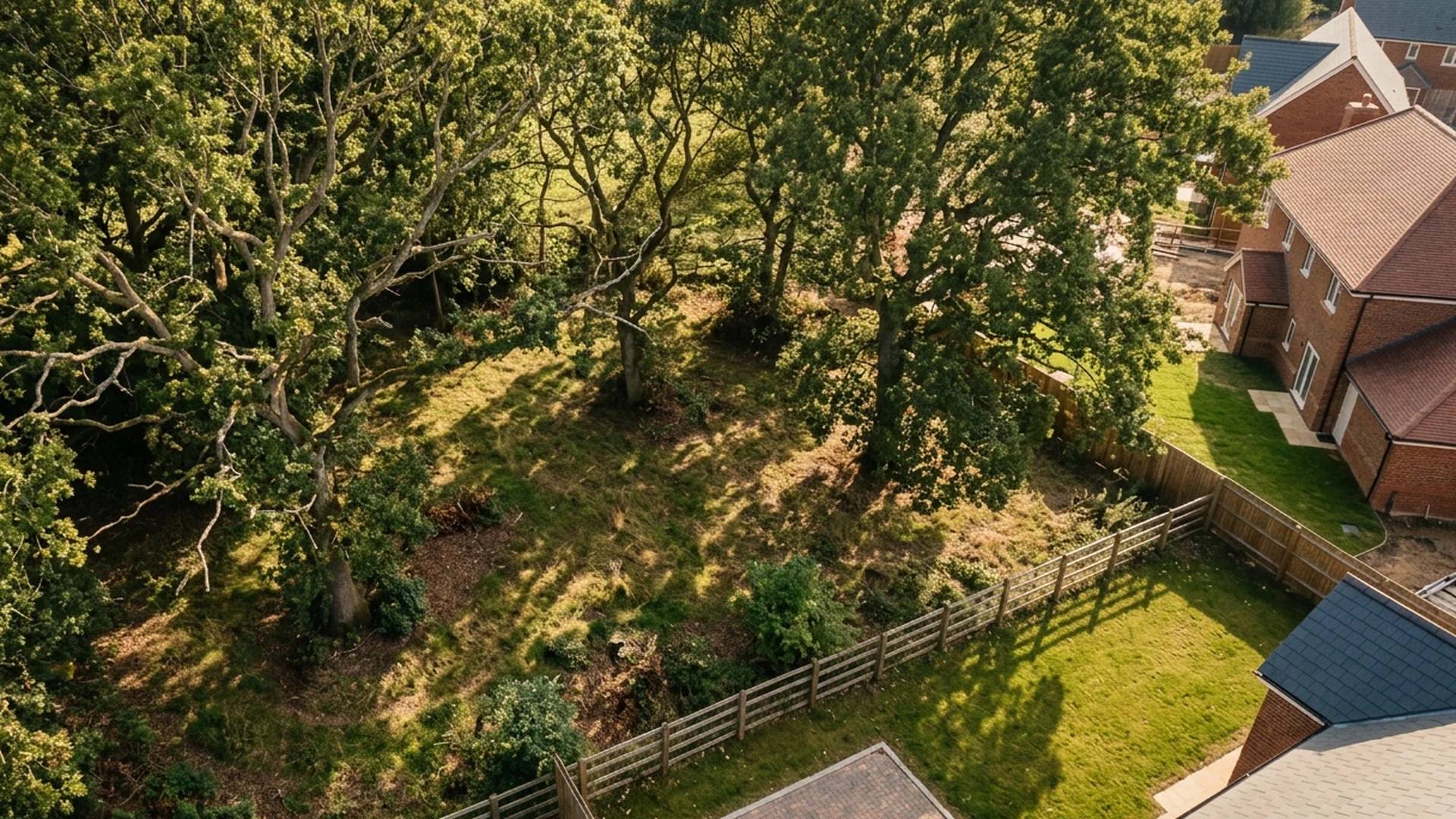
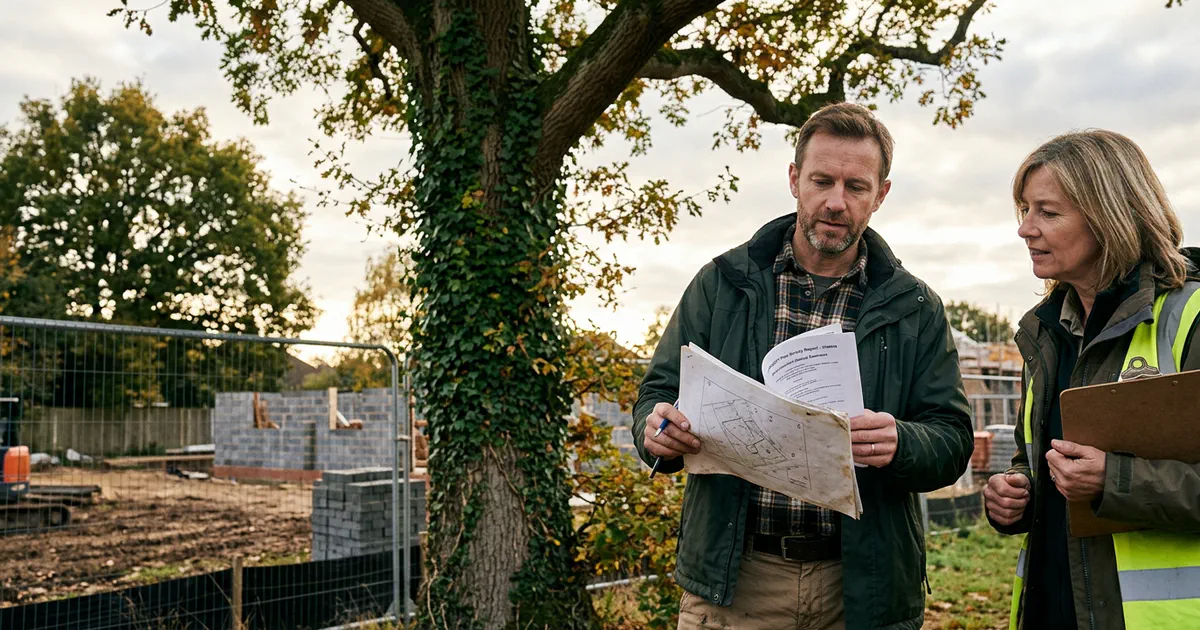
You’re weeks from exchange on a plot that looks perfect for your development. The vendor’s solicitor hands over a due diligence pack, and there it is: a tree survey, complete with a tree constraints plan, carried out 18 months ago. It feels like a win, one less thing to sort. But that document was prepared for someone else, for a different purpose, and possibly under a different version of the British Standard. If you rely on it to shape your layout or support a planning application, you could be building on sand. The cost of getting this wrong isn’t just a rejected application; it’s redesign fees, delayed starts, and potentially a tree that fails because its root protection area was miscalculated.
What an inherited tree survey can and cannot tell you
A standard tree survey records the basics: tree numbers, species, dimensions, condition, and a BS5837 category grade (A, B, C, or U). That data is factual, a snapshot of the trees on a specific date. What it cannot tell you is whether those trees are still in the same condition today, whether the root protection areas (RPAs) have been compromised by recent groundworks, or whether the surveyor’s recommendations align with your proposed layout. The advice sections, such as retention priorities or mitigation measures, are time-sensitive and tied to a particular planning context. A survey that was perfect for a previous applicant’s scheme may be irrelevant to yours.
Key factors that determine inherited tree survey validity for a new owner
Age of the survey and BS5837 updates
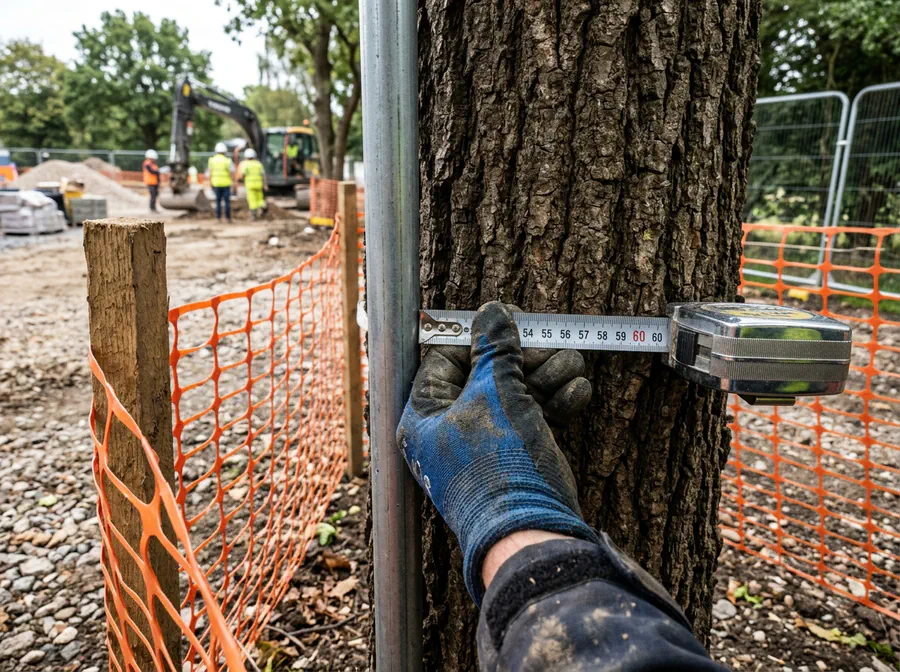
Trees change. A healthy specimen can develop decay, storm damage, or disease within a single season. Root protection areas are calculated from stem diameter, which increases over time, altering the RPA on the ground. BS5837 has also been revised, most recently in 2012, and older surveys may not reflect current guidance on RPA calculation or category grading. If your survey predates the current edition, planning authorities may reject it outright.
Site changes and ground disturbance since the survey
What has happened on site since the surveyor walked it? If the vendor has cleared vegetation, stripped topsoil, or run heavy machinery over the root zones, the original findings are no longer accurate. Soil compaction alone can reduce root function and stability, turning a category B tree into a category C risk. Even a dry summer can stress trees, making them more susceptible to failure. Without a re-inspection, you’re guessing.
Original purpose, scope, and limitations of the instruction
A survey commissioned for a previous development proposal may have been scoped to a specific layout, with trees outside the red line ignored. The original surveyor’s terms of engagement often include caveats that limit use by third parties, and the duty of care runs to the original client only. You cannot assume the report is transferable, and the surveyor owes you no duty unless formally reassigned or freshly instructed.
Liabilities, limitations, and the original surveyor’s remit
Professionally, a surveyor’s liability is to the client who commissioned the work. If you rely on an inherited survey and something goes wrong, you have no recourse against the original surveyor. They may not even be insured for a claim from a third party.

When a new tree survey is the only safe option
Commission a fresh survey if any of these apply: the existing survey is more than 12 months old, the site has been altered since it was carried out, your proposed layout differs from the original scope, or you intend to rely on the survey to support a planning application or comply with conditions. A re-inspection may be sufficient if the changes are minor, but a full new survey is the only way to get legally defensible data that you can own.
Due diligence checklist for land buyers
Before you exchange, ask the vendor or their agent these questions:
- What is the exact date of the survey, and which edition of BS5837 was used?
- What was the original purpose of the instruction, and does it match your proposed use?
- Have any site works, vegetation clearance, or ground disturbance occurred since the survey date?
- Are there any caveats in the surveyor’s terms that limit third-party reliance?
- Does the survey include all trees relevant to your proposed layout, or only those within a previous red line?
- Has the surveyor been asked to re-inspect, or is a fresh survey needed to provide reliable, current data?
Getting answers now can save you from a costly redesign later. If in doubt, a re-inspection is a small price compared to the risk of building on assumptions that no longer hold.
Frequently asked questions
Find out what's on your site before it becomes a problem.
Subito provides BS5837 tree surveys and arboricultural impact assessments for planning applications across England. If your site has old trees, we will identify them, assess them, and give you the information you need to design around them with confidence.