Long Term Crown Cover Assessment: The BS5837 Requirement Developers Are Missing
Long term crown cover assessments under BS5837 are now expected by many LPAs. Here's what the work involves, what it costs, and when to commission it.
What Is a Long Term Crown Cover Assessment Under BS5837?
BS5837:2012 — the British Standard guiding trees in relation to design, demolition, and construction — sets out a framework for identifying, evaluating, and protecting trees on and adjacent to development sites. Most developers are familiar with the tree survey, tree constraints plan, and arboricultural impact assessment that flow from it. What is less well understood is the standard’s expectation that the long-term contribution of trees to the developed landscape should be considered, not just their current condition or their survival through the construction phase.
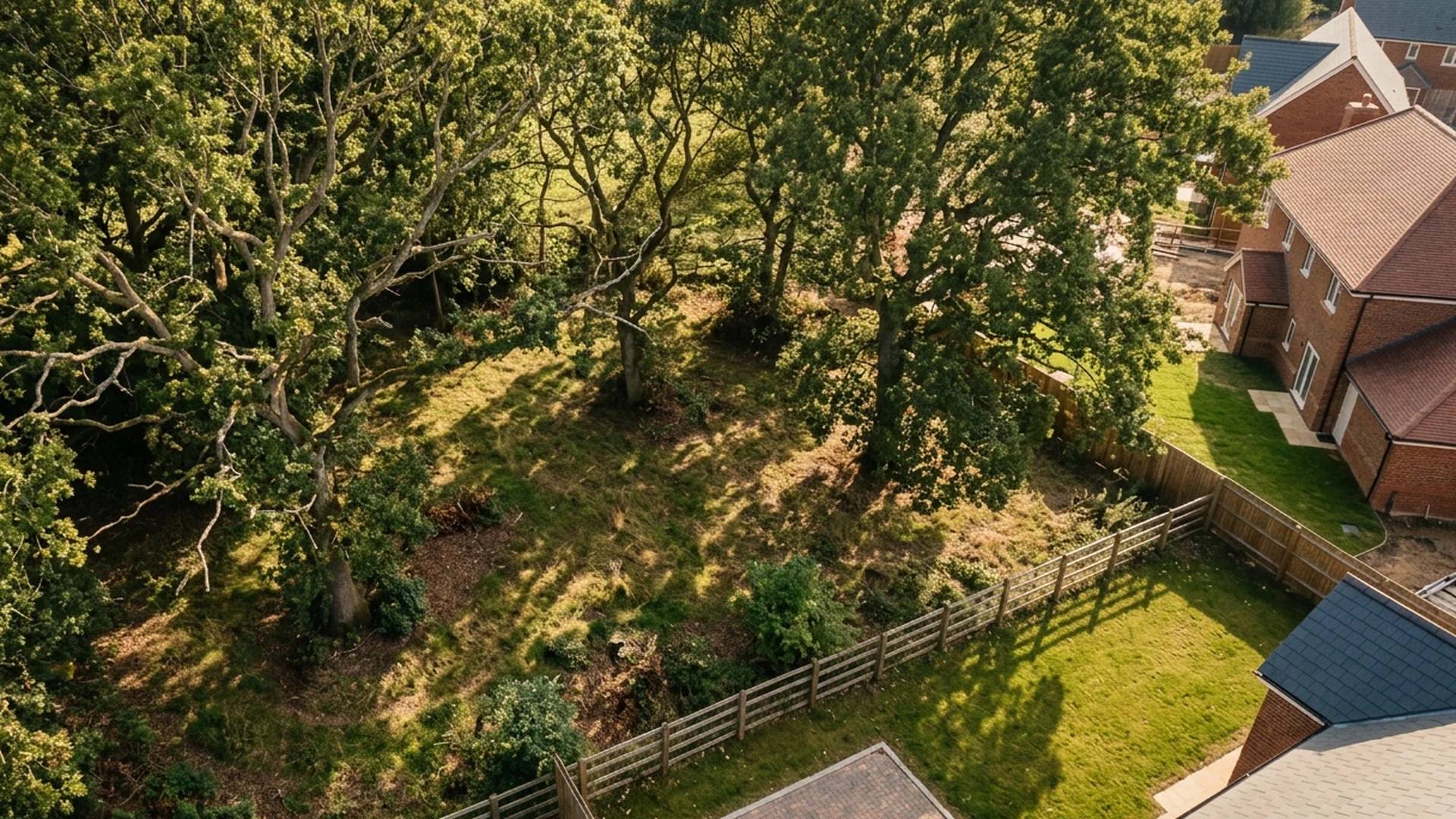
A long term crown cover assessment takes that expectation and gives it a quantifiable form. Rather than simply recording which trees are present and whether they are worth retaining, it projects how canopy coverage across a site will change over time — typically over a 25-year horizon — accounting for the loss of trees removed during development, the condition and likely longevity of retained trees, and the growth trajectory of any new planting proposed as part of the scheme. The output is a measurable picture of net canopy change, expressed as a percentage of site area, at a defined future point.
This is fundamentally different from a standard BS5837 survey. A survey tells you what is there now and how valuable it is. A long term crown cover assessment tells you what the site’s canopy will look like in a generation’s time, and whether the development leaves the landscape better or worse off for trees.
BS5837:2012 Crown Cover Principle
Why This Requirement Is Catching Developers Off Guard
For much of the period since BS5837:2012 was published, long term canopy cover was treated as a consideration rather than a deliverable. Arboricultural consultants might reference it in a report, but local planning authorities rarely demanded a standalone assessment or conditioned approvals on demonstrable canopy outcomes. That has changed significantly over the last three to four years, particularly across the South East and East of England.
The shift has been driven by a convergence of policy pressures. National planning policy now places greater weight on green infrastructure, urban cooling, and biodiversity. Many county and district authorities have adopted local plans that include explicit canopy cover targets or reference the Urban Greening Factor. Biodiversity net gain requirements under the Environment Act 2021 have also sharpened LPA scrutiny of green space outcomes, and trees sit at the intersection of several measurable metrics. The result is that officers who previously accepted a planting schedule as sufficient evidence of tree provision are now asking how much canopy cover the scheme will actually deliver, and when.
The problem for developers is that this expectation rarely appears in pre-application advice in explicit terms, and it almost never features in early project budgets or programme timelines. A standard arboricultural survey is a familiar line item. A long term crown cover assessment is not, and when it emerges as a condition or an officer requirement mid-application, it creates both cost and delay at a stage when neither is welcome.
How Local Planning Authorities Are Applying the Requirement
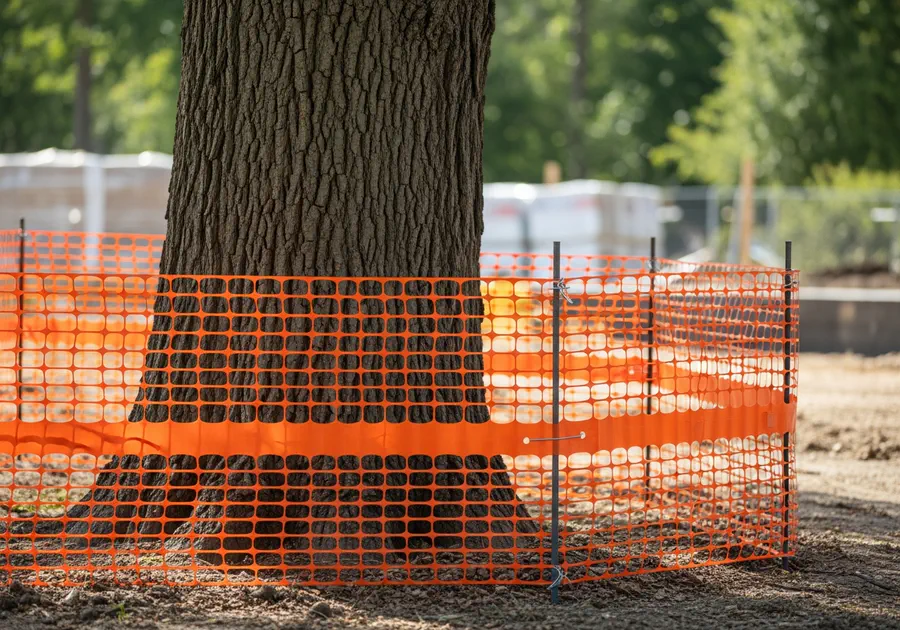
LPAs are applying this requirement in several ways, and the approach is not yet uniform across the region. Some authorities are including crown cover conditions directly in planning approvals, requiring applicants to demonstrate that the scheme will achieve a specified percentage of canopy cover at year 25 before reserved matters or pre-commencement conditions can be discharged. Others are raising it at the application stage through officer comments or holding objections, effectively making the submission of a crown cover assessment a prerequisite for a recommendation to approve.
A growing number of authorities are explicitly cross-referencing Urban Greening Factor frameworks alongside BS5837 expectations. The Urban Greening Factor assigns weighted scores to different types of green infrastructure, with tree canopy carrying a significantly higher value than ground-level planting or grass. Where a scheme scores poorly on the UGF, a robust long term crown cover assessment demonstrating meaningful canopy gain can provide supporting evidence that the development is making a genuine contribution to green infrastructure rather than simply meeting a minimum planting requirement on paper.
Biodiversity net gain adds a further layer. While trees are not always captured directly within the biodiversity metric, the habitat units associated with woodland edge, scrub, and hedgerow planting are influenced by canopy structure and long-term tree cover. Authorities that are scrutinising BNG submissions carefully are increasingly alert to inconsistencies between the ecological baseline and the arboricultural picture, and a long term crown cover assessment helps to align those two evidence streams.
What the Assessment Actually Involves
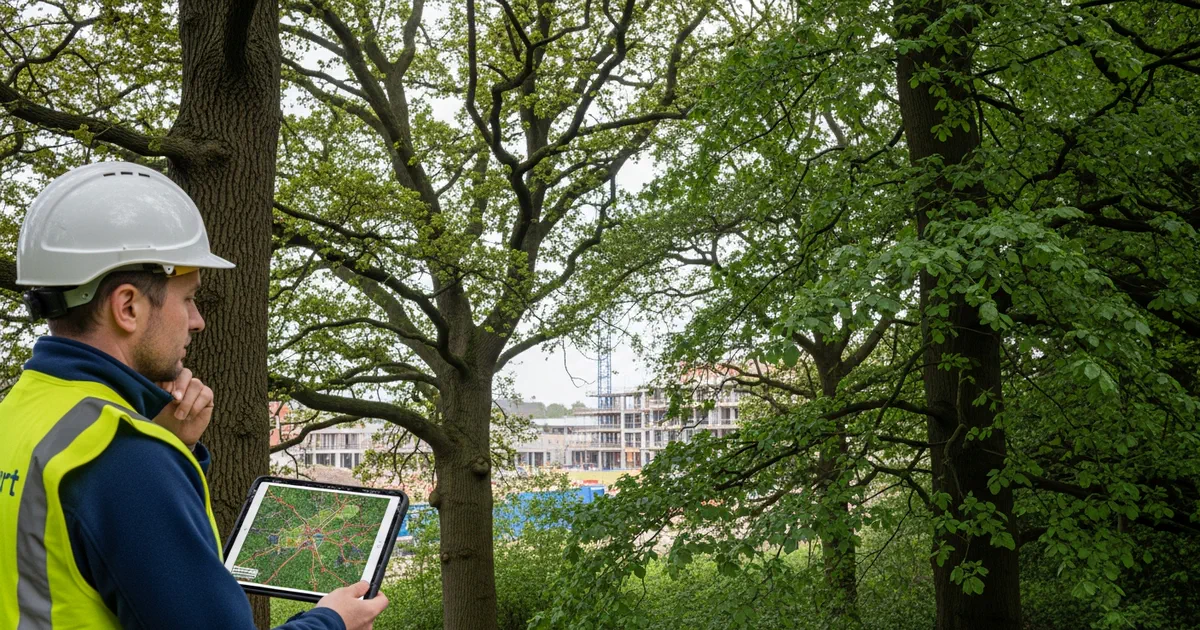
The technical scope of a long term crown cover assessment goes well beyond what is produced as part of a standard BS5837 survey. The starting point is a baseline canopy map, typically produced from a combination of measured survey data and aerial canopy interpretation, which establishes the current extent of crown cover across the site expressed as a percentage of total site area. This baseline must account for all trees, including those outside the red line boundary where their canopy extends over the site.
From that baseline, the assessment models projected canopy change. Trees identified for removal are subtracted from the baseline. Retained trees are assessed not just for their current condition but for their projected canopy at year 25, taking into account species, age, physiological condition, and any constraints imposed by the development layout. A mature oak in good condition will contribute substantially to future canopy; a semi-mature silver birch in moderate condition may not.
Proposed new planting is then evaluated against realistic growth projections for the species selected, the planting conditions available, and the maintenance regime proposed. This is where species selection review becomes critical. A planting schedule that relies heavily on ornamental species with limited canopy spread, or that places trees in constrained positions where their growth will be restricted by hard surfaces or services, will not deliver the canopy coverage that the numbers on paper might suggest. The assessment must interrogate those assumptions and, where necessary, recommend changes to species selection or planting positions to achieve a credible outcome.
The final output brings retained and proposed trees together into a projected canopy coverage figure at year 25, expressed as a percentage of site area, with a comparison against the baseline to demonstrate net gain or loss.
The Cost and Programme Implications for Development Projects

The cost of a long term crown cover assessment is not trivial, and it is not covered by the fee for a standard BS5837 survey. The work requires specialist arboricultural input, canopy mapping, growth modelling, and a written assessment that can withstand LPA scrutiny. For a medium-sized residential or mixed-use site, the additional cost over and above a standard survey is meaningful, and it needs to be in the budget from the outset.
Programme implications are equally significant. The assessment cannot be completed until the design has reached a stage where tree removal, retention, and planting positions are sufficiently defined. That means it sits at a point in the programme where design changes are still possible but are becoming progressively more costly. Commissioning the work too late — after planning submission or, worse, after approval — removes the opportunity to use it to influence the design in ways that improve the canopy outcome and reduce the risk of a holding objection or a condition that cannot be discharged without layout changes.
The right stage to commission this work is alongside the arboricultural impact assessment, once a design option has been developed but before it is fixed. That window allows the findings to feed back into the design process rather than simply documenting a scheme that may not perform as required.
How to Integrate Crown Cover Assessments Into Your Planning Strategy
Commission at AIA stage
Appoint your arboricultural consultant to scope the long term crown cover assessment at the same time as the arboricultural impact assessment, once a working design option exists. This ensures the two documents are aligned and that the canopy modelling reflects the actual scheme rather than a preliminary layout.Align with the tree constraints plan
Use the baseline canopy mapping from the crown cover assessment to inform the tree constraints plan. A constraints plan that reflects projected canopy extent rather than just current crown spread gives the design team a more accurate picture of the space trees will occupy over time.Review species selection before it is fixed
Ask your consultant to review proposed planting species and positions against the canopy growth projections before the landscape strategy is finalised. Changes at this stage are straightforward; changes after planning approval are not.Submit proactively with the application
Include the long term crown cover assessment in the planning application submission rather than waiting for an officer to request it. Proactive submission demonstrates that canopy outcomes have been considered from the outset and reduces the likelihood of a holding objection or a condition requiring additional information.
For planning consultants managing the application process, it is worth raising the question of long term canopy cover at pre-application stage, even if the LPA does not raise it first. Authorities that have adopted Urban Greening Factor policies or that have a track record of conditioning canopy outcomes will respond positively to an applicant who has already addressed the issue. It also gives you the opportunity to understand the authority’s specific expectations before the assessment is written, rather than discovering them through an officer’s report.
What to Look for When Appointing an Arboricultural Consultant
Not all arboricultural consultants have experience delivering long term crown cover assessments to the standard now expected by local planning authorities. When appointing a consultant for this work, the starting point is membership of the Arboricultural Association at Registered Consultant level, which indicates a recognised level of professional competence and adherence to current standards. Membership of the Institute of Chartered Foresters is also relevant where the work involves woodland or significant tree groups.
Beyond qualifications, look for demonstrable experience of producing crown cover assessments that have been accepted by LPAs in the South East and East of England specifically. The way authorities in this region are applying BS5837 expectations, Urban Greening Factor requirements, and biodiversity net gain frameworks varies, and a consultant who works regularly across the region will understand those local nuances in a way that a generalist may not.
Methodologically, ask how the consultant approaches canopy growth modelling and what data sources they use for projected crown spread. A credible assessment should be based on species-specific growth data and should account for site conditions rather than applying generic assumptions. Ask also how they handle the interaction between retained trees and proposed planting — a consultant who treats these as separate exercises rather than an integrated canopy model will produce an assessment that is less likely to satisfy a well-informed LPA officer.
Finally, look for a consultant who is willing to engage with the design team during the assessment process rather than simply producing a report at the end. The value of commissioning this work early is only realised if the findings actually influence the scheme, and that requires a consultant who communicates findings clearly and in time for them to be acted upon.
Frequently asked questions
Find out what's on your site before it becomes a problem.
Subito provides BS5837 tree surveys and arboricultural impact assessments for planning applications across England. If your site has old trees, we will identify them, assess them, and give you the information you need to design around them with confidence.