Pre-Application Advice: Getting a Tree Officer's View Early
Learn how pre-application advice from a tree officer shapes your design before tree constraints force costly redesigns after submission.
Why Tree Officers Matter Before You Submit
Tree officers are local authority employees with a specific remit: to protect trees that contribute to the character and amenity of an area. They assess planning applications, recommend conditions, and advise on tree preservation orders. When a scheme lands on their desk at validation stage, their job is to scrutinise it, not to help you fix it.
That dynamic changes entirely at pre-application stage. Before a formal application exists, a tree officer has no decision to defend. They can speak plainly about what they will and will not support, which trees they consider significant, and where they see the real constraints on a site. That conversation is worth more than most applicants realise.
Developers and planning consultants who engage tree officers early tend to submit stronger applications. They avoid layouts that conflict with root protection areas, they understand which trees are likely to attract conditions, and they do not waste money on detailed design work that trees will later force them to redo.
What Pre-Application Advice from a Tree Officer Actually Covers
Pre-application advice through the local planning authority is a formal paid service in most councils. You submit a request, pay a fee, and receive a written response within a set timeframe. The scope of that response depends on what you ask and what information you provide.
For tree-related matters, a tree officer will typically comment on the following. They will identify which trees on or adjacent to the site are protected, either by a tree preservation order or by virtue of being within a conservation area. They will give a preliminary view on which trees they expect to be retained and which they might accept losing, subject to justification. They will flag any obvious conflicts between your emerging layout and the root protection areas of significant trees. They will also indicate what survey information they will require to support a formal application.

That distinction matters, but it does not reduce the value of the exercise. A clear steer from a tree officer at this stage is far more useful than an objection after submission.
Getting the Right Survey Information Before the Meeting
Pre-application advice is only as useful as the information you put in front of the tree officer. Turning up with a sketch layout and no survey data means the officer cannot give you anything specific. You will receive a generic response that tells you trees need to be considered, which you already knew.
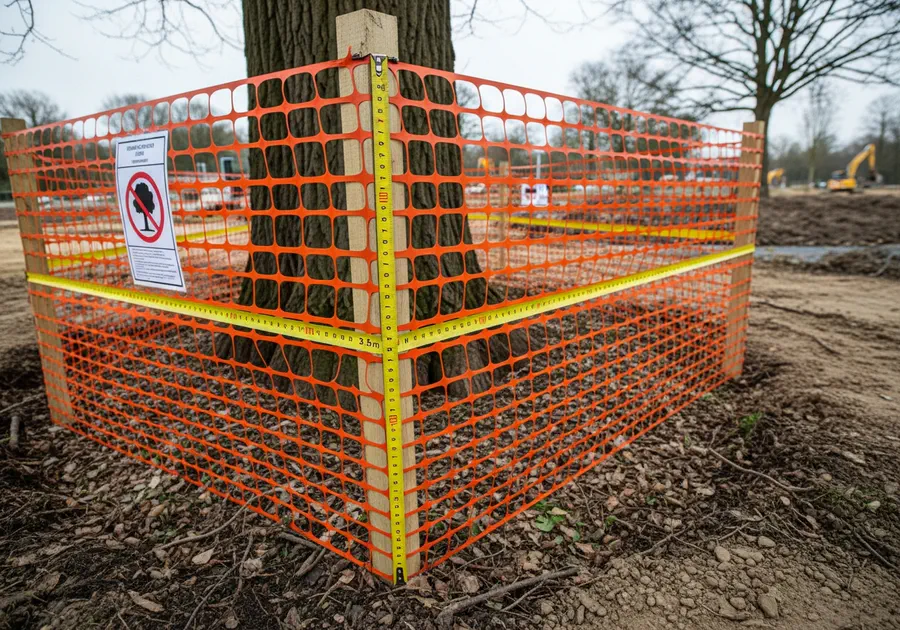
To get a meaningful response, you need a BS 5837 tree survey completed before you request pre-application advice. This survey records every tree on and immediately adjacent to the site, assigns each one a quality category, and maps the root protection areas. It gives the tree officer a factual basis for their comments rather than forcing them to speculate.
BS 5837 Quality Categories
If you have an emerging layout, even a draft one, include it. The tree officer can overlay the root protection areas against your proposed building footprints, access routes, and service runs. That is where the real value of the conversation lies. They can tell you whether your proposed house position sits within a root protection area, whether your access road will require root severance that they would not accept, or whether a tree you have assumed is retainable is actually one they would consider expendable.
Bringing an arboricultural consultant to the pre-application meeting or into the written submission process adds another layer. A consultant who understands how tree officers think can frame the survey findings in a way that anticipates the officer’s concerns and presents the constraints clearly.
How Tree Officer Feedback Shapes the Design Process
The practical effect of pre-application engagement is that it moves tree constraints into the design process rather than leaving them to collide with a finished scheme.
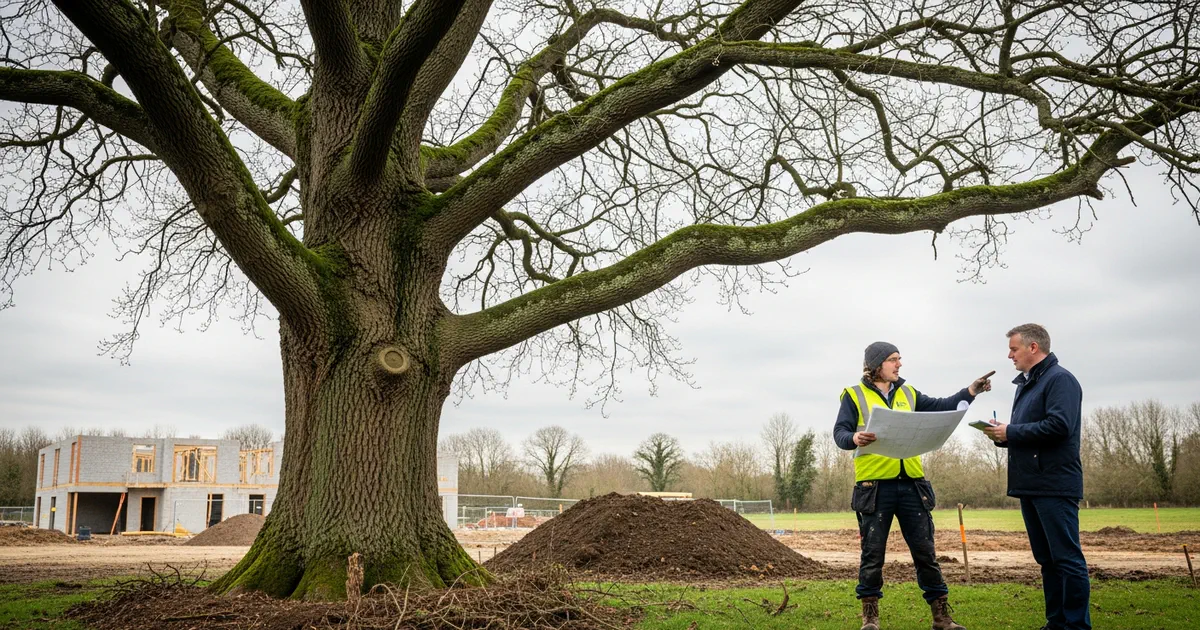
Consider a site with a row of mature oaks along the northern boundary. Without pre-application advice, a designer might position a terrace of houses close to that boundary to maximise yield, assuming the trees can be dealt with later. After submission, the tree officer objects. The root protection areas extend well into the site. The proposed foundations would cause unacceptable root damage. The scheme has to be redesigned, the application is delayed, and the cost of abortive work accumulates.
With pre-application advice, the tree officer confirms early that those oaks are category A trees and that the council will not support any development within their root protection areas. The designer knows this before the layout is fixed. The terrace moves. The yield adjusts. The application goes in with a layout that already reflects the constraint, and the tree officer’s formal response at determination is unlikely to raise objections they have not already flagged.
This is not a theoretical benefit. It is the difference between a scheme that progresses and one that stalls. Tree officers see the same avoidable conflicts repeatedly. Developers who engage early are the ones who do not repeat those mistakes.
When Pre-Application Advice Is Particularly Important
Not every site warrants a formal pre-application meeting focused on trees. A brownfield site with no significant tree cover is unlikely to need one. But there are circumstances where skipping this step carries real risk.
Protected Trees
Large or Veteran Trees
Conservation areas present a situation that catches many applicants off guard. All trees over a certain size within a conservation area are subject to notification requirements, and councils are often protective of the tree cover that contributes to the area’s character. A tree officer’s view on which trees they consider essential to that character is information you need early.
Finally, sites where the viability of the scheme depends on removing trees benefit from early engagement. If you need to remove a category B or category A tree to make the numbers work, you need to know whether the tree officer will support that removal before you commit to the scheme. They may indicate that they would accept removal with appropriate justification and replacement planting. They may indicate that they would not. Either answer is useful before you spend money on detailed design.
Making the Most of the Pre-Application Process
The quality of the pre-application response depends on the quality of the submission. A well-prepared request gets a well-considered response. A vague request gets a vague response.
Commission the BS 5837 survey first
Submit the completed BS 5837 tree survey with your pre-application request. Include a site plan showing root protection areas mapped against any emerging layout. This gives the tree officer a factual basis for their comments and prevents a generic response that adds no value.Ask specific questions
Do not ask whether trees will be an issue in general terms. Ask whether the council would support removal of a specific tree given a particular justification. Ask whether a proposed building position within a defined distance of a specific tree’s root protection area would be acceptable. Specific questions get specific answers.Follow up with a meeting on complex sites
Written responses can be ambiguous, and a conversation allows you to test the officer’s position and understand the reasoning behind it. Some councils offer pre-application meetings as part of the service. Others require a separate request. It is worth asking.Keep a record and maintain consultant continuity
Pre-application advice is not binding, but a written response indicating support for a particular approach is a useful document at determination. Engage your arboricultural consultant throughout, not just at survey stage. A consultant involved in the pre-application engagement can prepare the arboricultural impact assessment and method statement in a way that directly addresses the officer’s stated concerns, reducing the risk of objections that could have been avoided.
Frequently asked questions
Find out what's on your site before it becomes a problem.
Subito provides BS5837 tree surveys and arboricultural impact assessments for planning applications across England. If your site has old trees, we will identify them, assess them, and give you the information you need to design around them with confidence.