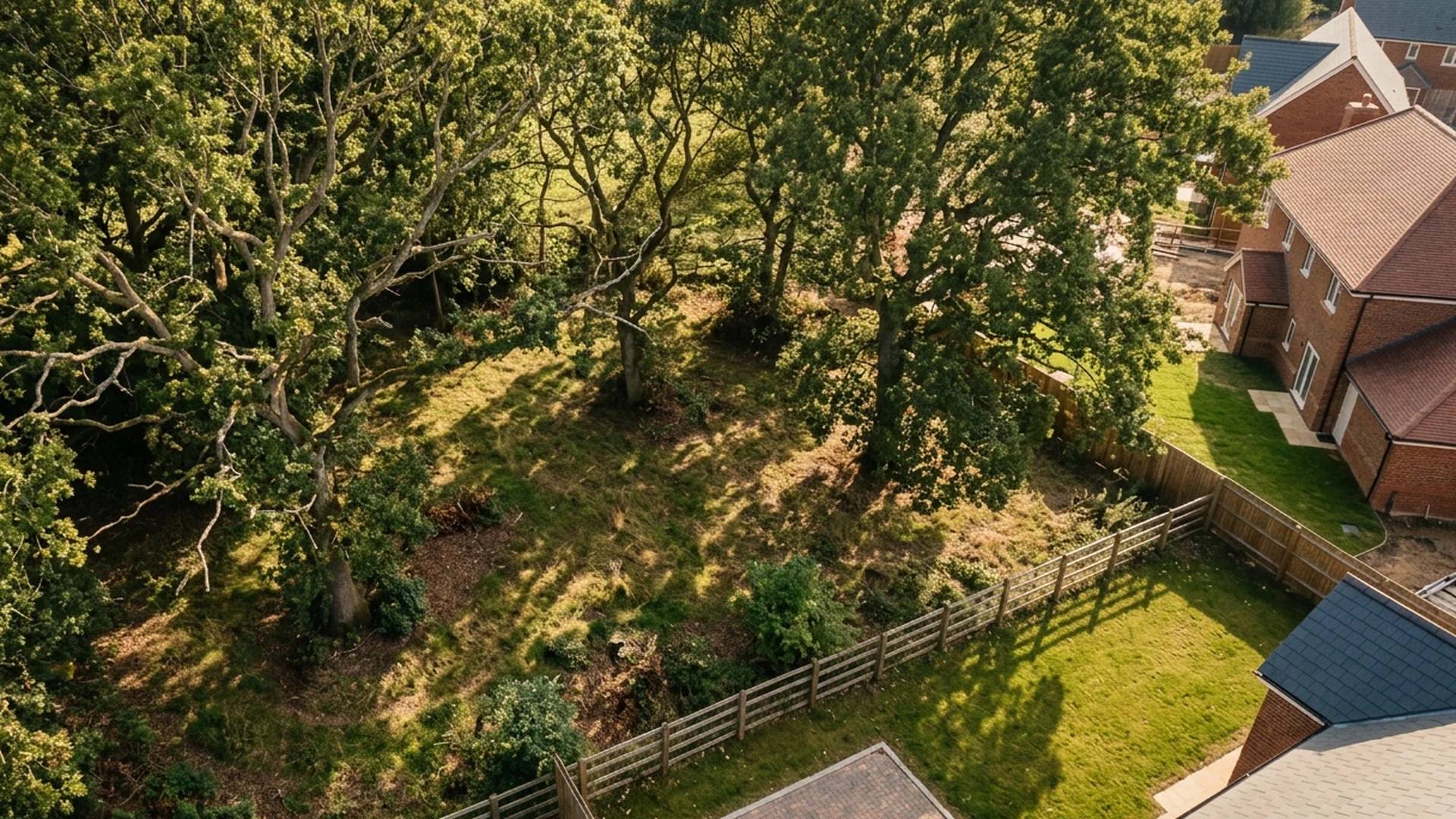
Reading Tree Constraints Plans for Architects
Learn how architects should read a tree constraints plan before finalising a layout, including RPA, canopy spread, and retention categories under BS5837.
Why the Tree Constraints Plan Changes Your Layout Before It’s Final
The Tree Constraints Plan (TCP) is not a bureaucratic tick box. It is a design shaping document that should influence your layout from the very first concept sketch. Reading it correctly at the concept stage prevents costly redesigns, refused applications, and damaged tree structure relationships. When you treat the TCP as a source of design drivers rather than an obstacle to overcome, you create layouts that work with the site’s natural assets instead of against them.
What a Tree Constraints Plan Actually Shows (and What It Omits)
A TCP presents the core survey data: tree positions, species, category grades (A, B, C, U), canopy spreads, and root protection areas (RPAs). It is a survey output, not an assessment of development feasibility. That means it shows what is there, but it does not tell you whether your proposed building is acceptable. The TCP may also omit off site trees and boundary conditions, so you cannot assume the plan shows every constraint that affects your site.
The Root Protection Area: Your Real Design Boundary
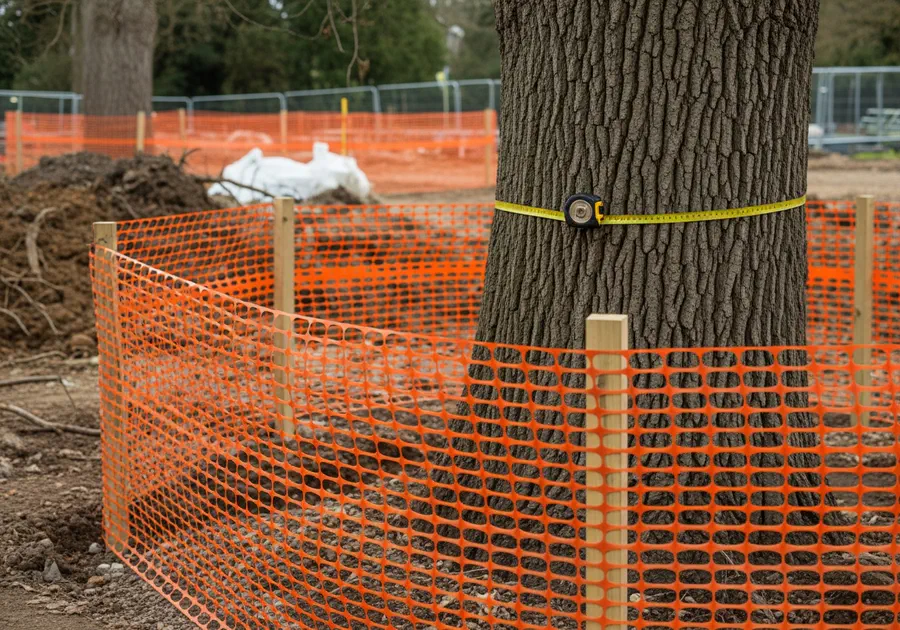
The RPA is calculated using the 12:1 rule for stem diameter. For every 1 cm of stem diameter measured at 1.5 m above ground, you need 0.12 m of protected radius. The RPA is represented as a circle or polygon around the tree. This is the key constraint for foundations, drainage, and ground works. Treat the RPA as a no go zone unless a specialist justifies encroachment. If you must build within an RPA, you will need an arboricultural method statement and possibly a bespoke foundation design.
The 12:1 Rule
Canopy Spread vs. RPA: Two Different Constraints on Your Massing
Above ground canopy spread affects shading, daylight, and overhang clearance. Below ground RPA affects root protection. These two constraints are separate and both matter for your massing. Canopy spread will influence where you place roof overhangs, balconies, and vertical clearance for construction access. RPA will influence where you place foundations, service runs, and any ground disturbance. A tree can have a modest canopy but a large RPA, or vice versa, so you must assess both independently.
Reading the Tagging System: A, B, C, U — What Each Grade Means for Retention or Removal
The BS 5837 retention categories carry different planning weights. A grade trees are the strongest design drivers, offering high quality and long life expectancy. B grade trees are worth retaining, with moderate quality and longevity. C grade trees offer limited value, often due to poor form or young age. U grade trees are unsuitable for retention, typically dead, dying, or dangerous. Do not assume C grade trees can be easily removed without justification. Local planning authorities may still expect you to retain them unless you provide clear arboricultural reasoning.
Spotting the Hidden Constraints: TPOs, Conservation Areas, and Ancient Woodland
The TCP does not always map legal protections. Tree Preservation Orders (TPOs), conservation area constraints, and ancient woodland buffers are separate layers of information. Before finalising your layout, cross reference the survey with the local authority TPO register and conservation area maps. If the site is near ancient woodland or veteran trees, there may be a 15 m buffer zone that affects your design. These legal protections can override the TCP’s recommendations, so you must check them early.
From Plan to Layout: A Step-by-Step Check Before You Sign Off
Before you sign off your layout, run through a practical checklist. First, verify the survey date and scope to ensure it is current and covers the whole site. Second, overlay the TCP on your draft layout and check every proposed foundation and service run against RPAs. Third, confirm that construction access and parking do not encroach on protected areas. Fourth, identify where arboricultural method statements or a new survey will be needed. This workflow catches issues before they become expensive problems.
Verify the Survey
Check the survey date and scope. A survey older than two years may be out of date, especially if trees have been removed or damaged.Overlay and Check
Overlay the TCP on your draft layout. Check every foundation, service trench, and hardstanding area against RPAs and canopy spreads.Assess Access
Confirm that construction access, parking, and storage areas do not encroach on protected zones. Temporary works can cause as much damage as permanent ones.Plan for Method Statements
Identify where arboricultural method statements or a new survey will be needed. This includes any work within an RPA or near a retained tree.
Red Flags That Mean You Need to Talk to an Arboriculturist
Certain warning signs should prompt an immediate conversation with an arboriculturist. If RPAs cover more than 30% of the developable area, your layout may be unworkable without significant mitigation. If a proposed building is within 2 m of a tree stem, you are likely to encounter root damage. If grade A trees sit near proposed service trenches, you need a specialist to design root protection. And if your design requires crown lifting or root pruning to enable construction, you must get expert advice before proceeding. These red flags indicate that your current layout is not yet viable, and early input from an arboriculturist can save you from costly redesigns later.
Frequently asked questions
Find out what's on your site before it becomes a problem.
Subito provides BS5837 tree surveys and arboricultural impact assessments for planning applications across England. If your site has old trees, we will identify them, assess them, and give you the information you need to design around them with confidence.