Survey Sequencing Order: Tree vs Ecology Survey
Get the survey sequencing order right for tree and ecology surveys. Avoid redesign, invalid surveys and planning delays on South East and East of England sites.
Survey Sequencing Order Tree Ecology: The Programme Risk You Can Avoid
Getting the order wrong is not a paperwork problem. It is a redesign problem. A tree survey commissioned after ecology has already fixed a layout can come back with root protection areas across your access road, and suddenly the drainage, levels and unit mix all move. On a 40 unit scheme, that is weeks of architect time and a resubmission.
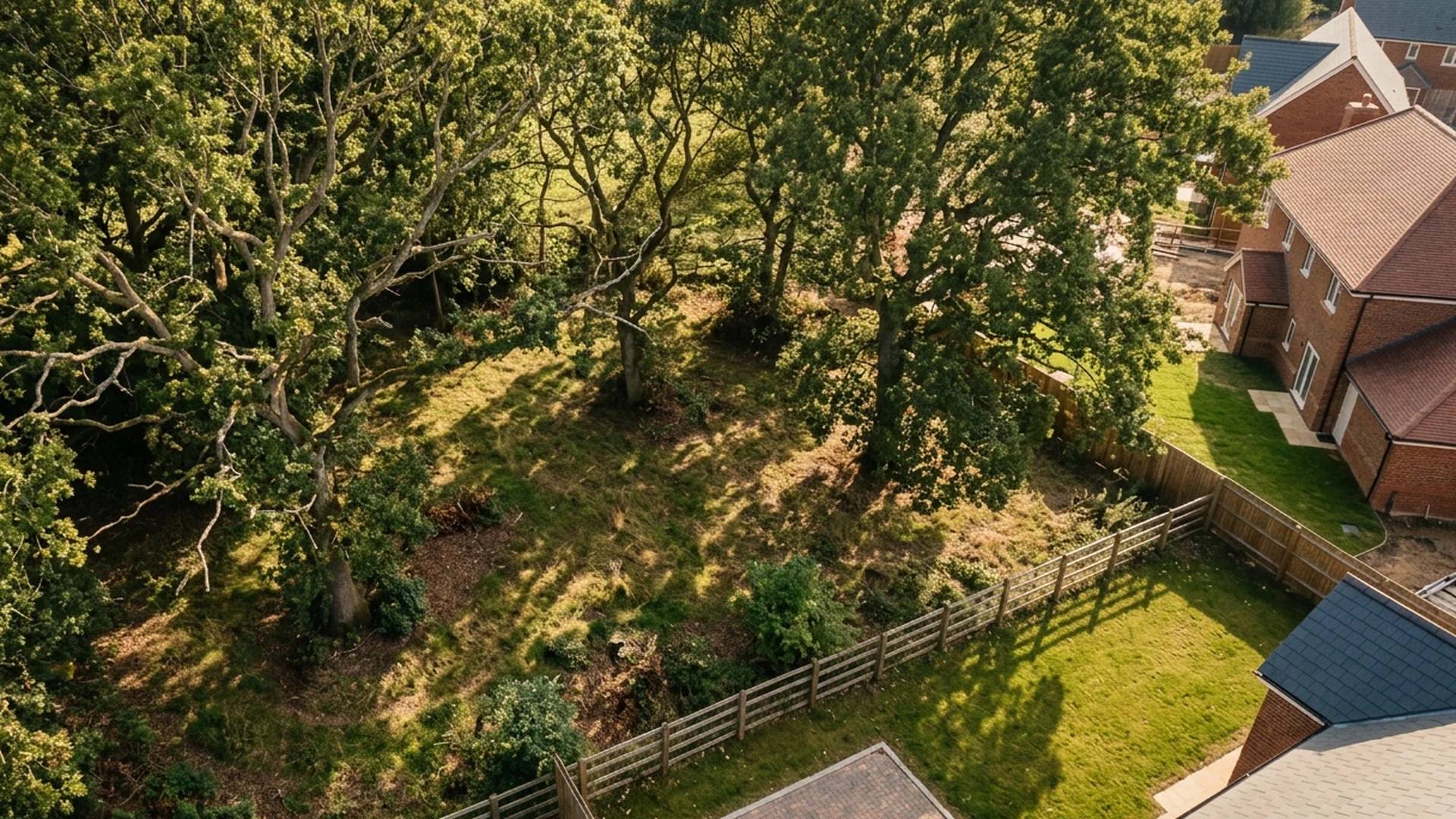
This applies most sharply across the South East and East of England, where ancient woodland edges, veteran oaks, hedgerow networks and protected species overlap on the same parcels. The two disciplines are not competing. They are reading the same site from different angles, and the order you read them in changes what each one finds.
Start with a Combined Constraints Review, Not a Fixed Sequence
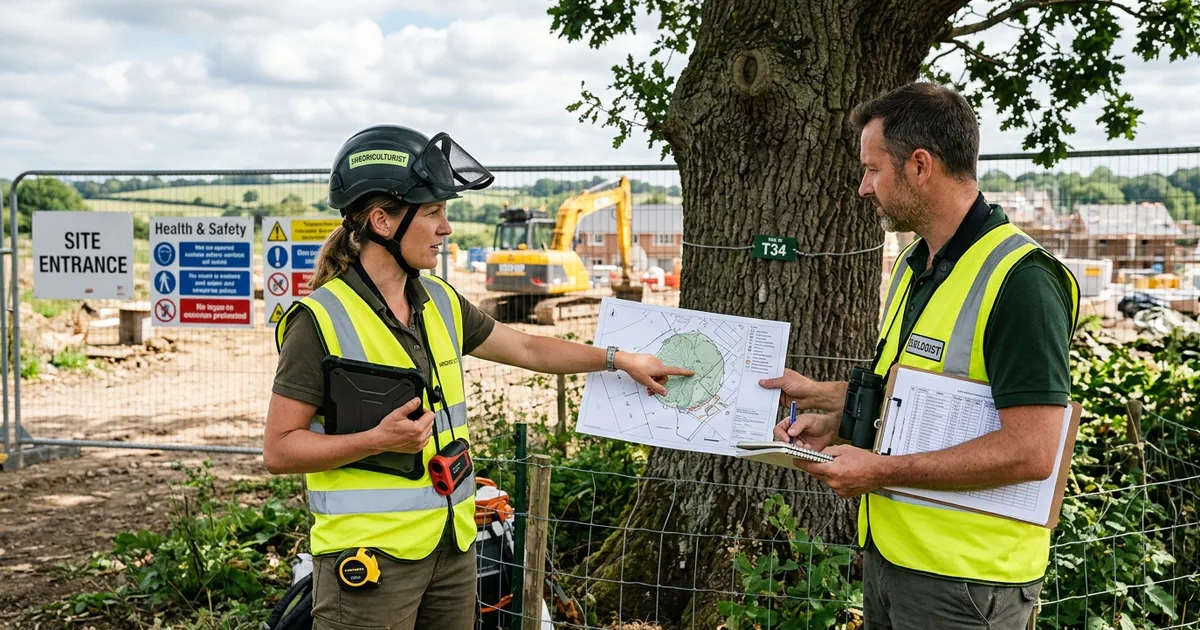
Before instructing either survey, walk the site or commission a desk study that pulls together MAGIC maps, local records centre data, the local plan policies map and any historic landscape character work. Half a day of scoping routinely saves a full survey cycle.
Ask one question: what is most likely to remove developable area? If it is a veteran tree with a 15 metre root protection area, trees drive the layout. If it is a pond within 250 metres supporting great crested newts, ecology drives it. “Tree first” or “ecology first” is an evidence based decision, not a habit.
When the Tree Survey Should Come First
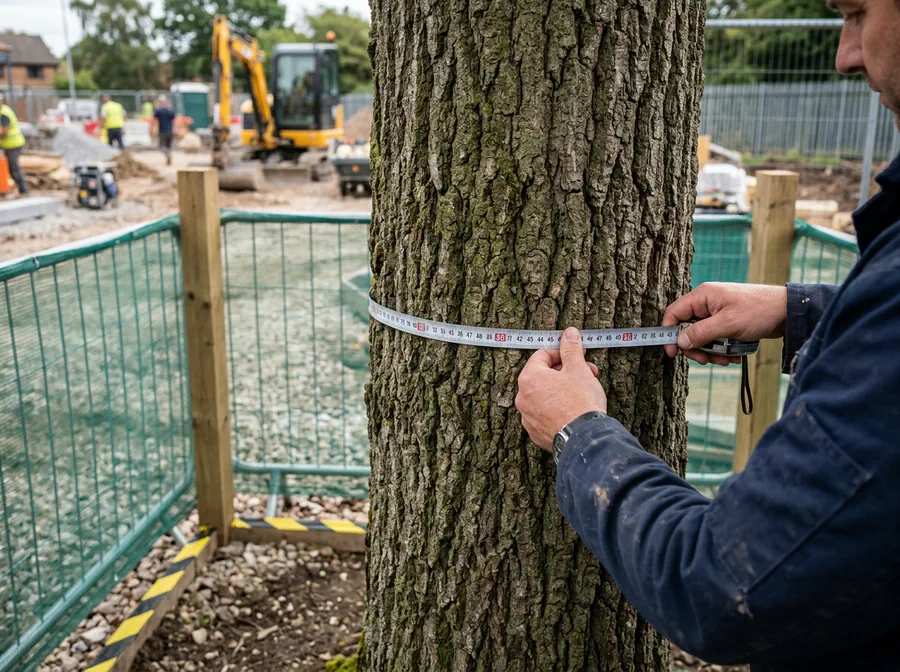
Tree first suits sites where BS5837 constraints will define the developable envelope. That means mature boundary trees, dense groups, or off site trees whose canopies and roots cross the red line. The tree survey and constraints plan give every other consultant a spatial framework.
Ecologists benefit directly. A tree constraints plan showing retention categories tells them where to focus bat roost potential assessments, which trees are veteran or ancient, and where nesting habitat will be retained or lost. Without it, they are surveying blind.
Tree survey validity
When the Ecology Survey Should Come First
Ecology first suits sites with high sensitivity: statutory designated sites within the zone of influence, watercourses, species rich hedgerows, or mature trees with obvious cavities, loose bark and dense ivy. Early ecology identifies no-go areas, buffers and mitigation that change the layout before the tree survey scope is fixed.
Seasonal constraints make this urgent. Bats are surveyed May to September, great crested newts mid March to mid June for presence, dormice April to October. If you fix a tree survey scope in February and discover in May that a roost is present, you have lost the season.

How Each Survey Feeds the Other
This is a feedback loop, not a relay. Tree findings should trigger ecological checks for bats, nesting birds, saproxylic fungi and invasive species such as Japanese knotweed regrowth near root zones. Ecology findings then change retention, access, pruning, removal and protection measures.
In practice, an ecologist may ask for a tree to be retained as a bat roost feature, which pushes a root protection area into a parking court. The arboriculturist then redesigns the protection specification or the layout shifts. That exchange needs to happen before submission, not after.
Seasonal Windows and Survey Validity
Tree surveys can be done year round, but leaf off work limits species identification and dormancy is the window for fungal checks on veteran trees. Ecology has harder windows and shorter validity. Bat surveys are typically valid for one season, great crested newt eDNA for one season, dormice for one season.
Work backwards from your submission date. If you are targeting a March submission, bat surveys must be completed the previous summer. Sequencing must account for both validity periods and the target date, not just the order of instruction.
A Sequencing Decision Framework for Consultants
Use this to decide before you instruct anyone.
Screen the site
Desk study and walkover to identify trees, watercourses, hedgerows, ponds and designated sites within the zone of influence.Score the drivers
If tree constraints will remove developable area, go tree first. If protected species or designated sites will, go ecology first.Check the calendar
Match ecology seasonal windows and survey validity against your submission date before fixing scope.Phase and coordinate
Where both drive layout, run parallel scoping then phase detailed surveys, with both consultants reviewing the emerging layout.
Protecting the Programme Without Redesign Risk
Commission early, phase the surveys, and keep the arboriculturist and ecologist talking to each other rather than to you separately. If the layout changes, update both surveys. A tree survey that no longer matches the red line is not evidence, it is a liability.
Subito’s Tree Surveys service provides sequencing and constraints advice alongside BS5837 surveys, so your consultant team starts from a position where the tree and ecology evidence supports the layout rather than fighting it.
Frequently asked questions
Find out what's on your site before it becomes a problem.
Subito provides BS5837 tree surveys and arboricultural impact assessments for planning applications across England. If your site has old trees, we will identify them, assess them, and give you the information you need to design around them with confidence.