Tree Root Subsidence Survey: What Insurers Expect
Insurers often request a tree root subsidence survey before settling a claim. Here is what the report must establish, what it costs to get wrong, and how to appoint a surveyor.
Tree Root Subsidence Survey Insurance: Why Insurers Ask Homeowners to Investigate Trees
When an insurer asks for a tree root subsidence survey, it is not asking for a planning document. It is gathering evidence for a claim. Cracking, movement and clay soils are the usual triggers. The insurer needs to know whether vegetation is causing the damage, and it will not settle, defend or decline without that answer. A planning tree report will not do. The questions are different, the standards are different, and the consequences of getting it wrong are financial.
When a Tree Root Subsidence Survey Becomes Part of an Insurance Claim
Triggers vary. New or worsening cracks above a damp course. A loss adjuster or structural engineer referral. Monitoring data showing seasonal movement. Trees or shrubs within influencing distance of foundations. Once a claim is live, the homeowner has a duty to cooperate with the insurer. That includes allowing access for investigation.

What Insurers Expect the Survey to Establish
Insurers need causation answered before they accept, defend or settle. The survey must connect the vegetation to the damage, or rule it out.
Tree Identification, Location and Condition
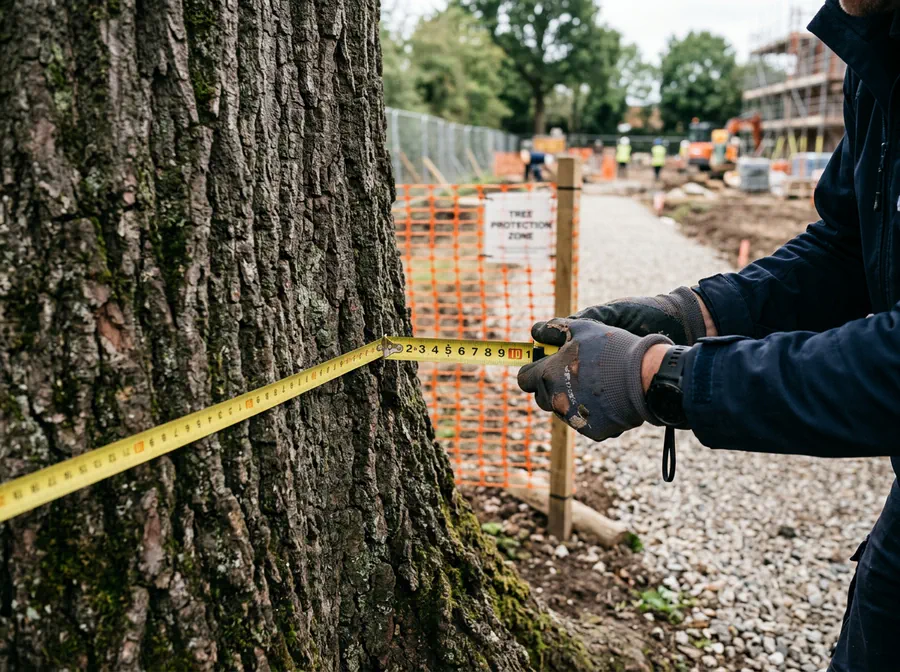
Accurate species, stem diameter, height, canopy spread, distance from the affected property, and health or structural condition. A 450mm diameter oak at 8m is a different proposition to a 200mm ornamental cherry at 4m. Species matters because water demand varies enormously.
Soil, Geology and Foundation Context
Boreholes, trial pits, soil classification, plasticity index and foundation depth or type. Shrinkable clay with a high plasticity index behaves differently to sandy loam. A foundation at 1m depth on clay is far more vulnerable than a piled foundation.
Plasticity index threshold
Root Presence and Root Zone Assessment
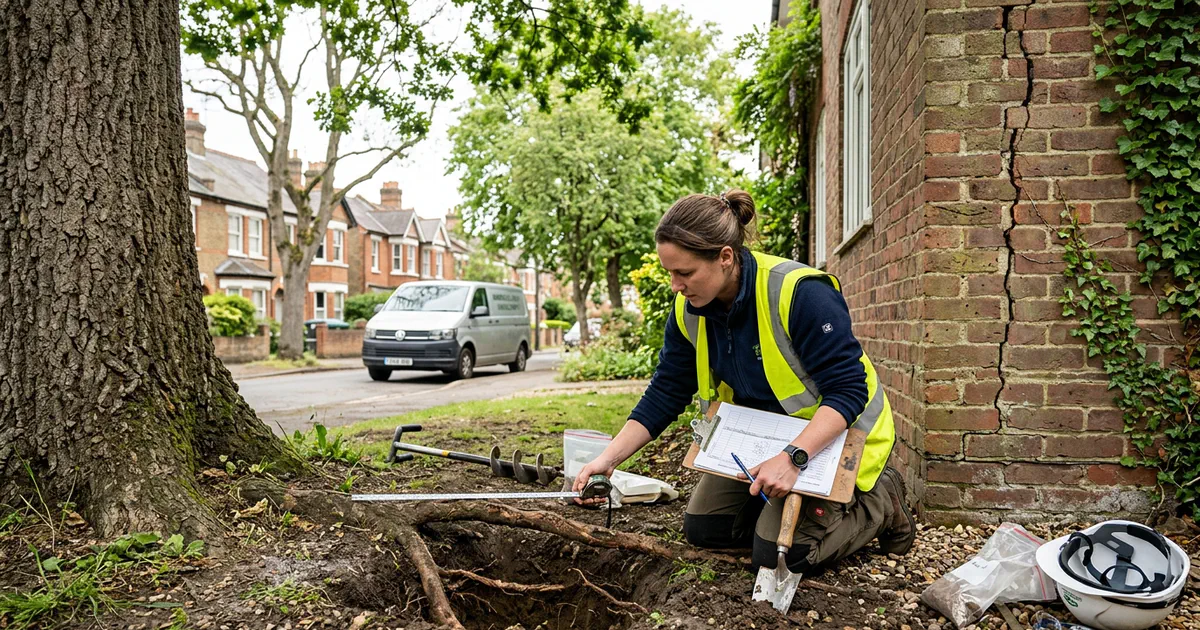
Root samples, root mapping and targeted excavation near foundations. A root found under a foundation is evidence. A root zone drawn on a plan is not. Surveyors need to show roots in the zone of influence and link them to the damaged structure.
Causation and Contribution: Tree-Related Movement or Other Factors
Tree-induced shrinkage or heave must be separated from drainage defects, leaking services, poor foundations or natural ground movement. In practice, more than one factor is often at play. The report must say which is dominant.
Regulatory and Professional Standards That Shape the Survey
NHBC Standards Chapter 4.2 sets out foundation depth requirements near trees. BRE guidance on shrinkable clay soils informs the assessment of vegetation-related movement. BS 5837 tree survey data is used where relevant, though this is not a planning application exercise. RICS and loss adjuster expectations shape the report format and the level of evidence required. The process is evidence-led, not planning-led.
What an Insurer-Ready Tree Root Subsidence Survey Report Should Include
An executive summary, site and tree plans, soil and root findings, photographic evidence, a causation opinion, limitations and clear recommendations. The report must be defensible, traceable and usable by insurers, engineers and solicitors. If it cannot withstand scrutiny, it will be sent back.
Your Responsibilities as a Homeowner During the Survey
Provide access and permissions. Avoid tree removal or pruning before assessment. Keep records of cracks, correspondence and any monitoring data. Meet insurer timescales. If you are unsure whether a proposed work is safe to authorise, ask the loss adjuster in writing first.
How Insurers Use the Findings to Decide Next Steps
Outcomes vary. The insurer may accept tree-related causation, request monitoring, fund tree removal, pruning or root barriers, require underpinning, or decline if damage is not tree-related. The survey recommendations feed directly into repair strategy and claim settlement. A clear causation opinion speeds this up. A vague one delays it.
Choosing a Tree Surveyor for a Subsidence Insurance Claim
Appoint a qualified arboricultural consultant with subsidence and insurance experience. Ideally someone used to working with loss adjusters and structural engineers. Subito provides Tree Surveys for homeowners across the South East and East of England, scoped to the claim rather than the planning file.
Frequently asked questions
Find out what's on your site before it becomes a problem.
Subito provides BS5837 tree surveys and arboricultural impact assessments for planning applications across England. If your site has old trees, we will identify them, assess them, and give you the information you need to design around them with confidence.