Tree Survey for Barn Conversions with Veteran Trees
Barn conversion with veteran trees on site? Learn how a specialist tree survey protects heritage oaks, avoids planning delays, and keeps your project viable.
Barn Conversion and Veteran Trees: Why the Right Tree Survey Matters
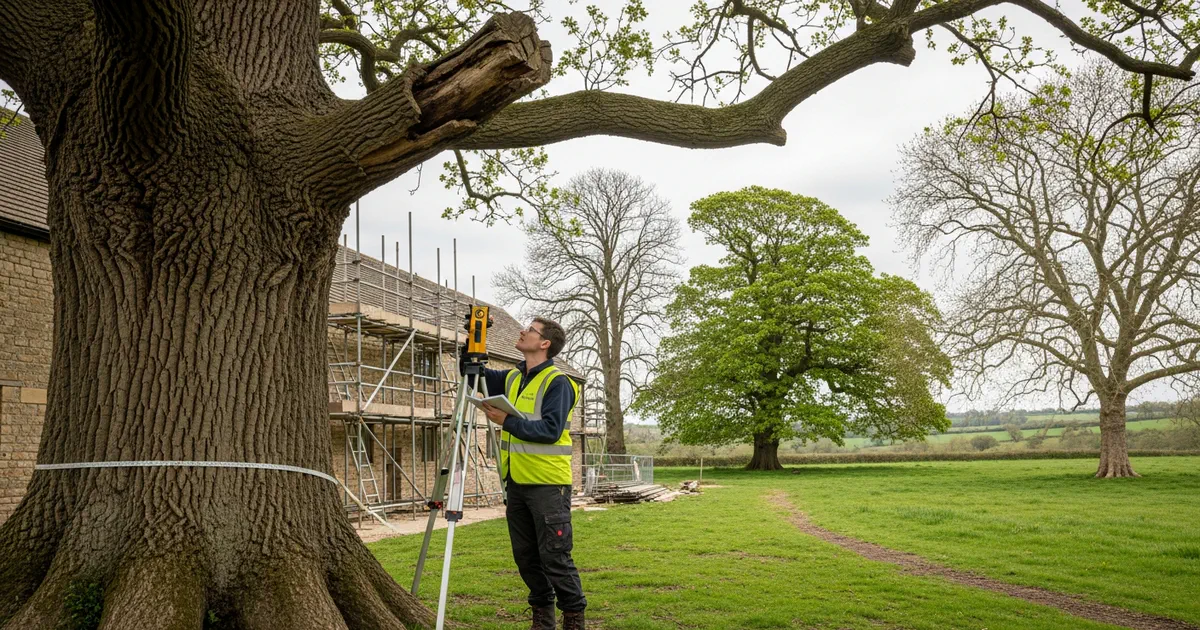
You have found the perfect barn. Timber frame intact, roof sound, and a setting that would make any estate agent salivate. Then you walk the site and see it: a massive, gnarled oak, older than the barn itself, with a trunk that would take three people to wrap their arms around. Your heart sinks. You know what that tree means for your planning application.
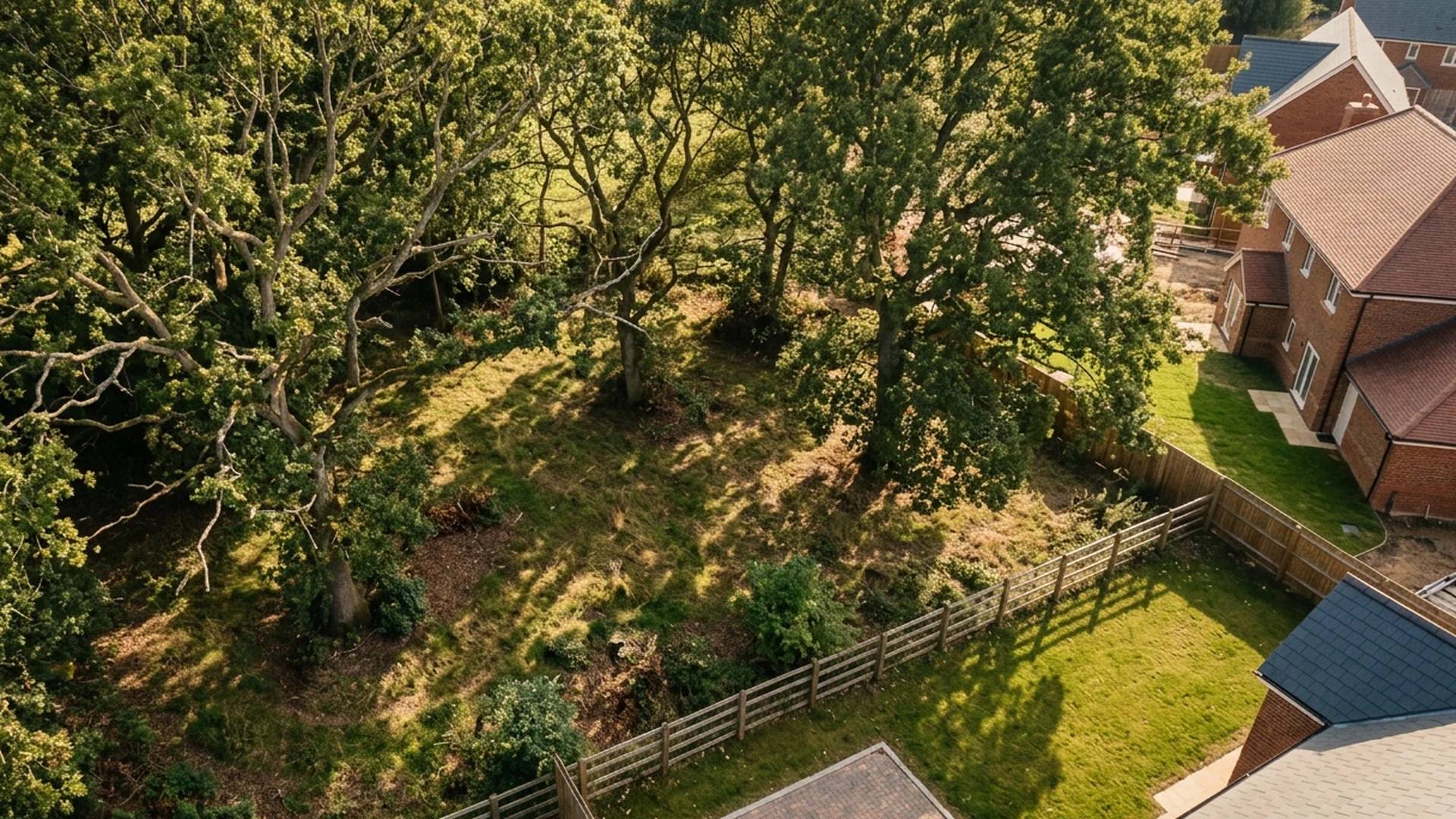
Barn conversions in the South East and East of England often sit in parkland or ancient farmsteads where veteran trees have stood for centuries. These trees are not just obstacles. They are the reason the site has character, and they are exactly what the local planning authority will scrutinise when you submit your application. Get the tree survey wrong and you face redesigns, refused applications, or costly conditions that eat into your budget. Get it right and the veteran tree becomes a selling point, not a sticking point.
The key is understanding that a veteran tree demands a different level of assessment than a standard protected tree. This article explains what that means in practice, from the initial desk study through to long-term stewardship after you move in.
How Veteran Trees Differ from Standard TPO-Protected Trees
A Tree Preservation Order (TPO) protects a tree from felling or pruning without consent. But a veteran tree carries weight far beyond that legal protection. It is an irreplaceable habitat. The cavities, deadwood, and fungal decay that make it veteran are exactly what rare invertebrates, bats, and birds depend on. National planning policy through the NPPF recognises this, and many local plans in the South East and East of England have specific policies that treat veteran trees as a material consideration, even if they are not TPO’d.
This means your tree survey cannot just tick the BS 5837 boxes. A standard survey will record species, height, and condition, but it will not capture the nuanced habitat value or the structural complexity that a veteran tree presents. Planners expect a specialist to assess the tree’s age, its decay profile, and its potential to support protected species. If you submit a generic survey, you risk the LPA asking for more information, which delays your application and costs you time.
Veteran vs. Ancient
Phase One: Desk Study and Walkover for Veteran Tree Constraints
Before anyone sets foot on site, the arboriculturist should pull together the background. That means reviewing historic maps to see if the tree appears on old estate plans, checking ecological records for protected species like bats or saproxylic beetles, and confirming whether the tree has a TPO or sits within a conservation area. This desk study shapes what to look for on the ground.
The walkover is where the real picture emerges. The surveyor walks the site, identifies each veteran tree, and records its location, canopy spread, and likely root spread. They also look for signs of past management, such as pollarding or crown reduction, which affect how the tree responds to nearby construction. This phase is not just about ticking boxes. It is about understanding how the tree fits into the wider landscape and where the constraints will bite hardest.
Phase Two: Detailed Veteran Tree Assessment in the Survey
This is where the survey goes beyond BS 5837. For a veteran tree, the arboriculturist assesses age class, structural condition, and the extent of decay. They look at the crown for deadwood and dieback, the trunk for cavities and fungal fruiting bodies, and the root plate for signs of instability. They also record habitat features: rot holes, hollows, loose bark, and sap runs. These are not just defects. They are the features that make the tree valuable.
The surveyor will also estimate the tree’s remaining contribution period, which is a standard BS 5837 category, but for veterans this is often expressed in decades or centuries, not the standard 40 years. This long-term perspective is critical for planning. A tree that could live another 200 years is a very different constraint to one with 20 years left. The survey must capture that distinction clearly.
Interpreting the Tree Survey for Barn Conversion Design and Planning
The survey findings translate directly into design constraints. Each veteran tree gets a retention category, usually A or B under BS 5837, but with additional notes on its veteran status. The root protection area (RPA) is calculated, and for veterans this is often larger than the standard formula suggests, because veteran trees have extensive root systems that can extend well beyond the canopy drip line.
These RPAs become the basis for the tree constraints plan, which the architect uses to position the barn conversion, parking, and access routes. The goal is to keep all construction activity outside the RPA wherever possible. If that is not feasible, the survey identifies where mitigation can allow limited work within the protected zone, such as using a no-dig surface for a driveway. This is where the survey earns its keep. A well-interpreted survey gives the design team the freedom to work around the tree without compromising its health.
Protecting Veteran Trees During Construction: RPAs and Mitigation
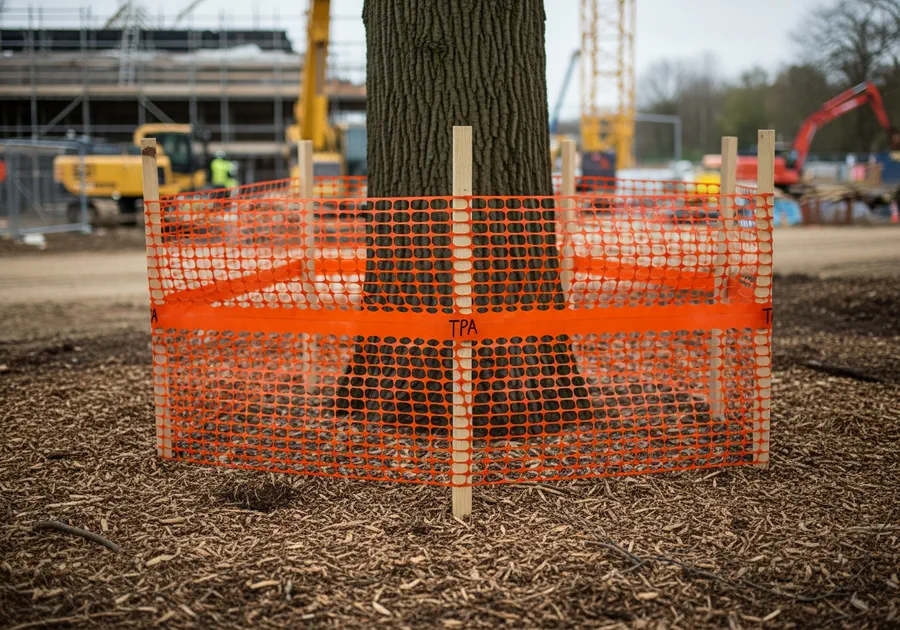
Once the design is set, the arboricultural impact assessment (AIA) details how the tree will be protected during construction. This includes a tree protection plan (TPP) showing physical barriers, typically Heras fencing, placed at the edge of the RPA. For veteran trees, the fencing is often supplemented with ground protection, such as load-spreading mats, where vehicle movements are unavoidable.
The method statement goes further. It sets out task-specific precautions: no digging within the RPA without an arboriculturist on site, no storage of materials or chemicals near the tree, and no changes to ground levels that could affect root aeration. These are not optional extras. They are the conditions that planners will attach to your permission, and they are enforceable. Ignore them and you risk a stop notice or enforcement action, which is far more expensive than getting the protection right from the start.

Long-Term Stewardship of Veteran Trees After Conversion
Your responsibility does not end when the builders leave. Planning conditions often require a post-construction monitoring period, typically five years, during which the tree’s health is checked annually. This might include remedial work, such as removing deadwood that becomes hazardous, or habitat management, like retaining cavities for bats.
Beyond the conditions, there is a stewardship angle. Veteran trees are part of the site’s heritage. A simple aftercare plan, agreed with the LPA, can cover watering during drought, mulching, and avoiding compaction from future landscaping. This long-term view protects your investment and ensures the tree remains a feature for the next generation of owners. It also makes future planning applications, such as extensions or outbuildings, easier because you have a documented history of responsible management.
In practice, we have seen barn conversions where a veteran tree became the centrepiece of the marketing, adding real value to the property. That only happens when the survey and protection are done properly from day one. The alternative is a tree that declines, a planning condition that is breached, and a project that becomes a cautionary tale.
Frequently asked questions
Find out what's on your site before it becomes a problem.
Subito provides BS5837 tree surveys and arboricultural impact assessments for planning applications across England. If your site has old trees, we will identify them, assess them, and give you the information you need to design around them with confidence.