Tree Survey Validity and Expiry for Planning
A tree survey for planning is valid for two years, but can expire sooner. Find out what invalidates a survey and how to avoid costly project delays.
When does a tree survey expire?
A tree survey carried out to the British Standard 5837:2012 (BS 5837) is generally considered valid for two years. Some Local Planning Authorities (LPAs) may accept surveys up to three years old, but two years is the reliable industry standard you should work towards. After this period, it is considered expired and will likely be rejected by a planning officer.
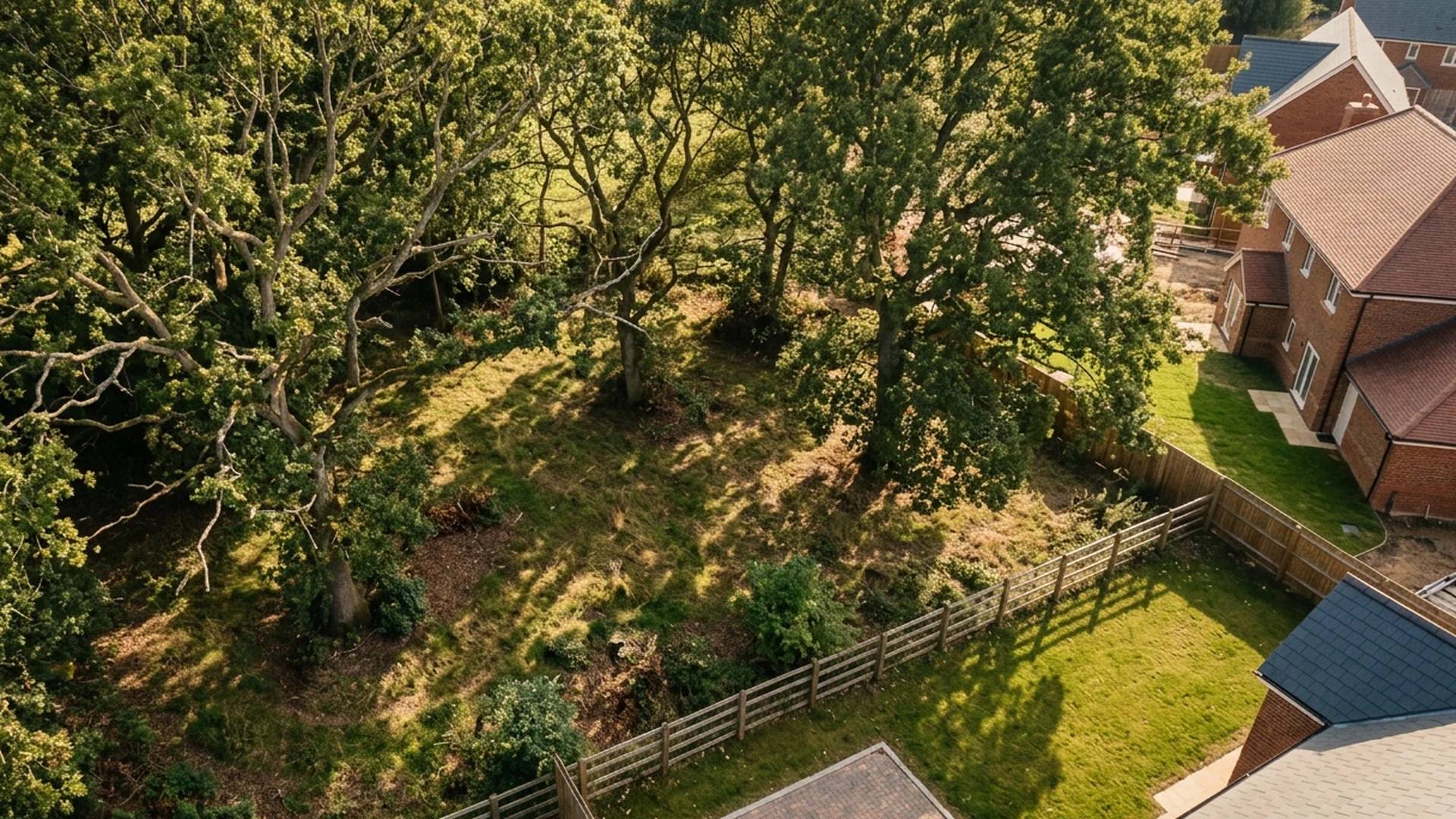
The reason for this expiry period is simple: trees are dynamic, living organisms. A survey is a snapshot in time, recording the physiological and structural condition of a tree on a specific day. Over two years, a great deal can change. Trees grow, extending their branches and root systems. They can develop structural defects, be colonised by decay fungi, or contract diseases. Their overall health can decline due to environmental pressures.
BS5837 Survey Validity
An expired survey does not provide the LPA with the accurate, current information it needs to make a sound planning decision. The data relating to tree condition, dimensions, and the all-important Root Protection Area (RPA) is no longer reliable. Relying on outdated information creates a risk that the proposed development could harm trees that are meant to be retained, or that trees earmarked for retention are no longer safe or viable. For these reasons, the two-year validity period is a sensible and necessary benchmark.
What happens when a survey expires during the planning process?
Discovering your tree survey has expired just as you are about to submit a planning application can cause significant and costly delays. Development projects often have long lead times, and it is common for a survey commissioned at the feasibility stage to become outdated by the time the full application is ready for submission.

Once the application fails validation, you will receive a notification, often as part of a checklist of missing documents, stating that the arboricultural information is out of date and must be updated before the application can be processed. You will need to commission your arboricultural consultant to revisit the site and update the survey and its associated reports. This process takes time. The consultant needs to be scheduled, the site visit conducted, and the documentation updated and reissued. This can add weeks to your project timeline, pushing back your planning determination date and creating knock-on effects for the entire development programme. Proactively managing the validity of your survey is a critical step in avoiding these preventable delays.
Triggers for a tree resurvey beyond simple expiry
A survey’s two-year validity is not guaranteed. Several events can occur that render a survey inaccurate and invalid, even if it is only a few months old. These events trigger the need for an immediate resurvey to reflect the new conditions on site.
Significant weather events
Extreme weather is a primary trigger for a resurvey. A severe storm with high winds can cause significant damage to a tree population. Branches can fail, large limbs can be torn from the trunk, or entire trees can be blown over. Even if a tree remains standing, the stress of the wind loading can create fractures or weaknesses that were not present during the original survey.
A survey conducted before such an event is no longer a reliable record of the trees’ structural condition. The categorisation of a tree might change from B to U (unsuitable for retention) overnight. An LPA, or any responsible landowner, would require a post-storm assessment to ensure the site is safe and that the arboricultural information accurately reflects the new reality. Continuing to rely on the old survey would be a serious oversight.
Discovery of new disease or pest infestation
The arrival of a new disease or pest on or near the site can instantly invalidate a tree survey. Statutory plant health notices and the rapid spread of certain pathogens mean that a tree’s condition and retention category can change dramatically in a short space of time.
A prominent example is Ash Dieback (Hymenoscyphus fraxineus). An ash tree assessed as healthy one year can show significant symptoms of infection the next, severely compromising its structural integrity and long-term viability. Similarly, an outbreak of Oak Processionary Moth (Thaumetopoea processionea) introduces a public health consideration that must be managed and documented. The original survey would not contain this information, and its management recommendations would be inadequate. A resurvey is essential to assess the impact of the disease or pest and update the report with appropriate remedial actions.
Changes to the site layout or development proposals
This is a common trigger in the design phase of a project. A BS 5837 survey is not just about the trees; it is about the interaction between the trees and the proposed development. The initial survey data is used to create a Tree Constraints Plan (TCP), which in turn informs the site layout. An Arboricultural Impact Assessment (AIA) is then produced based on that specific layout.
If you change the design, the impact assessment is no longer valid. Moving a building footprint, altering an access road, or changing the location of underground services can fundamentally alter the relationship between the construction and the retained trees. A new building corner might now encroach upon a Root Protection Area. A new service trench might now sever critical roots. Any such change requires the arboricultural consultant to reassess the plans. This may not always require a full site resurvey of the trees themselves, but it will always require the AIA and the Tree Protection Plan (TPP) to be reviewed and amended to reflect the new design.
Unauthorised works or site damage
Accidental damage to trees on site will immediately invalidate the survey’s condition assessment. This can happen during preliminary ground investigations, demolition works, or even just careless site access before the main construction phase begins.
Common examples include machinery compacting the ground within a Root Protection Area, damaging the soil structure and harming roots. Excavation for trial pits can sever roots directly. The trunk or branches of a tree might be struck by plant or delivery vehicles, causing wounds that can lead to long-term decay. If any such incident occurs, a resurvey is required to assess the extent of the damage, evaluate the tree’s chances of survival, and document its new, compromised condition. The original survey is no longer a true representation and cannot be used for planning purposes.
The resurvey process: what to expect
When a survey needs updating, either due to time expiry or a specific trigger event, it does not always mean starting the entire process from scratch. A professional consultancy will have a more efficient method for updating existing data.
The update survey or ‘walkover’
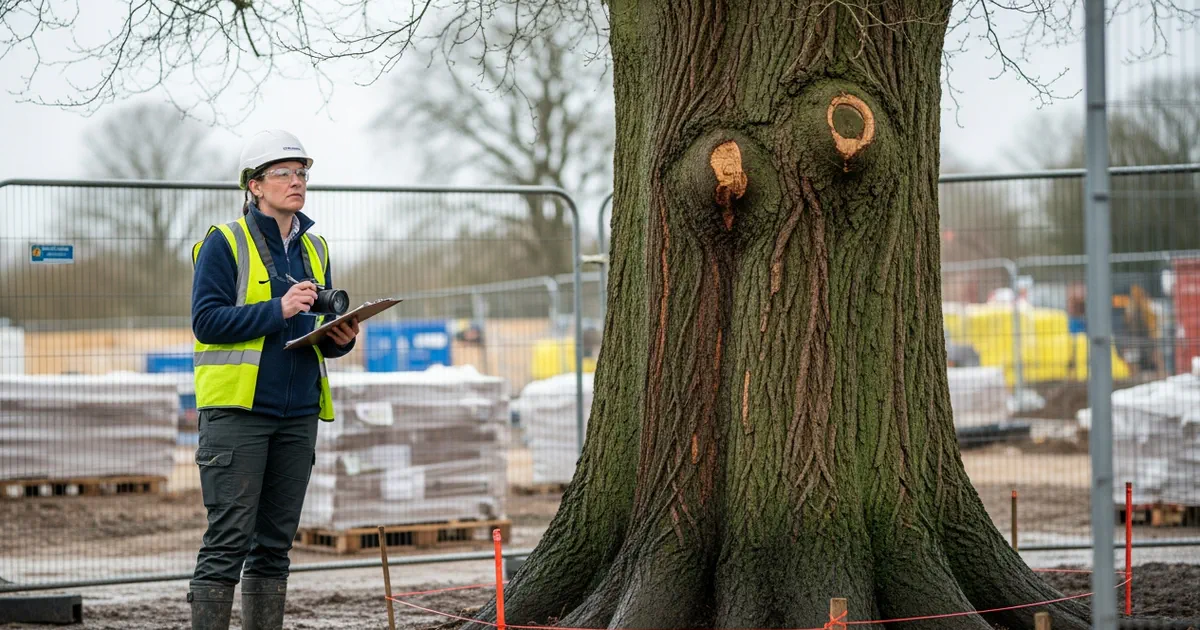
For a standard expiry, the process is typically an update survey, sometimes called a re-inspection or walkover. The arboricultural consultant will revisit the site equipped with the original survey data, schedule, and plans. They will then systematically visit each tree and check it against the original assessment.
During this visit, the consultant is looking for any changes. Has the tree grown significantly? Are there any new signs of disease, decay, or structural defects? Has its overall vitality changed? Any new observations are recorded. This process is significantly faster and more cost-effective than conducting a full BS 5837 survey from the beginning, as the baseline data already exists.
Updating the documentation
Following the site visit, the office-based work involves updating the original documents. The tree schedule will be amended to reflect any changes in condition, dimensions, or management recommendations. The survey report will be updated with a new inspection date and a summary of the findings. All associated plans, such as the Tree Constraints Plan and Tree Protection Plan, will be checked and reissued with the new survey date.
The final deliverable is a complete, revised set of arboricultural documents that are current, accurate, and ready for submission to the Local Planning Authority. This ensures the planning application is supported by robust information that meets professional standards and satisfies the requirements of the planning officer.
Practical steps for managing tree survey validity
To avoid unnecessary delays and costs, you should actively manage the validity of your arboricultural information throughout your project’s lifecycle. This is a straightforward risk management exercise.
Check the survey date early
Always check the date of your tree survey before compiling a planning submission. If it is more than 18 months old, schedule an update survey with your consultant. Do not wait until it is two years old, as this leaves no buffer for the time it takes to schedule and complete the work. Acting proactively ensures your documents are current when you are ready to submit.Communicate design changes immediately
Maintain clear communication with your arboricultural consultant. If you make any changes to your site layout, however minor you think they are, inform your consultant immediately. They can advise if a report addendum or a full AIA revision is required.Report damage or weather events promptly
If there is a significant weather event or you suspect any damage has occurred to trees on site, contact your consultant for advice. A quick inspection can assess the situation and determine the necessary course of action.Stay compliant throughout
This proactive approach keeps your project compliant, prevents planning validation delays, and ensures you are meeting your duty of care regarding tree safety on your site.
Find out what's on your site before it becomes a problem.
Subito provides BS5837 tree surveys and arboricultural impact assessments for planning applications across England. If your site has old trees, we will identify them, assess them, and give you the information you need to design around them with confidence.