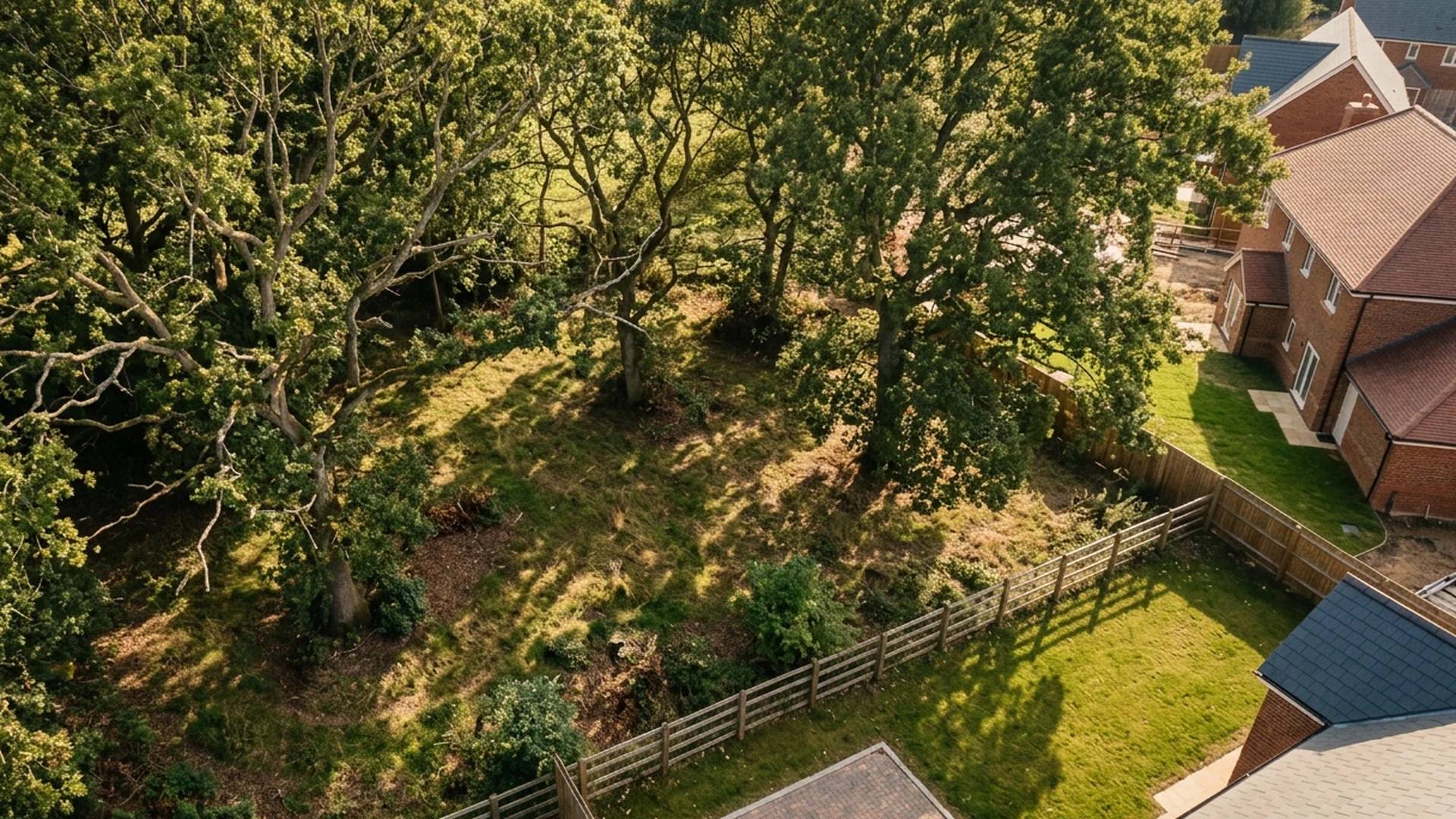
Tree Surveys Through an ESG Lens: Why Corporate Estates Are Paying Attention
Trees on your estate are no longer just a facilities management issue. As nature related disclosure requirements tighten across UK corporate reporting, knowing exactly what you have — and proving you manage it responsibly — is becoming a boardroom concern.
Trees on a corporate estate have always mattered to facilities managers. Falling branches, root damage to hard standing, leaf fall blocking drainage — these are practical problems that need managing. But in 2026, trees on your estate matter to a much wider audience than the grounds team.
Sustainability leads, investors, non executive directors and insurers are all beginning to ask questions about how organisations manage the natural assets on their land. The answer starts with knowing what you have, in documented and defensible form. That means a professional tree survey.
ESG reporting has reached the estate boundary
Environmental, Social and Governance reporting is now standard practice for listed companies and a growing number of large private organisations. For most of the past decade, the environmental component of ESG has meant carbon emissions: tonnes of CO2, energy intensity, net zero commitments.
That is shifting. Nature related risk is emerging as the next major disclosure frontier, and biodiversity on operational land is at the centre of it.
The Taskforce on Nature related Financial Disclosures (TNFD) published its final recommendations in 2023. These provide organisations with a framework for identifying, assessing, and reporting on their dependencies and impacts on nature — covering everything from supply chain land use to the ecological condition of sites they own and operate. The framework is voluntary for now, but it is following the same path as climate reporting: voluntary early adoption, then regulatory endorsement.

For those organisations, an undocumented tree estate is a gap in their nature data. Auditors and sustainability assurance providers will look for it.
What trees contribute to nature disclosures
Trees are not peripheral to nature reporting. They are central to it.
A mature tree provides measurable, quantifiable ecological services: carbon sequestration, canopy cover, air quality improvement, temperature regulation, rainfall interception, and habitat for protected species including bats and nesting birds. These are the kinds of nature related dependencies and impacts that TNFD aligned reporting asks organisations to disclose.
Documented tree cover supports positive disclosure
A survey is the defensible baseline
Duty of care has not gone away
ESG is one reason to manage your trees properly. Liability is another, and it has not softened.
Under UK health and safety legislation and the Occupiers Liability Acts, organisations have a duty to take reasonable steps to prevent foreseeable harm to people using their land. That duty extends to trees. Where a branch failure or full tree failure causes injury or damage to property, the central question in any legal proceedings will be whether the risk was reasonably foreseeable and whether it was managed appropriately.
This risk is heightened on high footfall sites. Retail parks, healthcare campuses, hotel grounds, logistics parks with staff and visitor access, and university estates all carry elevated exposure. A branch failure near a hospital entrance is a categorically different liability event from the same failure in a field. Location and usage are material.
Portfolios spanning multiple sites need consistency
Many of the organisations most exposed to ESG scrutiny on nature manage land across multiple sites. A retail group with 200 stores. A healthcare trust with regional campuses. A logistics operator with warehouse parks across the country.
For these organisations, tree management is often inconsistent. Some sites have recent surveys; others have never been formally assessed. Some have active management programmes; others have trees that have not been inspected for years. That inconsistency creates both liability gaps and ESG reporting problems. You cannot credibly disclose your organisation’s relationship with biodiversity if you do not know the condition of your own estate.
Survey sites systematically
Roll out tree surveys across your portfolio on a planned cycle, prioritising high footfall and high risk locations first.Apply consistent risk ratings
Use the same methodology and reporting format at every site so estate-wide data can be aggregated and compared.Maintain a documented inspection cycle
Keep survey reports, remedial works records, and reinspection dates in one auditable programme that sustainability assurance can review.
What a professional tree survey actually gives you

A tree survey conducted to the British Standard BS5837 framework, or a risk based inspection using an established methodology such as VALID, delivers a structured written report covering every tree on site.
Every tree is recorded and assessed
One document, three uses
For larger or more complex sites, additional ecological assessment may identify bat roosts, nesting birds, or other protected species in the tree canopy. Where these are present, they become relevant to protected species obligations as well as nature disclosure. Your consultant can advise on whether additional surveys are warranted.
The window before mandatory reporting arrives
Nature reporting is still in a transitional phase in the UK. The TNFD framework is voluntary. UK Sustainability Reporting Standards are in their final consultation stages. Mandatory nature disclosure for large companies is expected to follow climate reporting requirements, likely from 2027 or 2028 onward.
That window is an opportunity, not a reason to delay.
The data behind a credible nature disclosure does not appear overnight. It is built through systematic, documented estate management. A tree survey is a practical and proportionate place to start.
Commission your estate tree survey.
Subito provides professional tree surveys and risk assessments for corporate, healthcare, retail, and logistics estates across England. We work with facilities managers, sustainability leads, and estate teams to deliver consistent, well documented survey programmes that support both compliance obligations and ESG reporting requirements.