What Happens During a BS5837 Tree Survey Site Visit
Worried about disruption? Here's exactly what happens during a tree survey site visit, from desk study to final report. No jargon, just the facts.
What Happens on Site During a BS5837 Tree Survey? A Walkthrough
If you’ve never commissioned a BS5837 tree survey, the thought of a stranger walking around your site with measuring equipment can raise questions. Will they need access to every corner? Will they damage the ground? Will they want to cut anything back? The short answer is no. A BS5837 survey is a visual, non-intrusive process. The surveyor’s job is to observe, measure, and record, not to alter anything. This walkthrough explains exactly what happens from the moment the surveyor arrives to the moment they leave, so you know what to expect and how to prepare.
Before the Surveyor Arrives: Preparation and Desk Study
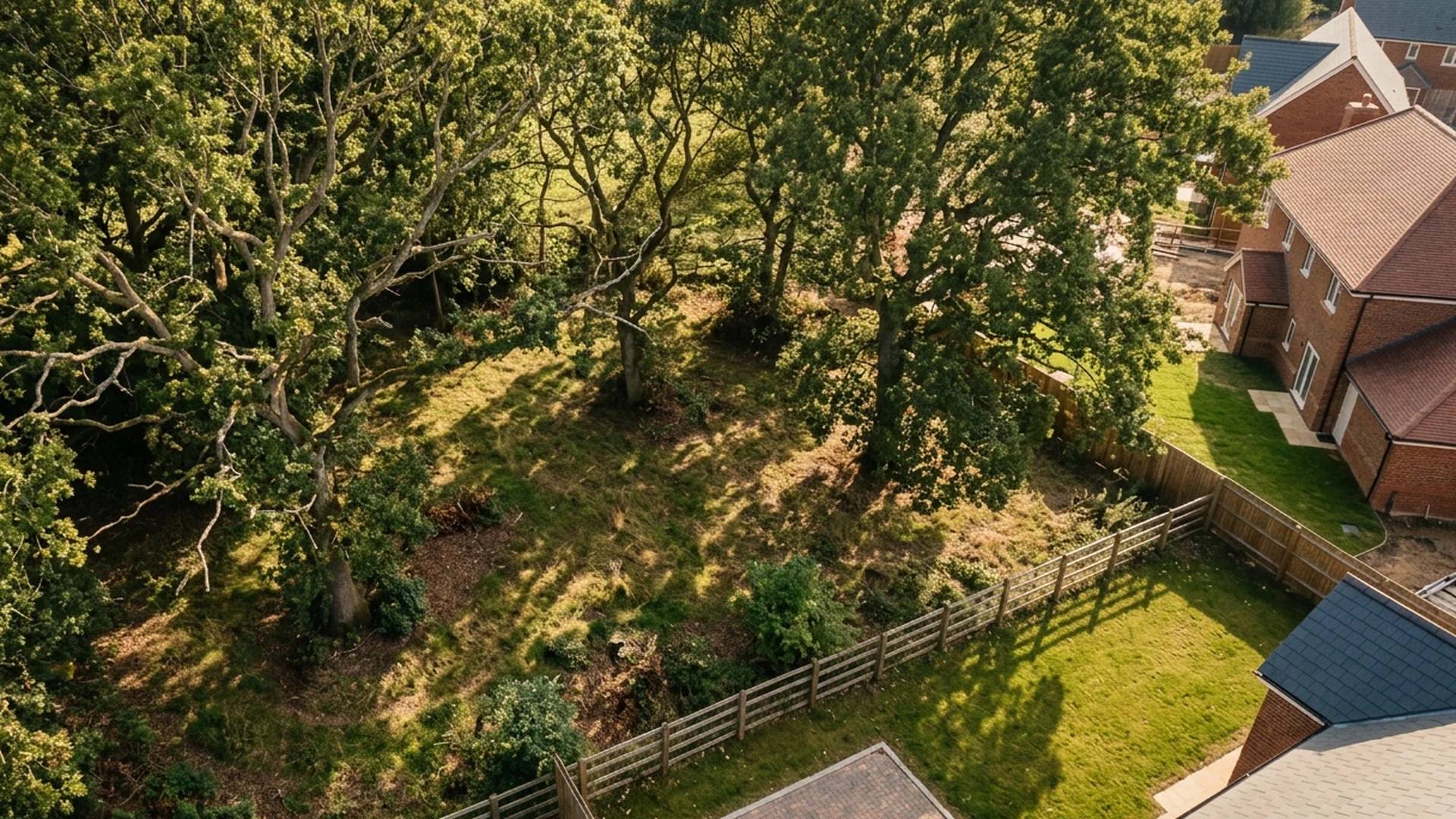
Before anyone sets foot on site, the arboriculturist has already done a significant amount of work. They will have reviewed the topographical survey to understand ground levels and existing features, studied the proposed development plans to see where structures, roads, and utilities are planned, and checked for any Tree Preservation Orders (TPOs) or conservation area designations that might affect the trees. This desk study means the site visit is not a scouting mission. The surveyor knows which trees are relevant, where the constraints are likely to be, and what specific data needs to be collected. For you, that translates into a more efficient visit, less time on site, and a report that directly addresses your planning application.
Meeting on Site: The Initial Walkthrough
The first fifteen minutes on site are about orientation and safety. The surveyor will ask for a brief health and safety briefing, especially if the site is active, and will discuss access points and any areas that are off-limits. Then comes a quick walk of the whole site, not to measure anything yet, but to get a feel for the layout, the distribution of trees, and any obvious issues like steep slopes, waterlogged ground, or restricted access. This initial sweep also helps the surveyor prioritise which trees need detailed assessment and which can be grouped, saving time later.
Surveying Each Tree: The Assessment Process
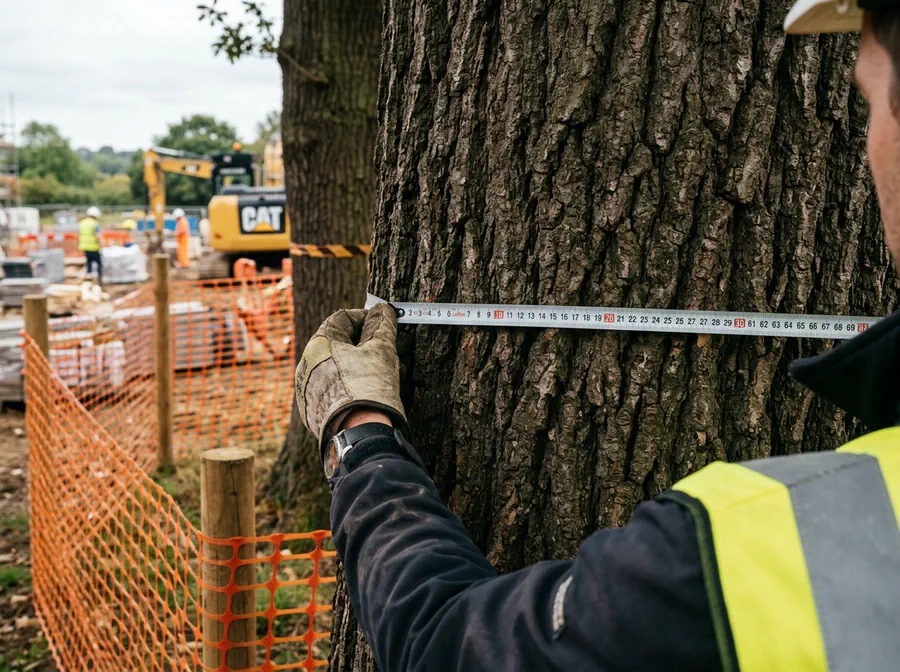
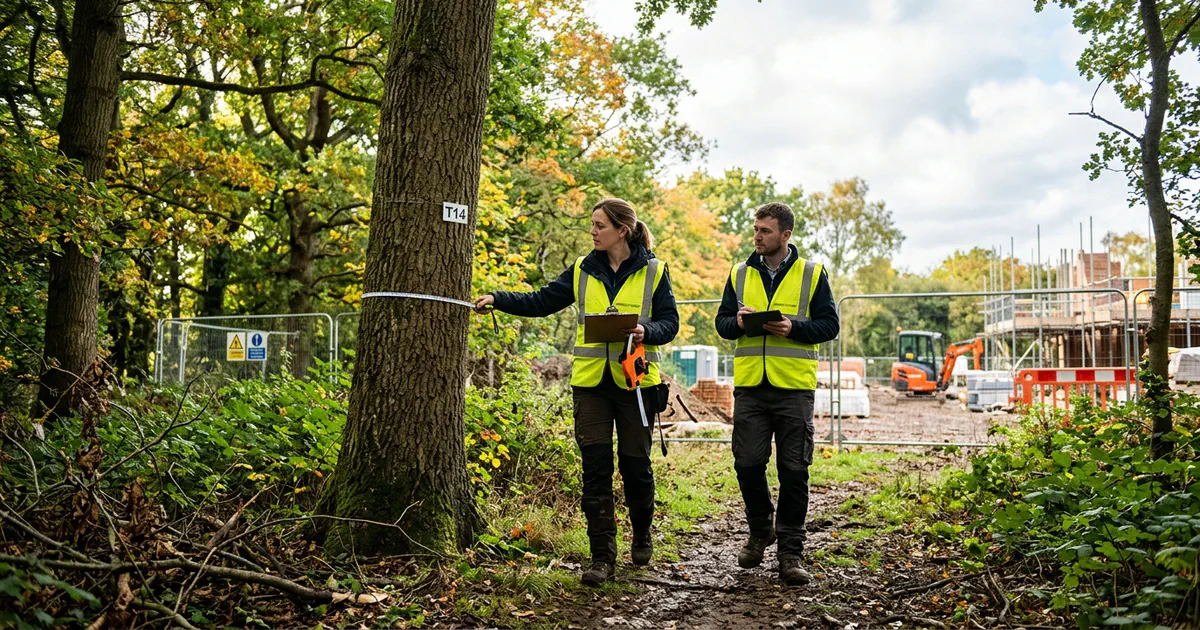
Once the context is clear, the surveyor works tree by tree. For each tree, they measure the stem diameter at 1.5 metres above ground level, estimate the height and crown spread, and note the physiological condition (whether the tree is healthy, declining, or dead) and the structural condition (whether there are cracks, splits, or signs of decay). They also record the tree’s age class, life expectancy, and any obvious defects. This is all done visually, using the naked eye and simple tools. There is no drilling, no scraping of bark, and no excavation. The surveyor will not climb the tree unless specifically asked to do a climbing inspection, which is a separate, more detailed assessment. For a standard BS5837 survey, the tree is assessed from the ground, from all sides where possible.
Recording Data: The Equipment Being Used
The toolkit is refreshingly low-tech. A diameter tape for measuring stem girth, a clinometer for estimating height, and a tablet or paper data sheet for recording observations. That’s about it. No ground-penetrating radar, no heavy machinery, no core samplers. The surveyor may take photographs for reference, but they will not disturb the ground or vegetation. This is good news for you because it means the survey can be carried out on a live construction site without causing delays or damage. The only thing the surveyor needs is a safe route to each tree and enough space to stand back and view the crown.
Access and Practicalities: What the Surveyor Needs From You
To do a thorough job, the surveyor needs to see each tree from all sides. That means access to rear gardens, fenced-off areas, or narrow side passages may be required. If a tree is in a locked compound or behind a secure gate, you’ll need to arrange access in advance. On an active site, the surveyor is used to working around machinery and site traffic, but it helps if the site team knows they are coming and can point out any hazards. You don’t need to accompany the surveyor for the entire visit, but it’s useful to be available at the start to answer questions about site boundaries or tree ownership. If you can’t be there, a site manager or someone who knows the layout can fill that role.
How Long Does a BS5837 Survey Take?
For a typical residential plot with a handful of trees, the survey will take two to three hours. For a larger development site with dozens of trees, it could take a full day or more. The surveyor will work efficiently, but they won’t rush, because the data they collect forms the basis of the entire report. You don’t need to block out your whole day. Once the surveyor is briefed and has access, they are self-sufficient. You can carry on with your work, and the only disruption is the occasional presence of someone walking around with a clipboard and a diameter tape.
After the Site Visit: What Happens Next
Back in the office, the surveyor translates the field data into a BS5837-compliant report. This includes a tree constraints plan (TCP) showing root protection areas and canopy spreads, a schedule of trees with condition ratings, and recommendations for retention or removal. The report will also highlight any trees that are protected by TPOs or conservation area status, which is critical for your planning application. Typically, you can expect the report within one to two weeks, depending on the size of the site and the current workload. The output is a clear, actionable document that your planning consultant or architect can use to design around the constraints, or that you can submit directly with your application.

Common Worries From First-Time Clients, Answered
It’s natural to worry about the unknown, but a BS5837 survey is one of the least disruptive parts of the development process. No trees are felled or pruned during the survey. No damage is caused to the site, and the only ‘disruption’ is an hour or two of someone quietly walking around with a clipboard. The surveyor will not leave tyre tracks, dig holes, or disturb wildlife. They will simply record what is there and let you get on with your project. If you have specific concerns about access or site conditions, a quick phone call before the visit can put your mind at ease. The goal is to give you the information you need without adding stress to your schedule.
Frequently asked questions
Find out what's on your site before it becomes a problem.
Subito provides BS5837 tree surveys and arboricultural impact assessments for planning applications across England. If your site has old trees, we will identify them, assess them, and give you the information you need to design around them with confidence.