Why Tree Surveys Matter — and What a BS5837 Actually Involves
BS5837 tree survey explained for UK planning applications — what LPAs require, what the site visit covers, Tree Constraints Plans, typical timelines and how to get a fixed quote.
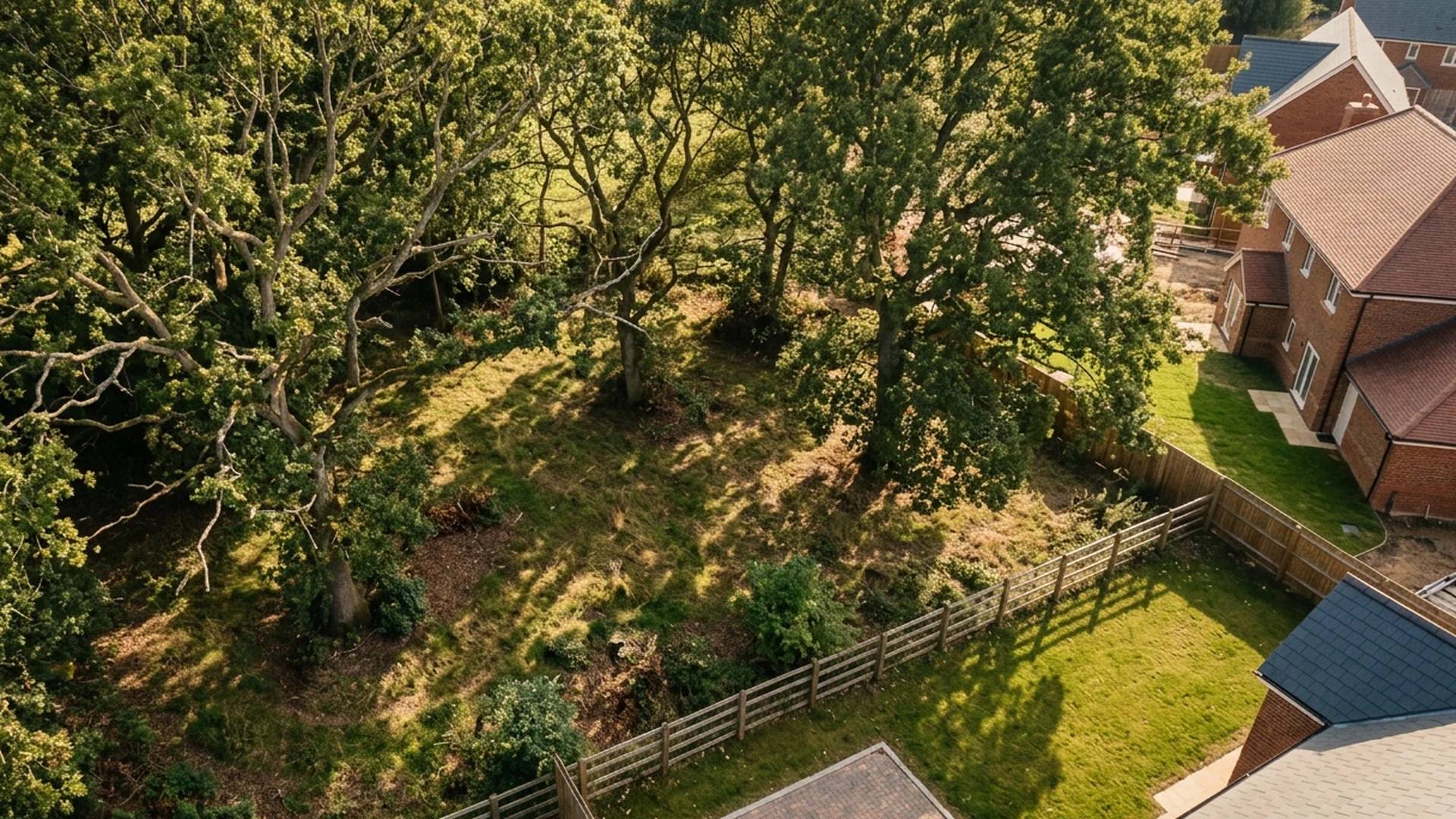
If trees stand on or near your site, your planning application will not move forward without arboricultural evidence — usually starting with a BS5837 tree survey. That is not a discretionary requirement. It is a condition of validation, and no amount of chasing your case officer will change it.
Getting the right tree survey in place early protects your programme. Getting it wrong — or leaving it too late — sends you back to square one after a refusal. Most BS5837 surveys are turned around within two to five working days.
Here is what you need to know.
Why your LPA requires a tree survey
Planning authorities have a legal duty to consider the impact of development on trees. Under the Town and Country Planning Act 1990, any trees that could be affected by proposed works must be assessed before consent is granted.
Your council’s tree officer reviews the arboricultural evidence and makes a direct recommendation to your case officer. Without a compliant BS5837 survey, that recommendation will be to refuse or not validate. It is that simple.
The earlier you commission the survey, the more useful it is. A tree survey does not just satisfy the planning authority — it tells your design team where the constraints are so they can work around them from the start, not after the layout is fixed.
What a BS5837 tree survey actually involves
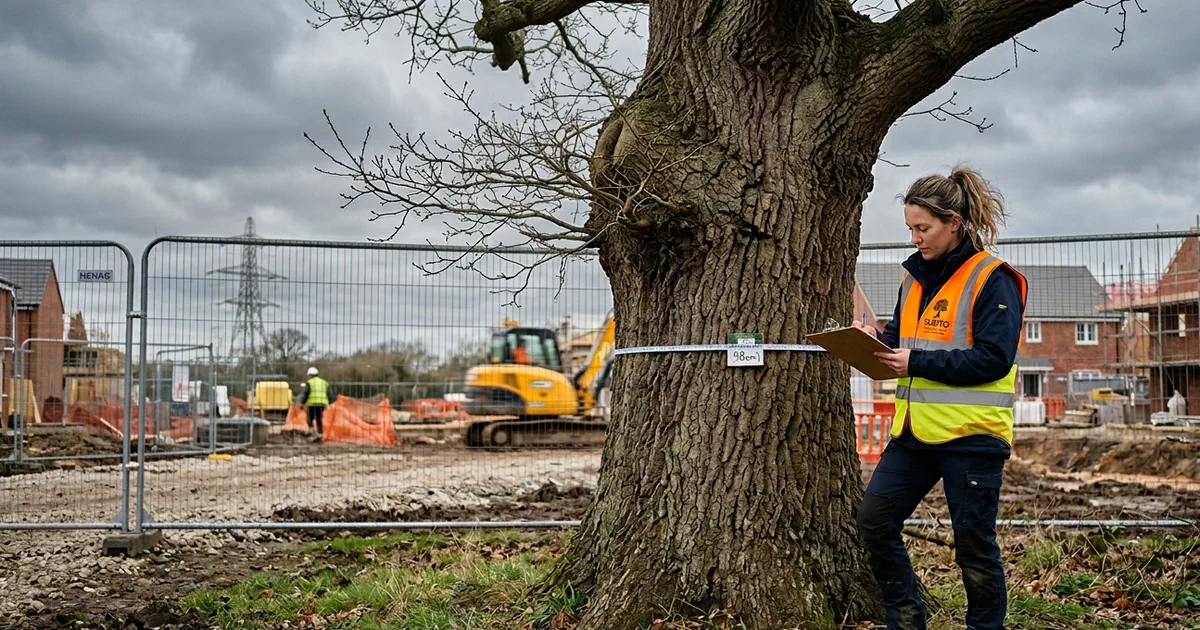
BS5837 is the British Standard that governs how trees are assessed in relation to construction and development. Produced by the British Standards Institution and recognised by the Arboricultural Association as the authoritative framework for arboricultural planning work, a survey carried out to this standard gives your planning authority confidence that the work has been done properly and to a recognised methodology.
In practice, a BS5837 tree survey involves four things.
A site survey
Tree categorisation
A Tree Constraints Plan
A written report
The whole process — site visit to completed report — typically takes two to five working days depending on site size.
What comes next
A BS5837 survey is the starting point for most development sites. Depending on your authority’s requirements, you may also need an Arboricultural Impact Assessment — a written analysis of how your specific proposals affect retained trees — and later, an Arboricultural Method Statement and Tree Protection Plan to govern how trees are managed during construction.
If you are not sure which documents apply to your site, tell us what you are planning. We will confirm the scope and price it the same day.
Get your quote in minutes
Enter your site address and project details and you will have a fixed, itemised quote ready to send to your client or planning consultant.
FAQ