Surveys from £295
Biodiversity Net Gain Surveys
Mandatory BNG — UKHab baseline, statutory metric and gain plan your LPA signs off before commencement.
Overview
Biodiversity Net Gain
If your planning application is for a development in England, Biodiversity Net Gain (BNG) almost certainly applies to you. Since February 2024 it has been a mandatory condition on planning permissions — meaning you cannot lawfully start work until your local planning authority (LPA) has approved a Biodiversity Gain Plan showing at least a 10% uplift in biodiversity value. That applies even if your site has no protected species at all.
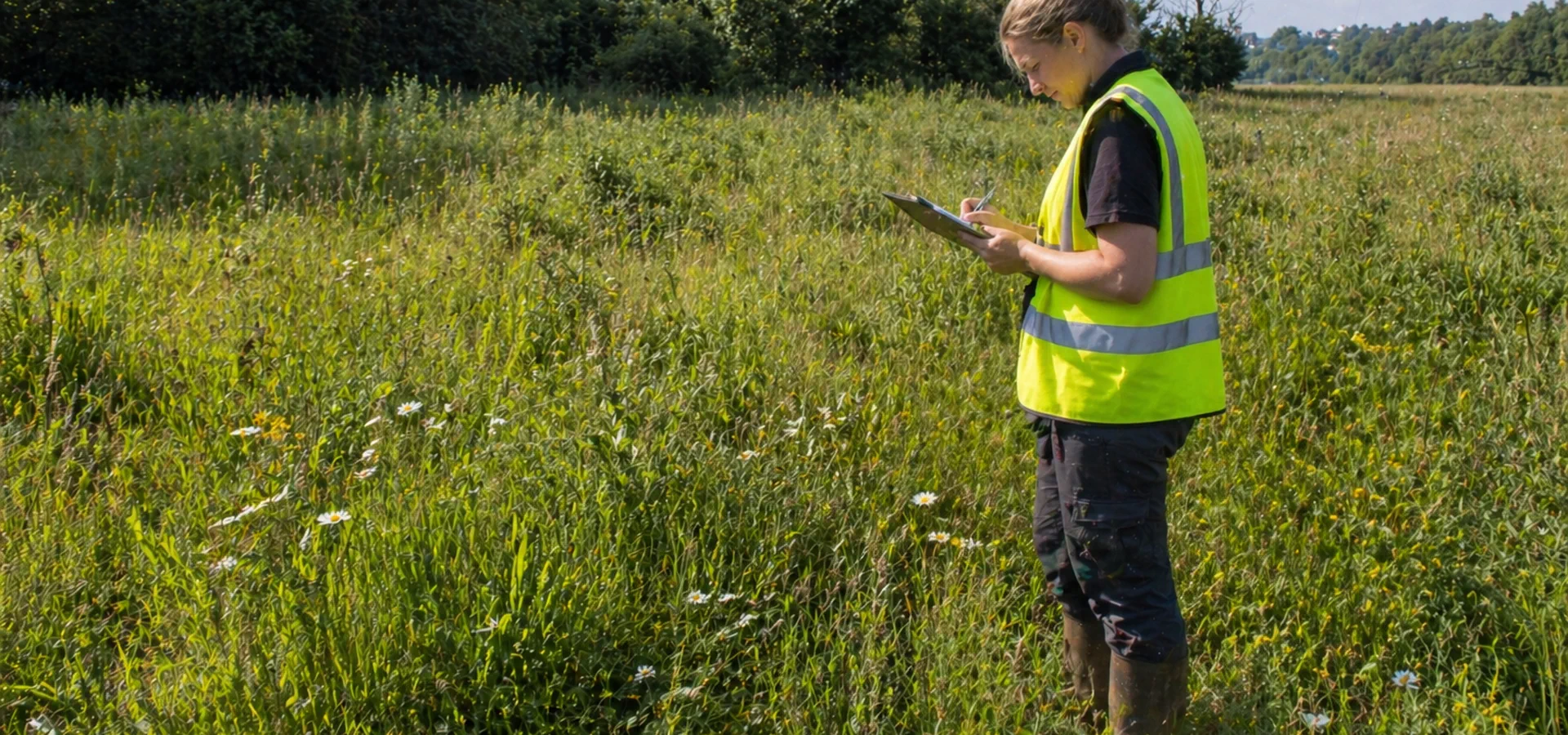
The baseline survey that underpins that plan is not a box-ticking exercise. It determines your starting biodiversity value, dictates whether you can meet the 10% target on your own site or need to purchase off-site units, and has to be robust enough to pass scrutiny from your LPA’s ecologist at validation. Getting it right at the start saves you time and cost later.
Does BNG apply to your site?
Not every application is in scope. Householder applications, permitted development rights, and sites below a minimum size threshold are currently exempt. A new exemption raising the area threshold to 0.2 hectares is expected before July 2026, which would remove BNG requirements from many smaller residential permissions. We confirm whether your site is in scope or qualifies for an exemption at the point of instruction, so you are not spending money where it is not needed.
How we work with you
We align BNG fieldwork with your Phase 1 habitat survey wherever possible, keeping your programme efficient and your costs down. The Biodiversity Gain Plan is prepared from your finalised layout — so we need a confirmed red line boundary and, where you have one, a proposed landscape strategy before the plan is completed. If your layout is still evolving, we will advise early on how sensitive your baseline score is to design changes, so you can make informed decisions before the scheme is fixed.
Process
How it works
Get an accurate, fixed-price quote in minutes. Then it's simply book, survey, and report.
Create your quote
Tell us about your site and your project. We'll identify the surveys you need and produce a formal quotation on the spot.
Confirm your booking
Choose a date and we'll take it from there. You'll know who's coming, when, and what they need from you.
Get your report
Your report lands within a few working days of the survey. It covers everything your planning authority needs.
FAQ
Biodiversity Net Gain — your questions answered
What is the difference between the baseline survey and the Biodiversity Gain Plan?
The baseline establishes habitat types, condition, and the pre-development biodiversity value in the statutory metric. The Biodiversity Gain Plan is a separate requirement: it explains how you will achieve and maintain the minimum 10% uplift after development, how gains will be secured for 30 years, and how delivery will be evidenced — including on-site measures, off-site habitat, or statutory credits where those routes are used.
Your LPA will expect the baseline to be robust at validation; the Gain Plan is what they must approve before you can lawfully commence works in scope.
Can Phase 1 habitat survey and BNG baseline be done in one visit?
Often, yes. Where the scope is aligned, we programme one coordinated field visit so habitat mapping, UKHab typing for the metric, and the PEA narrative stay consistent — avoiding duplicated effort, conflicting habitat lines, and extra access days.
If your site needs additional seasonal species survey, that is scoped separately and sequenced so it does not undermine your baseline.
When should the Biodiversity Gain Plan be prepared?
The Gain Plan should reflect your finalised red line and a clear view of the proposed development — including landscape proposals where they affect habitat delivery. If your layout is still moving, we still advise early on baseline sensitivity so you understand how design choices affect the metric before the scheme is fixed.
We will tell you what we need (for example confirmed boundaries and landscape strategy inputs) before we finalise the plan for submission.
How do I get a fixed price?
Deliverables
BNG deliverables that stand up at validation
UKHab-typed baseline, metric calculations and a gain plan that makes delivery options clear early — on-site first, off-site or credits where needed.
Get started today
Let's move your site forward.
Fixed pricing in 4 minutes. No commitment until you book.