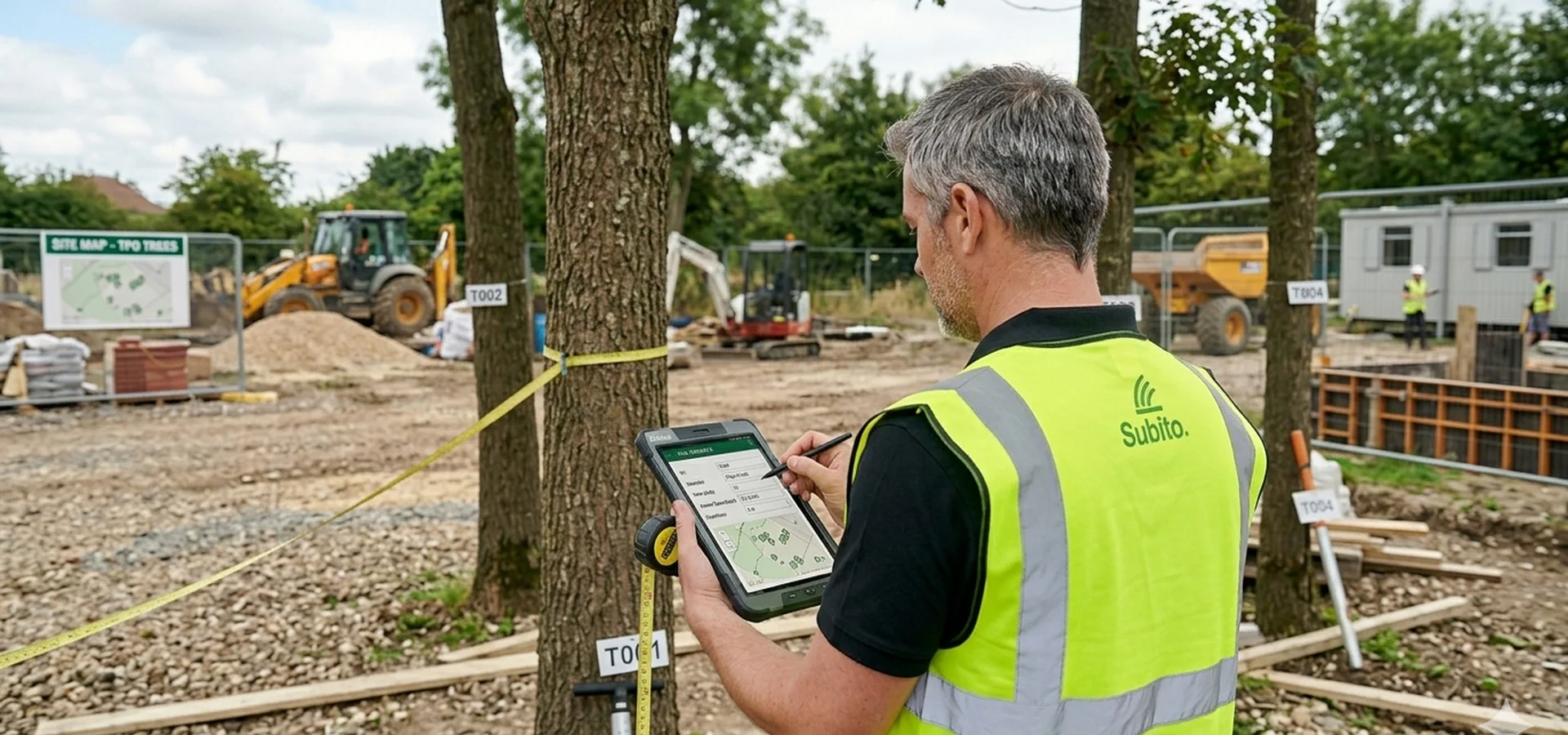
Mortgage Tree Report
Buying a property with mature trees nearby? Lenders often want a written view of any tree-related risks before releasing funds. We carry out a pre-purchase inspection and deliver a clear report written to satisfy your lender, quickly enough to keep your purchase on track.
Overview
The Report Your Lender is Asking For
When a building surveyor flags trees close to a property, mortgage lenders frequently ask for a specialist arboricultural report before they will proceed. This isn’t a planning document — it’s a focused assessment of what the trees near the property mean for its structure, foundations, and drains, written in a format your lender can act on.
We assess every relevant tree on the property and on neighbouring land, consider the risk each one presents to the building, and produce a clear written report covering what was found, what it means, and what if anything needs to happen next. If tree works are recommended, we include an estimated cost so you have everything you need for discussions with your lender or the seller.
The same report satisfies insurance companies as well as mortgage lenders, so if your insurer has flagged trees as a concern, we can help with that too.
Turnaround is fast. We understand you are working within a conveyancing chain and that delays are costly. Get in touch with your site address and we will get a surveyor to you quickly.
FAQ
Mortgage Tree Reports — Your Questions Answered
Why your lender is asking for a tree report
Mortgage lenders are primarily concerned with the long-term structural integrity of the property they are lending against. Trees close to a building introduce risk that a standard mortgage valuation does not assess in detail: root systems can cause subsidence in shrinkable clay soils, branches can cause direct physical damage, and the presence of a Tree Preservation Order can limit what future owners are permitted to do.
When a surveyor notes mature trees in close proximity to the property, the lender’s risk team will often ask for a specialist arboricultural report before releasing funds. Lenders including Barclays and HSBC routinely request this as part of their due diligence process. It is increasingly common and is not a reflection on the property itself — it is simply the lender satisfying themselves that the risk has been properly examined.
The same requirement can also come from your insurer. If your buildings insurance provider has flagged trees as a concern, a mortgage tree report addresses their needs in exactly the same way.
What a mortgage tree report covers
The report assesses every tree on or near the property that could affect the building, its foundations, drainage, or boundary structures. This includes trees on neighbouring land where their canopy or root system could reach the property — not just trees within the boundary.
The report is structured around five areas. Tree identification and data covers the species, dimensions, and location of every relevant tree, giving the lender a clear picture of what is present and where. The risk assessment determines the likelihood of tree failure, falling branches, or direct structural damage. The subsidence analysis examines soil conditions and the relationship between root systems and the building’s foundations. The legal and planning review confirms whether any trees are protected by a Tree Preservation Order or whether the property falls within a conservation area, and sets out what that means for future management. Finally, recommendations and management sets out any works required, with an estimated cost, so the findings are immediately actionable.
What the difference is between a mortgage valuation and a tree survey
A mortgage valuation is carried out for the lender to confirm the property’s value. It is a brief assessment and does not include detailed analysis of tree-related structural risk. When the valuer notes trees as a potential concern, they flag it for specialist review — that is where we come in.
A tree survey for mortgage purposes is a standalone report prepared by a qualified arboricultural consultant with specific expertise in tree and building interactions. It goes into a level of detail the valuation cannot provide and gives the lender the specialist opinion they need to proceed with confidence.
How the process works
We keep the process straightforward and move as quickly as the conveyancing timeline requires.
Step 1: Get in touch. Provide us with the property address, an indication of the trees present, and any correspondence from your lender or insurer setting out what they need. We will send you a fixed quote within a few hours.
Step 2: Confirm your booking. Once you are happy to proceed, we agree a date for the site visit. We work around your availability and aim to attend as quickly as possible.
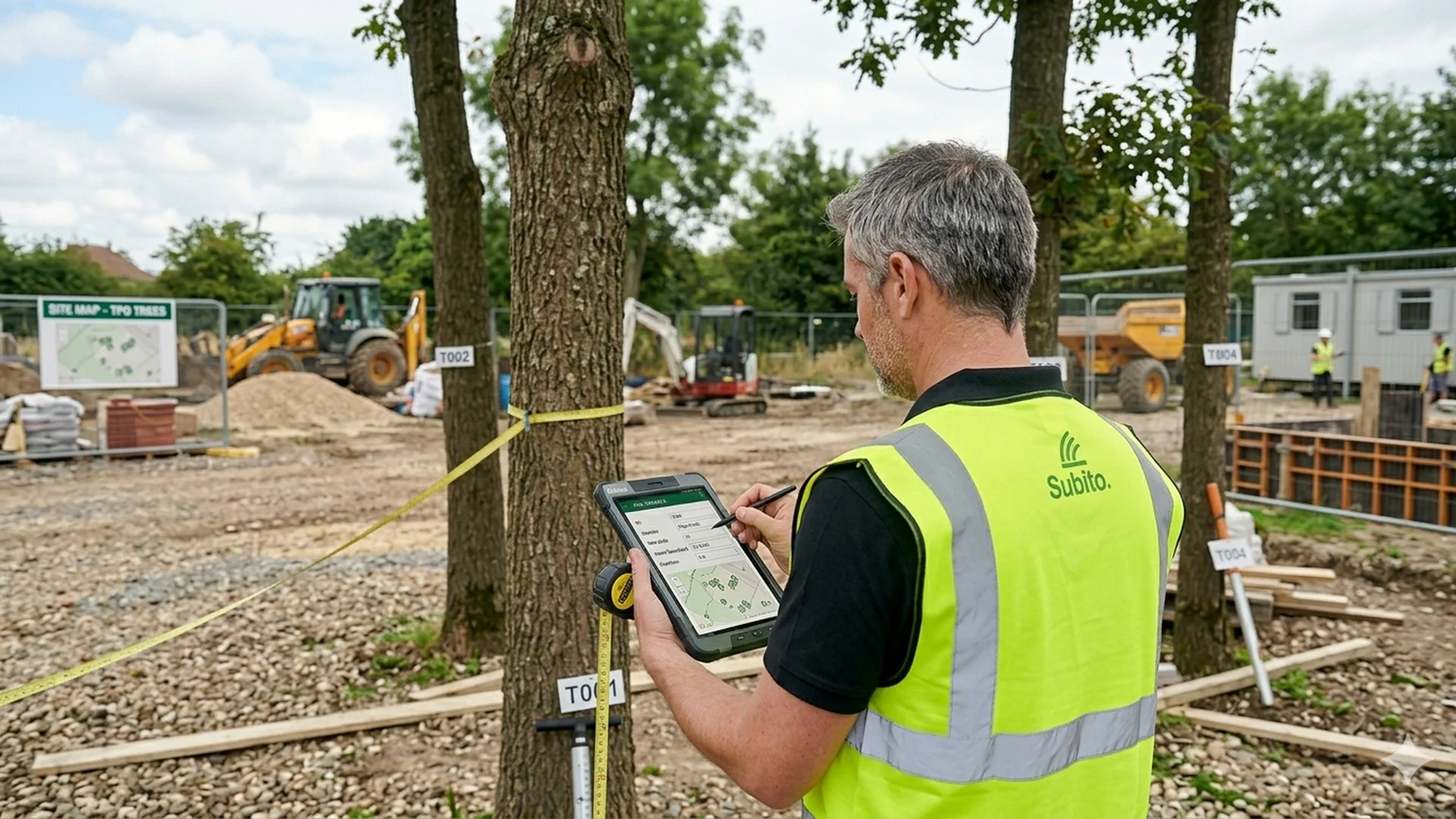
Step 3: Site inspection. One of our arboricultural consultants visits the property and inspects all relevant trees, including any on neighbouring land within influencing distance of the building. The inspection covers tree health, structural condition, species identification, proximity to foundations and drainage, and soil type.
Step 4: Report production. The consultant prepares a detailed written report based on the site findings, structured to meet the requirements of mortgage lenders and insurers.
Step 5: Delivery. The completed report is sent to you, ready to submit to your lender or insurer. If they have follow-up questions or require any clarification, we are available to assist.
How soil type affects the assessment
Not all trees near buildings present the same level of risk, and soil type is one of the most important factors. Trees growing in shrinkable clay soils can cause subsidence by extracting moisture and causing the ground to contract. The same tree on a sandy or gravelly soil presents far less structural risk.
The report will identify the soil type at your site and assess it alongside the species and size of the trees present. Some species, including willows, poplars, and oaks, are known to have more extensive root systems and are treated with greater scrutiny when they sit close to a building. The assessment considers the full picture rather than applying a blanket judgment based on proximity alone.
What happens if the report identifies a problem
A report that identifies tree-related risk is not necessarily a reason to walk away from a purchase. In many cases the recommended action is straightforward: a crown reduction, removal of a specific tree, or installation of a root barrier. Where works are recommended, the report includes an estimated cost that can be used in negotiation with the seller or presented to the lender as part of a plan to address the risk.
Where findings are more serious, the report gives you the information you need to make an informed decision before you are committed. That is ultimately what the lender wants too: evidence that the risk has been properly understood.
If the property is one you later wish to develop, the arboricultural report can also feed into any future planning application, giving you a useful head start on the tree constraints picture.
What it costs and how to get started
Mortgage tree report pricing is based on the number of trees to be assessed and the size of the site. We provide a fixed quote upfront so there are no surprises.
To get started, provide us with the property address and any correspondence from your lender or insurer. We will confirm availability, turnaround time, and a fixed price promptly.
Guides & insights
Guides & insights
Practical explainers on BS5837, constraints plans and what planning authorities expect.

More surveys
Looking for a different tree survey?
Browse every survey type and deliverable — constraints plans, impact assessment, protection plans and more — on our tree surveys overview.